Part 1
My name is Marbel Carter, and if you’d met me at eighteen, you probably would’ve thought I was one of those girls who always got good grades because she was quiet, polite, and a little too careful with her hopes.
You would’ve been half right.
I was quiet because in my house, noise was expensive. If I asked the wrong question, the air changed. If I wanted the wrong thing, dinner got colder. If I looked disappointed for too long, my mother would tap my wrist under the table and give me that soft warning smile that meant, Please. Not tonight.
We lived in Oakridge Hills, Virginia, in a white two-story house at the end of a cul-de-sac where every mailbox matched and every front porch looked staged for a real estate brochure. On Sunday afternoons, my mother clipped the hedges in pearls and gardening gloves. On weeknights, my father came home in pressed white shirts that still smelled faintly of starch and expensive cologne, loosened his tie at exactly the same chair, and expected the world to keep making sense around him.
In his world, sons were futures. Daughters were transitions.
My brother Ethan was four years older than me and blond in the kind of effortless way people described as all-American. He had a crooked smile, broad shoulders by sixteen, and a talent for walking into rooms like they belonged to him. Teachers forgave him for late homework. Coaches called him “kiddo.” Neighbors told my parents they were lucky, and my father glowed like he’d built Ethan himself with blueprints and good stock.
I was the other child. The useful one. The easy one.
When Ethan got a B in algebra sophomore year, my father hired a private tutor by Friday. When I asked for one the next spring after my AP Chemistry teacher started skipping material and half the class was drowning, my father looked up from the financial section and said, “You don’t need all that. Just study enough to get by.”
I didn’t get by. I got the highest score in the class.
No one mentioned it at dinner.
I learned early that achievement was only impressive in our house if it came from Ethan. His soccer games were family events with folding chairs, snacks in coolers, and my father shouting advice from the sideline like he was coaching a national team. My academic award ceremonies were usually me standing under fluorescent lights in school auditoriums while some assistant principal mispronounced my name and my mother texted ten minutes later, Proud of you, sweetheart. Dad had a meeting.
Once, in tenth grade, I won a statewide science scholarship competition. The prize was small, just enough to cover lab fees and books for a summer program, but to me it felt enormous. I came home with the certificate rolled in a tube and found my father in the den watching Ethan’s game highlights on a camcorder.
“I won,” I said from the doorway.
He didn’t look away from the screen. “That’s nice.”
That was it. On the television, Ethan scored a goal and my father rewound it to watch again.
Even now, I can remember the smell of dust from the carpet, the hum of the air vent, the crinkle of the certificate tube under my fingers. It’s funny what sticks in your body. Not just the insults. The ordinary moments when you realize invisibility isn’t an accident. It’s architecture.
My mother, Diane, was harder to understand.
She wasn’t cruel. That would’ve been easier. Cruelty is at least honest. My mother was gentle in the way people become gentle when they’ve spent years sanding themselves down to survive. She tucked notes in my lunchbox when I was little. She brushed my hair when I had fevers. She bought me secondhand medical memoirs at library sales because she knew I loved them. But every kindness of hers came wrapped in surrender.
“Your father means well,” she’d say.
“He’s old-fashioned.”
“He worries.”
What she really meant was: I know. I know. I know. But I’m not going to stop him.
By the time I was seventeen, college brochures had started arriving in fat glossy stacks that smelled like ink and possibility. UCLA. Duke. UVA. Johns Hopkins. I kept them hidden under my mattress like contraband. At night I’d take them out and run my hand over the photos—brick paths, white coats, libraries lit gold from inside. I wanted medicine with the kind of hunger that doesn’t feel like ambition so much as oxygen. I loved the precision of it, the puzzle of the body, the miracle that knowledge could become action. A clamp in the right place. A diagnosis in time. A heart kept beating because somebody refused to look away.
I think some part of me already knew why I wanted it.
I got into the University of Virginia with a partial scholarship. The envelope came thick, with cream paper and a blue crest, and for two full minutes I let myself imagine the impossible version of my family—the one where my father smiled, slapped the table, said, That’s my girl.
Then the summer before freshman year arrived, and my mother made meatloaf.
She only made meatloaf when there was news she wanted to soften. Birthdays. Promotions. Deaths. The smell of onion and ketchup glaze filled the kitchen, sweet and sharp. I sat at the polished dining table with my acceptance letter beside my plate and a yellow legal pad where I’d written out the numbers three different ways.
Tuition shortfall: $15,000 a year.
I had grants. I had the scholarship. I had a job lined up at the campus bookstore. I had a plan that depended on one thing I had never been allowed to ask for before.
Help.
My father came in late, loosened his cufflinks, poured himself two fingers of bourbon. Ethan was home from college that weekend, sprawled in a chair with one ankle over his knee, barely paying attention. My mother served slices onto white china plates with the gold rim she used for serious dinners.
I waited until everyone had taken a few bites. My mouth was dry enough to hurt.
“I got in,” I said, even though they knew. “With a scholarship.”
My mother smiled too quickly. “We’re proud of you.”
I slid the letter toward my father. “I just need help with the rest.”
He picked it up, glanced at the crest, then set it down without opening it. No pause. No calculation. No question about my major or my plans or how much I’d already earned on my own.
“That money is for Ethan,” he said.
I stared at him. “What money?”
“The education fund.” He swirled the bourbon. Ice clicked against crystal. “Your brother needs a real career. He’ll have a family to support.”
For a second I thought maybe I’d misheard him. The kitchen light buzzed faintly overhead. My mother’s fork stopped halfway to her mouth. Ethan looked at his plate.
“And me?” I asked.
My father leaned back and looked at me with the kind of calm that hurts worse than shouting.
“You’re a girl, Marbel. You don’t need all that. Find yourself a good husband. You’ll be fine.”
Nobody breathed. Not really. That’s what I remember most—the silence after. It wasn’t shocked. It was practiced. My mother looked down. Ethan said nothing. Somewhere outside, a sprinkler started ticking across the lawn.
I folded the letter slowly, once, then again, because my hands had started to shake and I didn’t want him to see.
“Okay,” I said.
That night I sat at my desk until after midnight with the window cracked open to the summer hum of cicadas, and I filled out every aid application I could find. Emergency grants. Need-based scholarships. Work-study. Loan forms that made my stomach twist. When my vision blurred, I got up, splashed cold water on my face, and came back.
At 12:43 a.m., I typed my signature on the last form and made myself a promise so quietly it almost didn’t sound like language.
I will never ask him for anything again.
Then, just as I closed my laptop, I heard my parents’ voices through the vent.
My mother’s voice was low, strained. “She’s so smart, Richard.”
My father answered without hesitation. “That’s exactly why we need to be practical.”
I froze with one hand on the keyboard.
Practical about what?
When their bedroom door shut, I sat there in the dark, pulse thudding in my throat, with the sick feeling that the worst part of the conversation hadn’t happened at the table at all. It had happened after I left—and I had no idea what else they’d already decided for me.
Part 2
College taught me two things very quickly.
The first was that exhaustion has layers. There’s tired because you stayed up studying, and then there’s tired because your entire life is balanced on a stack of borrowed money, vending-machine dinners, and the idea that if you slip once, there is nobody coming to catch you.
The second was that I was better at surviving than anyone in my family had ever guessed.
I moved into a narrow dorm room with a cinderblock wall painted a yellowish white that made everything look jaundiced after dark. My roommate had framed photos from home and a comforter her mother had monogrammed. I had two suitcases, a secondhand desk lamp, and one plastic storage bin of textbooks I’d bought used and already highlighted by someone else’s anxiety.
I worked mornings at the campus bookstore, afternoons in the library circulation office, and weekends tutoring intro biology because apparently there were freshmen willing to pay twenty dollars an hour to be told that mitochondria were not, in fact, a type of bacteria. I stretched grocery money with ramen, bananas, peanut butter, and cafeteria apples tucked into my backpack. When the sole of my sneaker peeled off during winter finals, I fixed it with craft glue and duct tape and kept walking.
I liked being busy because busy didn’t let me think too much.
Still, some nights the loneliness came in sideways. You’d be crossing the quad under hard blue winter light, your face numb from cold, and suddenly some other girl would be on the phone laughing with her dad about a statistics class, and it would hit you in the ribs so sharply you had to stop pretending the wind was the reason your eyes watered.
My mother called once every few weeks, always during the hour she knew my father was still at work.
“Are you eating enough?”
“Yes.”
“Are your classes going well?”
“Yes.”
She never asked about money, maybe because she knew the answer, maybe because asking would’ve made her responsible for hearing it. Sometimes I could hear the television in the background and Ethan’s voice somewhere in the house, older now, deeper, still central. Once she said, “Your father tells everyone you’re doing some pre-med thing,” like she was offering me a compliment smuggled through customs.
“Some pre-med thing,” I repeated.
“You know how he is.”
I did.
What I didn’t tell her was that I’d stopped coming home for holidays. Thanksgiving became extra shifts in the library. Christmas became a cheap box of takeout noodles and flashcards spread across my twin bed. Spring break meant cleaning out the campus science building for cash because no one wanted to hire students to scrape old labels off specimen drawers. The smell of bleach and metal and old paper stayed in my clothes for days.
The truth was, going home cost more than staying away.
I thrived anyway. Not with ease. With teeth clenched.
I loved organic chemistry in the strange, punishing way some people love marathons. I loved anatomy labs, the cold sterile smell, the reverence of it. I loved the moment when confusion turned into comprehension and something inside you locked into place. My professors noticed. Not all of them, but enough. Dr. Helen Avery, who taught cell biology in pearls and no-nonsense flats, became the first person to look at me and speak as if my future was obvious.
“You’re medical school material,” she said after I stayed late one day asking about a paper on cardiac remodeling.
I laughed because it felt safer than crying.
“I’m serious,” she said. “Do not shrink your plan because other people are small.”
That sentence lived in me.
During sophomore year, I picked up an overnight job at the hospital records department two towns over. It was mostly filing, scanning charts, and walking fluorescent-lit hallways that smelled like coffee burned hours ago and antiseptic. It wasn’t glamorous, but it got me inside a hospital. Sometimes if the ER doors swung open at the right moment, I’d catch sight of a trauma team moving fast, voices clipped, lights glaring, everybody suddenly aligned around a single urgent purpose.
I’d stop with a box of records in my arms and feel my whole body pull toward it.
One winter around 3 a.m., a surgeon came through still in scrubs, cap hanging from one pocket, blood on one cuff. He looked exhausted and absolutely alive. He stopped at the nurses’ station, scribbled something, took a cup of terrible coffee, and smiled at nobody in particular like he’d just dragged someone back from the edge.
I thought, That. Whatever that costs, whatever that demands—I want that.
By senior year, I was top of my class. My GPA was 3.98, the kind of number people say with lifted eyebrows. I had recommendation letters, research experience, volunteer hours, and a body running mostly on caffeine and habit. I sent my parents a graduation invitation out of something that wasn’t hope exactly, but maybe an old reflex of it.
My mother texted back the next day.
So proud of you, sweetheart. Ethan has an important game that day. We’ll celebrate later.
I sat staring at the message in the student center while somebody at the next table ate fries and laughed too loudly. The fryer grease smell made me nauseous.
Later never came.
Graduation morning was bright and humid. The folding chairs on the lawn sank slightly into the grass. Families arrived carrying flowers and cameras and too much emotion. I watched classmates spot their people in the crowd and turn into softer versions of themselves. A girl in front of me kept waving to her parents. The boy behind me had three grandparents wearing matching university T-shirts.
I walked across the stage alone.
The dean shook my hand. A photographer snapped a picture that made it look like someone must’ve been waiting for me somewhere. Afterward I stood off to one side in my cap and gown while the crowd broke into little islands of celebration. Dr. Avery found me near a hedge and hugged me with surprising force.
“Where are they?” she asked.
“Busy,” I said.
She looked at my face for one second too long, then reached into her bag and handed me a small envelope.
Inside was a card and a check for five hundred dollars.
“For application fees,” she said before I could protest. “You can pay me back by becoming the doctor I think you are.”
I swallowed hard enough to hurt. “Thank you.”
“No,” she said. “Just keep going.”
I sat in my car afterward in the parking lot with the cap tossed on the passenger seat and cried for exactly ten minutes. Not because nobody came. That had been decided years earlier. I cried because kindness from near-strangers still felt shocking. Because I was tired of being brave in empty rooms. Because for one stupid second, watching everyone else hug their families under the June sun, I had wanted to be chosen.
Then I wiped my face, turned the key, and drove straight to my evening shift.
Medical school applications consumed the next year. Twelve schools. Three interviews. Endless essays about resilience, leadership, purpose, as if those things grew in clean neat lines instead of from anger, hunger, and necessity. When Redwood Medical Institute accepted me with the strongest financial package I could piece together, I sat on the floor of my apartment with the email open and laughed out loud, then clapped one hand over my mouth because my downstairs neighbor had already complained twice that month.
I called my mother.
“Medical school?” she repeated, voice thin with surprise. “Really?”
“Yes.”
“That’s… wow.” A pause. “Your father’s in the den.”
“I didn’t ask.”
“I know.”
She didn’t offer to tell him. I didn’t ask her to.
Orientation week at Redwood smelled like fresh paper, rain on hot pavement, and ambition. My classmates wore confidence the way expensive people wear watches. Some had physician parents. Some talked about gap years in Spain or public health work in Nairobi. I had one suit from a consignment store and a spreadsheet of my loan totals I only looked at when I wanted to terrify myself into studying harder.
The first weeks were relentless. Anatomy lab before sunrise. Histology until my eyes blurred. Simulations. Quizzes. A steady low-level panic that everyone else was secretly more prepared. I kept my head down and outworked the fear.
Then one night after lab, I found a voicemail from my mother.
“Marbel,” she said softly, almost whispering. “Your father and I had dinner with the Whitakers tonight. They have a son. He just started at Georgetown Law. Very good family. I just thought… well, maybe when you come home sometime…”
I deleted the message before she finished.
Even from a hundred miles away, they were still trying to redirect my life with a polite hand on the shoulder.
A week later, I was leaving the library after midnight when I saw an email subject line on my phone that made my stomach drop.
Family Investment Update.
It was from my father. The first email he’d sent me in months.
For one absurd moment, I thought maybe he was writing to say he’d changed his mind. Maybe he’d seen something in me after all. Maybe the impossible had finally gotten tired of being impossible.
I opened it standing under a buzzing lamp in the near-empty hallway, and the first sentence knocked the air out of me.
We have formally committed the full Carter education fund to Ethan’s medical training.
I read the line twice, then three times.
Ethan hadn’t even gotten into medical school yet.
And somehow, before he’d earned a seat, my father had already purchased his future—while reminding me I had never been considered for one.
At the bottom of the email was one more line.
I trust you understand the importance of investing wisely.
I stood there with my phone lighting my face in the dark hall, and for the first time in my life, something colder than hurt slid into place.
If Ethan was suddenly headed for medicine too, then this was no longer just favoritism.
It was a comparison my father had designed on purpose—and I had no idea how far he intended to take it.
Part 3
People like to talk about medical school as if it’s one long test of intelligence.
That’s not exactly true.
It’s a test of stamina, humiliation tolerance, hand steadiness, sleep deprivation, and whether you can walk into a room full of suffering at 4:30 in the morning and still remember to introduce yourself like a human being. Intelligence helps, sure, but it won’t keep you upright after thirty hours awake when a resident asks for a lab value and your brain feels like wet cotton.
I loved it anyway.
Not all of it. Nobody loves all of it unless they’re lying or unwell. But I loved enough.
I loved the first time I heard a murmur and knew what it meant before the attending said a word. I loved the anatomy of the heart in all its muscular precision. I loved the clean click of a proper diagnosis, the way a terrified family member’s shoulders dropped half an inch when someone competent finally told them what came next. I loved the operating room even before I’d earned my place in one—the cold blast of air, the stainless steel gleam, the choreography that looked chaotic from the outside but wasn’t. Every object had purpose. Every second had weight.
By second year I knew I was leaning toward surgery, though saying it out loud felt almost indecent. Surgery was for the relentless, the arrogant, the impossible. It was for people who didn’t flinch. I flinched plenty in private. I just learned not to show it where it counted.
Ethan started at a medical school in another state around then, one my father mentioned to my mother often enough that pieces filtered back to me. Tuition. Housing. A used BMW “because appearances matter.” Review courses. Exam prep subscriptions. Rent in a nicer neighborhood because Ethan “needed proper rest.” Every time I heard some new detail, it felt like listening to a fantasy version of my own life being funded for somebody else.
I saw Ethan only once during those years.
It was Christmas of my third year. I hadn’t planned to go home, but my mother called crying two days before the holiday because my grandmother had died in Delaware and the funeral was the twenty-sixth. So I drove down in sleet with a trunk full of wrinkled black clothes and resentment.
The house looked exactly the same. Pine garland on the stair rail. Cinnamon candles burning too strongly. The old grandfather clock ticking in the foyer like it had opinions. Ethan was there in a navy sweater, broader than I remembered, standing at the kitchen island eating cookies and telling my father some story about anatomy practicals with the kind of breezy confidence I’d seen a hundred men wear badly.
When he saw me, he smiled like we were ordinary siblings.
“Look who’s home.”
I put my keys down. “Temporary.”
My mother hugged me too tightly. My father nodded once from across the room and said, “Heard you’re still plugging away.”
Still plugging away.
Ethan laughed. “Dad, she’s in med school too.”
“Not the same kind,” my father said.
The room went very still. My mother busied herself with the kettle, though it was already boiling.
I looked at him. “What does that mean?”
He shrugged. “There’s practical medicine, and then there’s all these side paths people take.”
Surgery. Research. Internal medicine. Pediatrics. He didn’t know, didn’t care. In his mind Ethan was already the real thing and I was some decorative imitation, like costume jewelry next to gold.
Ethan had the decency to look embarrassed for maybe half a second. Then he reached for another cookie.
At the funeral the next day, an aunt I hadn’t seen in years squeezed my arm and said, “Your father tells us Ethan will be Dr. Carter soon.” Then she tilted her head. “And you’re working at a hospital too?”
I smiled so hard my jaw hurt. “Something like that.”
By the time I drove back to Redwood, sleet cracking against the windshield, I understood something ugly and freeing: my father wasn’t just ignoring my achievements. He was actively curating a story where Ethan’s mattered more. Facts were optional. Narrative was everything.
That clarity helped.
When you stop expecting fairness, you conserve a shocking amount of energy.
Clinical rotations came and nearly broke me, then remade me sharper. Internal medicine taught me patience. Pediatrics taught me how much terror can fit inside a parent’s eyes. Emergency medicine taught me speed, triage, instinct. Surgery taught me where I belonged.
My first day scrubbing in as a student, I stood at the sink up to my elbows in chlorhexidine foam while the chief resident barked at someone behind me about suction, and I felt so alert it was almost joy. The operating room smelled like antiseptic and warmed plastic and that faint metallic note of blood that no one mentions in admissions essays. Lights blazed overhead, too white to flatter anything. The patient’s chest rose in controlled rhythm under the drapes. The attending surgeon, Dr. Miguel Santos, had hands so calm they made everyone else calmer by proximity.
I watched him open a body and make it make sense.
Hours later, after the last stitch, when the patient had done well and my feet were throbbing inside clogs that didn’t fit, Dr. Santos peeled off his gloves and looked at me.
“You stayed engaged the whole case.”
“Yes, sir.”
“You want surgery?”
“Yes.”
He smiled slightly. “Then grow a spine now. You’ll need it.”
Residency was worse and better than anything I’d imagined. There are years of my twenties I can’t recall in sequence because they were all fluorescent hallways, stale coffee, pager alarms, and learning to function inside permanent adrenaline. I chose cardiothoracic surgery because apparently I had not yet suffered enough and because the first time I assisted in a valve repair, something in me went still. The heart is not poetic in the room. It is tissue, pressure, timing, blood, risk. It’s also a miracle people pretend is ordinary because it happens inside all of us.
I wanted the hardest thing because the hardest thing felt honest.
During my third year of residency, my mother left a voicemail I almost ignored.
“Ethan had a rough rotation,” she said. “Your father says the hours are brutal. He’s under so much pressure.”
I listened to that message sitting on the edge of an on-call room cot that smelled faintly of bleach and somebody else’s shampoo. I had been awake twenty-eight hours. My socks were damp because I’d spilled coffee on my shoes. Two of my patients were unstable. I laughed, just once, not because it was funny but because otherwise I might’ve thrown the phone.
Pressure.
I wanted to call back and say, I know. I know what pressure feels like when no one paid your rent through it, when no one bought you a car, when no one cushioned you from consequences, when your mother only whispers your name after 9 p.m. because daylight belongs to your brother.
Instead I deleted the voicemail and went back to work.
A few months later, I got a Christmas card from my parents. Not a handwritten note. A glossy printed card with a family photo on the front—my father in a camel coat, my mother smiling carefully, Ethan centered between them in a scarf that probably cost more than my groceries that month.
Inside, beneath their names, was one line in my father’s neat script:
Proud to celebrate Ethan’s final years of training.
Nothing for me. No mention that I was chief resident by then. No acknowledgment that I’d recently co-authored a paper that got picked up by a national journal. No question about whether I was alive.
I held the card over the trash for a full thirty seconds before putting it in a drawer instead. Not because I treasured it. Because I wanted proof. For myself, maybe. Evidence that I hadn’t imagined the shape of things.
The years kept moving. Fellowship. Board exams. My first attending position at Redwood Medical Center. The day my name was added to the surgical board outside OR 6, I stood in the hallway after everyone had gone home and stared at the black letters on brass until they blurred.
Marbel Carter, MD
Cardiothoracic Surgery
No one from my family knew.
Or maybe my mother knew in fragments. She knew I worked at Redwood. She knew my hours were bad. She knew not to ask questions she couldn’t bear to answer honestly. I stopped volunteering details because details have dignity, and I was tired of sending mine into a house where they’d be mishandled.
I bought myself a ring the week I finished fellowship. Plain gold, heavy enough to feel. Inside the band was the crest of the institution where I’d earned everything the hard way. I wore it every day. A private witness.
Then, three years before Ethan’s engagement party, Olivia Hayes arrived in my life under trauma lights.
She came in after a car accident just after 2 a.m., blood pressure collapsing, chest crushed, internal bleeding so severe the trauma surgeon on call looked at me over the drapes and said, “If we don’t move now, we lose her.”
I still remember the first look at the monitor, the wet red shine inside the cavity, the smell of cautery in the cold air. I remember the nurse saying the patient’s name: Olivia Hayes. Female. Twenty-seven. I remember how young she looked once the blood was cleaned away from her face. I remember seven hours vanishing into clamps, repairs, suction, orders. I remember the tiny violent hope every time a waveform improved.
When she finally stabilized, when her heart held, I stood there in a lead apron and sweat-soaked scrubs and felt that fierce stunned gratitude that sometimes comes after you’ve spent hours inches from loss and somehow not lost.
A week later, I checked on her in recovery. Morning light angled through the blinds in pale bars. Her voice was rough from intubation.
“Did I make it?” she asked.
“You did,” I said.
She blinked at me, disoriented, scared. “Am I going to be okay?”
I pulled a chair closer so I wasn’t towering over her. “The hardest part is over. Now you live.”
I didn’t know then how those words would come back to me.
What I did know was that she looked at me like I was real.
That same night, after I got home and kicked off my shoes in the apartment I barely saw awake, my phone rang.
My mother.
I almost let it go to voicemail. Instead I answered.
Her voice was hush-thin. “I shouldn’t call this late.”
“Then why are you?”
A pause. “Your father and Ethan are celebrating.”
“For what?”
“Ethan matched into internal medicine,” she said.
Something about the way she said it made me sit up straighter.
“Matched where?”
Another pause. Too long.
“Your father says it’s a good program.”
Says. Not is.
I stared at the dark kitchen window over my sink, my own reflection faint in the glass.
“Mom,” I said slowly, “what program?”
But she didn’t answer me. In the silence, I heard a man’s laughter in the background, a glass clink, my father’s voice carrying from another room—proud, loud, certain.
And for the first time, I wondered whether Ethan’s life was being narrated to me the same way mine always had been: not truthfully, but usefully.
Part 4
By the time I turned thirty-two, I had built a life so full that it could almost trick me into forgetting where I came from.
Almost.
Most mornings began before dawn. Redwood Medical Center looked different at 5:15 a.m. than it did in the daytime. Less public. More honest. Hallways waxed to a dull shine. Coffee smell floating from the residents’ lounge. The occasional squeak of wheels from supply carts. Night-shift nurses with tired eyes and clipped voices handing off patients whose lives had tilted suddenly at midnight and were still trying to settle.
I liked the hospital best at those hours.
In the operating room, nobody cared whose daughter I was. Nobody cared what my father believed about women. Nobody cared how often I’d been ignored at my own dinner table. In that room, only the work survived. Hands. Training. Judgment. Endurance. You either knew what to do when things went wrong or you didn’t.
And I did.
That was the strangest revenge—not public recognition, not applause, but competence so solid nobody could take it away from me.
I became known at Redwood for staying unnervingly calm when blood loss spiked or a repair got complicated. “Ice water in her veins,” one anesthesiologist said once, not meaning it cruelly. The truth was more practical. When you grow up in a house where saying the wrong thing can tilt the whole evening, you learn to regulate your face. Surgery just gave that old survival skill a better use.
I had colleagues I liked, a condo with clean lines and more windows than furniture, a ficus tree I kept forgetting to water, and exactly one friend who knew almost everything about my family: Daniel Lee, interventional cardiology, smart mouth, kind eyes, impossible ability to eat hospital vending-machine peanuts like they were a gourmet meal.
Daniel had a way of asking questions that didn’t feel like prying.
“Do they know what you actually do?” he asked one night after a brutal case, while we stood in the staff lounge drinking coffee that tasted like regret.
“My mother knows enough.”
“And your father?”
I stirred powdered creamer into the cup even though I drank it black. “He knows whatever story works best for him.”
Daniel leaned against the counter. “That sounds exhausting.”
“It’s manageable.”
“That’s surgeon code for terrible.”
I looked at him and smiled despite myself. “Don’t psychoanalyze me, Lee. You’re not qualified.”
“Neither are you, but that hasn’t stopped you.”
That was our friendship. Dry, precise, low-maintenance. He never pushed beyond where I let him, which was probably why I trusted him.
He was the one who noticed, months before Ethan’s engagement party, that I always declined family-related invitations with the same expression I used before re-opening a chest in crisis.
“Whatever they did,” he said once, “it’s still active.”
I hated how right he was.
My mother called late on a Tuesday in September, while I was standing barefoot in my kitchen eating yogurt over the sink because I’d been too tired to plate anything. The screen lit up with her name, and immediately I knew it wasn’t casual. She never called at nine unless secrecy was involved.
“Hi, Mom.”
“Marbel.” Her voice was thin, almost breathless. “Honey, I have news.”
I leaned a shoulder against the counter. “Is everyone okay?”
“Yes, yes. It’s good news. Ethan’s getting engaged.”
I closed my eyes for one second. “To who?”
“Her name is Olivia Hayes. She’s wonderful. Sweet, polished, from a very nice family.” A little pause. “Your father is thrilled.”
I pictured him immediately: his gold watch catching light as he lifted a glass, already recasting the event into legacy.
“That’s great,” I said, and I meant it in the abstract. “Tell him congratulations.”
“There’s going to be a party,” she rushed on. “At Silverwood Country Club. Big. Your father wants all his business contacts there. Ethan’s colleagues, Olivia’s family, friends…”
I knew Silverwood. Of course I did. White columns, manicured grounds, old money pretending to be taste. The kind of place where women in sheath dresses said “lovely” like a weapon.
“What’s the date?”
“Saturday the fourteenth. Seven o’clock.”
I walked to the calendar on my fridge, though I already knew my schedule. No cases. No call. A clean square of empty time.
“You can come,” my mother said, then lowered her voice further. “If you want.”
If I want. Not if we’d love to have you. Not of course you should be there.
I waited.
“There is one thing,” she said.
Of course there was.
My spoon clinked against the sink. “What thing?”
Another pause, long enough for shame to gather around it.
“Your father doesn’t want…” She inhaled shakily. “He doesn’t want anyone introducing you as a doctor. He thinks it might confuse people. He’d prefer if you just came as Ethan’s sister. Keep things simple.”
For a moment, I genuinely thought I might laugh. It rose hot in my chest, disbelief so sharp it nearly became sound.
“Simple,” I repeated.
“You know how he is.”
“Yes,” I said. “I do.”
I looked out my kitchen window at the city lights across the parking lot. Somewhere a siren wailed and faded. On the counter beside me sat the grocery list I’d forgotten to write, my car keys, and a folded patient thank-you note with my name printed clearly on the envelope in blue ink. Dr. Marbel Carter. Perfectly uncomplicated in the world that mattered.
“Did he send me an invitation?” I asked.
The silence answered before she did.
“Mom.”
“It was easier this way.”
Easier for whom?
A memory flashed so suddenly it felt physical: the security guard at my high school awards banquet asking if I was really supposed to be onstage because my last name wasn’t on the seating list. Someone had left me off, and nobody in my family noticed until I stood in heels at the side door with my certificate and a red face.
“I’ll think about it,” I said.
“Please come,” she whispered. “It would mean a lot to me.”
That was unfair, and she knew it. She had always used herself as the softer edge of the same blade.
After we hung up, I stood in the kitchen long enough for the yogurt to melt warm and unappetizing in the carton. Then I called Daniel.
He answered on the second ring. “If you’re calling this late, someone’s either dying or you need emotional support with side commentary.”
“My brother’s getting engaged.”
He waited. “That was too calm. Something else happened.”
“They want me there,” I said. “But not as me.”
There was a brief silence, then the soft sound of him exhaling through his nose. “Amazing. They continue to innovate in the field of nonsense.”
I sat down at the kitchen table. “My father doesn’t want anyone to know I’m a doctor.”
“Because?”
“Because Ethan’s almost a doctor.”
“Almost?”
“That’s the story.”
“And you’re considering going?”
“Yes.”
“Why?”
The answer came faster than I wanted it to. “Because some part of me wants to see if it’s really still that bad.”
Daniel was quiet for a moment. “Marbel, you don’t owe anybody a live demonstration.”
“I know.”
“But?”
“But maybe I owe myself one.”
After I hung up, I opened my closet and stared at dresses. I had exactly three options appropriate for a country club event and one of them still smelled faintly like a gala I’d escaped early last spring. I chose a navy silk dress the color of dusk—elegant, structured, impossible to call attention-seeking unless you were already looking for reasons to diminish it.
I wore the ring. Of course I did.
The week before the party, I barely thought about it during the day. Surgery didn’t allow much room for personal dread. But at night the old house came back to me in fragments: the dining room table reflecting chandelier light; Ethan’s untouched plate pushed toward the center so my mother could clear around him; my father’s voice saying practical like it was holy.
By Friday, I had made a decision without formally admitting it. I would go. I would stand in the room. I would look at whatever they had built out of omission and see if it still had the power to reduce me.
Saturday evening came cool and clear. I took a rideshare because I didn’t want my car valeted and discussed by strangers. Silverwood’s front lawn glowed under landscape lights. At the entrance, a guard with a clipboard scanned the list once, then again.
“Name?”
“Marbel Carter.”
He frowned. “I’m not seeing it.”
Of course he wasn’t.
The familiar heat of humiliation climbed my neck, but it was older now, less panic than contempt. I called my mother. She answered on the second ring and hurried out within a minute, smile tight, pearls luminous under the lights.
“She’s with me,” she told the guard too quickly. “She’s family.”
Family. The word felt like a shirt that used to fit and didn’t anymore.
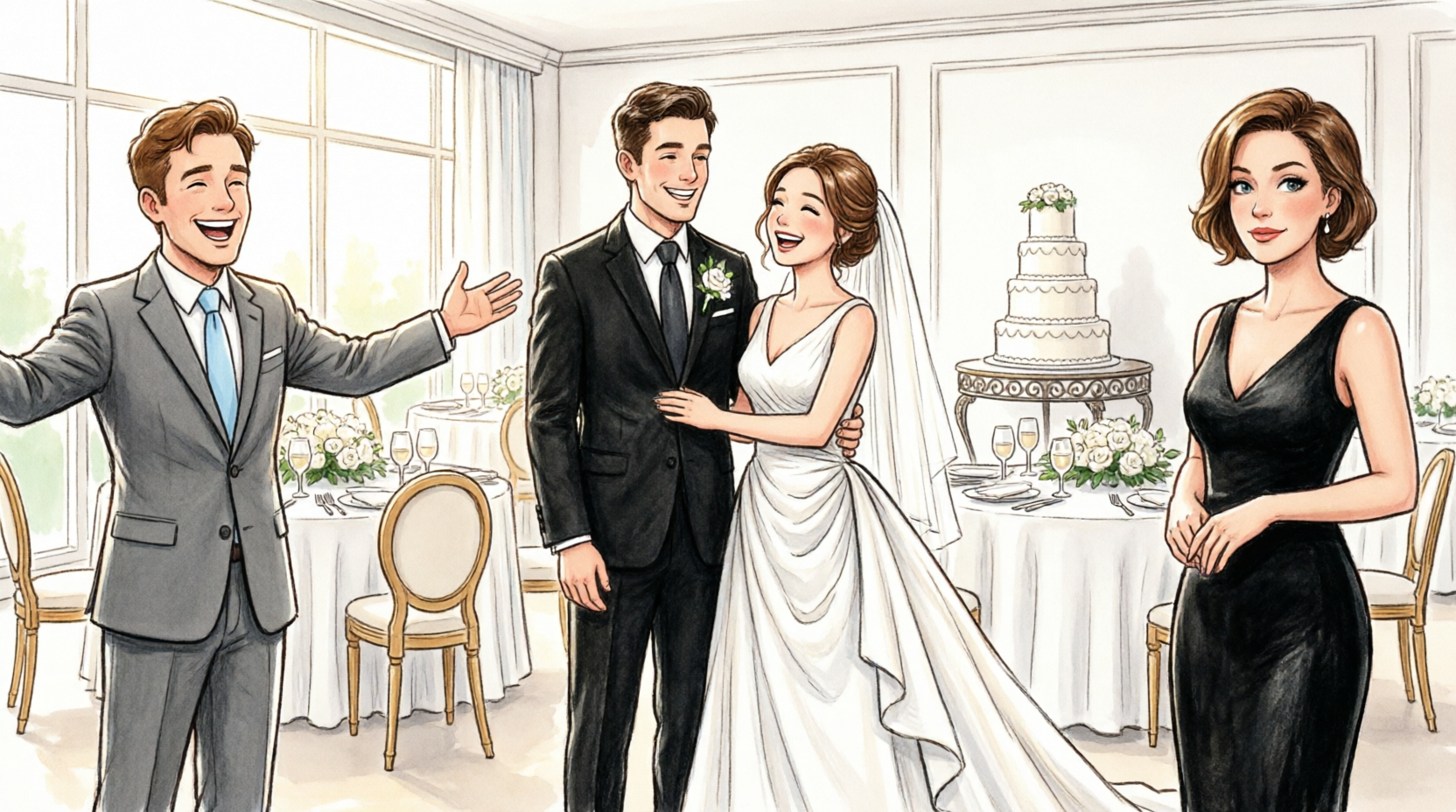
Inside, the ballroom shimmered with soft amber lighting and polished silverware. Glasses clinked. A string quartet worked hard in the corner while conversations floated over cream carpet and floral arrangements that looked more expensive than some people’s cars. The room smelled like roses, champagne, and catered beef tenderloin.
My father stood near the front greeting guests, broad and solid in a black tuxedo, his gold watch flashing every time he lifted a hand. When he saw me, something tightened in his face before it smoothed over.
No hug. No welcome.
Just a curt nod and his body angled back toward the more important people in the room.
I walked to the bar.
A woman in a cream dress stood a few steps away, not drinking, just watching the room with a smile that flickered in and out like she was performing ease. She was beautiful, yes, but what struck me first was the way she touched the base of her throat every few seconds without seeming to realize it.
Scar tissue, maybe. Or memory.
She looked down, and her gaze landed on my ring.
There. Just a shift. The briefest catch in her breathing.
At that exact moment, the quartet softened and a microphone squealed near the stage. My father stepped into the light with a champagne flute in hand, ready to tell the room who mattered.
And when the bride-to-be turned fully toward me, pale and suddenly intent, I had the strange, electric feeling that somehow, impossibly, I already knew her.
Part 5
My father loved a microphone.
Not because he liked public speaking for its own sake. He liked the control of it. The way a room had to suspend itself while he chose the version of reality everyone else would hear. He was good at that kind of thing—tone warm, smile practiced, details polished until they reflected exactly what he wanted.
“Ladies and gentlemen,” he began, lifting the champagne flute. “Thank you all for being here tonight.”
The room quieted obediently. Conversations folded away. A waiter with a tray of crab cakes stopped in place like a stagehand who knew better than to cross the scene.
“Tonight,” my father said, “we celebrate my son, Ethan Carter, and the wonderful woman he is going to marry.”
Applause. Ethan, standing near the stage, smiled in that easy handsome way of his and slipped an arm around Olivia’s waist. She smiled too, but faintly, and once again touched the base of her throat.
I picked up a glass of sparkling water from the bar and didn’t drink it.
“My family has always believed in investing in the future,” my father continued. “In discipline, in ambition, in excellence. Ethan embodies everything we value.”
More applause.
Then he said it.
“He is, without question, our only successful child.”
I didn’t move. For one strange second, the words seemed to detach from sound and hang in the air as pure information. A sentence. A choice. A living thing that had just been released into a room.
Our only successful child.
I heard a woman somewhere to my left inhale sharply. Someone else shifted a chair. Ethan’s smile twitched, barely, then resumed. My mother stared into her lap as if she’d dropped something there.
The part of me that was still eighteen flinched.
The part of me that was thirty-two got very still.
My father went on talking—Ethan’s bright future, the family legacy, Olivia joining “this proud house”—but the room had changed for me. Every chandelier bulb looked too bright. Every laugh sounded rehearsed. In the reflective silver of a serving tray, I caught a warped image of myself standing at the back like an inconvenient truth nobody had budgeted for.
I set my untouched glass on the bar and turned slightly toward the exit.
That was when the woman in cream moved in front of me.
Up close, she looked younger than I’d first thought, maybe late twenties, with dark hair pinned low and a tiny crescent-shaped scar disappearing beneath one earring. Her eyes were fixed not on my face, but on my hand.
“Excuse me,” she said softly. “I’m sorry if this is strange.”
Her voice had that roughened edge some trauma patients keep for a while after chest tubes and ventilation. My stomach dropped before my brain caught up.
“Yes?”
She pointed—almost apologetically—toward my ring. “Do you work at Redwood Medical Center?”
I looked at her properly then.
Not the dress. Not the makeup. The structure of the face beneath it. The shape of the mouth. The eyes.
A trauma bay at 2 a.m.
Blood.
Monitor alarms.
A chart clipped to a gurney.
Olivia Hayes.
“I do,” I said carefully.
Her breath caught. “Are you a surgeon?”
The noise around us thinned, receded. It’s remarkable how fast memory can clear when the body recognizes something before the mind allows it.
A cold OR.
A chest opened under white light.
A heart struggling.
My own voice saying, Hold pressure. More suction. Now.
“Olivia,” I said.
Tears filled her eyes instantly. “Oh my God.”
I saw it at the same moment she did—the certainty landing.
“You’re her,” she whispered. “You’re Dr. Carter.”
Before I could answer, Ethan appeared at her side, smile already too bright.
“Hey,” he said. “What’s going on?”
His gaze flicked to me, then to Olivia’s face, then to my ring, and in that one second I watched the entire calculation happen behind his eyes.
Do not let this become a thing.
“Do you know my sister?” he asked, voice casual and wrong.
Olivia turned to him. “Your sister?”
He laughed lightly. “Yeah. Marbel.”
“You never told me what your sister does.”
He shrugged too fast. “She works at a hospital.”
“What does she do there?” Olivia asked.
There was a half beat where he could’ve told the truth. He chose otherwise.
“Administrative stuff,” he said.
If he’d slapped me, it would’ve been less revealing.
Olivia stared at him. Then at me. Then back at him. “Administrative,” she repeated, and her voice changed. “Ethan, this woman saved my life.”
He reached for her elbow, not hard, but with clear intent to redirect. “That’s amazing. Really. We should introduce you to Lawson before he leaves—Dad wants you to meet him.”
“Did you hear what I said?”
“I heard you.”
“No,” she said, stepping back. “You didn’t.”
People nearby had started pretending not to listen, which of course meant they were listening to every word. The air took on that high, brittle quality parties get right before they break.
Ethan leaned closer to me, teeth barely moving. “Can you not do this here?”
I almost laughed. “I’m standing still, Ethan.”
“You always do this,” he muttered.
“Do what?”
“Make things weird.”
Olivia turned toward him slowly. “Why didn’t you tell me your sister is a surgeon?”
He rubbed a hand over the back of his neck. “It’s complicated.”
“No,” she said. “Complicated is a tax return. This is a lie.”
That was when my father materialized beside us, summoned by disturbance the way some men are summoned by applause.
“What’s going on?” he asked, smiling for the room while fury tightened the corners of his mouth.
“Nothing,” Ethan said quickly. “Marbel was just leaving.”
“I wasn’t,” I said.
My father’s eyes snapped to mine. There it was—that old warning current, instant and cold.
“Marbel,” he said, lowering his voice. “This is Ethan’s night.”
Olivia looked between us. “Mr. Carter, did you know your daughter is a surgeon?”
“We’re aware she works in healthcare,” my father said smoothly.
In healthcare.
Not even wrong enough to be accidental. Just vague enough to diminish.
“Works in healthcare?” Olivia repeated.
My father kept smiling for the audience gathering around us. “Tonight isn’t about job titles. It’s about family.”
A man with a pink tie and the leathery face of a golfer stepped closer. “Richard, I didn’t realize you had a daughter.”
My father’s smile sharpened. “We’re a private family.”
I stood there listening to him erase me in real time and felt something surprising happen inside me.
Nothing collapsed.
No panic. No heat behind the eyes. No desperate impulse to make this easier for everybody. Just a clear, flat understanding that he would do this forever if allowed. At graduations. At funerals. At weddings. At the edges of my life and in the middle of his. He would keep arranging language around my absence as if it were a reasonable decorative choice.
My mother appeared at Olivia’s shoulder, fingers trembling around a champagne stem. “Sweetheart,” she said to Olivia, “come meet some friends from the club.”
Then to me, in a whisper: “Please don’t.”
Don’t what?
Tell the truth? Exist at full size?
I looked at her and saw all the years she had spent choosing peace over me. Not once. Habitually. Tenderly. A thousand times in small domestic gestures.
“Mom,” I said quietly, “do you even know what I do?”
Her eyes dropped. “Marbel…”
“That’s not an answer.”
She swallowed. “I know you’re doing very well.”
Very well. Like I sold nice houses. Like I ran a respectable dental office. Like all the specifics were too dangerous to touch.
Olivia looked from my mother to me and something in her expression sharpened into comprehension. She understood more in thirty seconds than my family had allowed themselves in decades.
My father drew himself up. “If you’re not going to be supportive, perhaps it’s best if you leave.”
There it was. The old command.
Leave the table. Leave the room. Leave the narrative to the people who matter.
I straightened my shoulders.
“No,” I said.
He blinked. “Excuse me?”
“I came to celebrate my brother’s engagement,” I said, my voice calm enough that even I barely recognized it. “I’m going to stay, congratulate them, and have a drink.”
A beat of stunned silence.
“You do not need to introduce yourself to anyone,” my father said.
I met his gaze. “You don’t need to acknowledge me. I’m used to that.”
Something flashed across his face—anger first, then something closer to alarm. Because this was new. Not the disrespect. The refusal.
I turned away before he could answer and walked back to the bar. My heels clicked against marble in neat deliberate beats. I ordered sparkling water with lime because my hands were steadier when I had something cold to hold.
Across the room, I could feel eyes on me. Olivia’s most of all.
I stood by the tall windows overlooking the golf course, where the grass looked silver under the lights and expensive cars lined the drive like polished animals. I thought about leaving again. I really did. Let them have the lie. Let the evening collapse in some other direction.
Then my phone buzzed.
A message from Daniel.
Hey. Random question. Your brother Ethan—did he finish residency? I just saw him listed at a NovaPharm sales event. Thought he was still training.
I stared at the screen so long the display dimmed.
NovaPharm sales event.
Still training.
Very slowly, I lifted my eyes and looked across the ballroom at Ethan, laughing beside my father under a chandelier while Olivia stood half a step away, no longer leaning toward him.
And all at once I knew two things.
One: tonight’s lie was bigger than me.
Two: if I pulled on the right thread, the whole thing might come apart in public.
Part 6
I didn’t move right away.
That’s the funny thing about finding out you’ve been standing inside a lie. There’s never a trumpet blast. No dramatic zoom. Just your own pulse in your ears and the slow rearranging of details you already had but hadn’t assembled correctly.
I looked down at Daniel’s message again.
Did he finish residency?
NovaPharm sales event.
My thumb hovered over the screen. Then, with the same detached focus I used before an incision, I opened a browser and typed Ethan Carter.
The first result was LinkedIn.
Ethan Carter
Regional Medical Sales Representative
NovaPharm, Inc.
I clicked.
The work history was all there in bland corporate bullet points: physician outreach, territory management, product education, quarterly sales goals. Two years at NovaPharm. Before that, a brief notation about graduate medical training that ended early enough to explain everything.
No board certification. No license listing. No hospital affiliation. No fellowship. No “Dr.” anywhere unless somebody in his life had been adding it by hand.
I checked a conference bio next. Same story.
A small laugh escaped me, not because anything was funny, but because the symmetry was almost vulgar. My father had spent hundreds of thousands of dollars financing the son’s white coat fantasy while the daughter he’d dismissed had become the real thing in silence. And Ethan—golden Ethan, supported Ethan, endlessly defended Ethan—had simply stepped out of the path and let everyone keep clapping for a version of him that no longer existed.
Maybe never had.
I slipped my phone back into my clutch and leaned against the cold window. Outside, valet attendants moved under neat pools of light. Inside, the room kept pretending the floor was stable.
Olivia found me a minute later.
“Can we talk?” she asked.
Her voice was low, controlled, but the skin around her eyes had tightened. Up close I could see she’d been crying a little—not enough to ruin mascara, just enough to sharpen everything.
“Of course.”
She glanced toward Ethan, who was pretending very hard not to watch us. “I need you to tell me exactly what’s going on. And please don’t protect me.”
The directness of it made me like her instantly.
“What do you believe is going on?” I asked.
She crossed her arms loosely, like she was holding herself together by strategy now instead of instinct. “I believe your family just acted like you’re some embarrassing side note. I believe Ethan lied to me about what you do. And I believe everybody in this room is following a script I didn’t get.”
That was accurate enough to deserve honesty.
“I’m a cardiothoracic surgeon at Redwood,” I said. “Board-certified. Attending for the last few years.”
She let out a breath through her teeth, half disbelief, half anger. “So I wasn’t crazy.”
“No.”
“And Ethan knew.”
“Yes.”
She looked away. Her gaze snagged on the stage where my father was laughing too loudly at something a man in suspenders had said. “He told me you worked in administration and preferred privacy.”
“I do prefer privacy,” I said. “That part wasn’t a lie.”
A sad smile flickered and disappeared. “I don’t think he knows the difference between privacy and concealment.”
That sentence told me a lot about her.
I hesitated for exactly one second before continuing. “There’s something else.”
Her eyes came back to mine immediately. “About Ethan?”
“Yes.”
“Tell me.”
I lowered my voice. “A colleague just texted me asking whether Ethan finished residency. He saw him at a pharmaceutical sales conference.”
Her face went blank the way people’s faces do when information arrives too large to process all at once.
“That doesn’t make sense,” she said quietly.
I took out my phone and held it where only she could see. “I checked.”
She read the screen. Then again. Then once more as if repetition might improve the answer.
NovaPharm. Regional Medical Sales Representative.
A pulse beat wildly at the base of her throat. “No.”
“I’m sorry.”
“No,” she said again, but this time it wasn’t denial. It was recognition catching up.
She took a slow step back, then another. Her eyes flicked across the room toward Ethan. “He told me his shifts were irregular because he was on service. He said he couldn’t always text because he was scrubbed in. He said conferences were mandatory through the hospital.”
There are moments when betrayal reorders the face in real time. The softness drains first. Then hope. Then the self-protective explanations start dying one by one behind the eyes.
“I’m not telling you what to do,” I said. “But you deserve the truth before you marry him.”
She laughed once, flat and stunned. “Marry him?”
Across the room, Ethan noticed her expression and started toward us. She saw him, turned slightly, and held up one finger without taking her eyes off me. Stop.
He actually stopped.
That told me even more.
“Three years ago,” she said, voice uneven now, “after my accident… I woke up in ICU and my mother told me the surgeon had stayed with me for seven hours. She said there was this woman with tired eyes and a bloody cap mark on her forehead who kept saying, ‘Not yet.’” Olivia swallowed. “I looked for you afterward. I really did. I sent flowers to the unit, but nobody could tell me where you’d gone because you were in surgery again or on another service or maybe they just protect doctors from dramatic patients.”
“I remember the flowers,” I said softly. “Yellow ones.”
Her mouth parted. “You got them?”
“I did.”
She stared at me for a second and then pressed the heel of her hand against her sternum, right above the place I knew her scar lived under silk and skin. “I wanted to thank you properly. Every year on the date of the accident, I think about you.”
There are things I can handle calmly—bleeding, grief, pressure, chaos. Gratitude, oddly enough, still undoes me a little. Maybe because I received so little of it at home unless it was attached to obedience.
“You don’t owe me anything,” I said.
“That’s not true.”
Her eyes filled, but her spine straightened. Whatever softness she’d arrived with tonight had hardened into something cleaner now. Not vengeance. Clarity.
“My father just stood up there and called Ethan his only successful child,” she said. “While the woman who saved my life stood in the same room and his son let him do it.”
I didn’t answer.
“What kind of man is okay with that?” she asked, but it wasn’t really directed at me.
Ethan was trying to approach again, smile fixed, panic hidden badly. My mother intercepted him, saying something urgent I couldn’t hear. My father, meanwhile, had resumed circulating, probably assuming the disturbance was contained. That was the thing about people who control the story for too long—they stop recognizing the sound of it cracking.
Olivia looked toward the stage.
“I was supposed to give a speech tonight,” she said.
Something in my stomach tightened. “Olivia.”
“I was going to thank Ethan’s family. Talk about love and future and how lucky I feel.”
“You don’t have to do anything tonight,” I said. “You could leave. You could call it off tomorrow. You could confront him in private.”
She shook her head slowly. “Private is where lies go to survive.”
That one hit me harder than I expected.
I looked at her—really looked. The slight tremor in her fingers. The flush rising under her makeup. The fury and humiliation and heartbreak fighting for room behind her eyes. A woman realizing she had nearly handed her whole life to a fabrication.
“Are you sure?” I asked.
“No,” she said honestly. “But I am sure I won’t stand up there and help them polish this.”
I should’ve told her to think. To breathe. To wait until emotions cooled. That’s what reasonable people say.
But I am a surgeon, and surgeons know sometimes waiting is just a prettier word for bleeding out.
“If you do this,” I said, “they’ll try to make you look irrational.”
She gave a short bitter smile. “Then I’ll have to be very calm.”
I almost smiled back.
She touched my forearm lightly. “Will you stay near me?”
It would’ve been easier to say no. Easier to step outside, call a car, and let the family drama detonate without me in the blast radius. Easier to protect the life I’d built by refusing to be pulled into theirs.
But I thought of the nineteen-year-old me sitting alone in a dorm room with duct-taped sneakers. The twenty-six-year-old me opening a Christmas card centered on Ethan’s future. The woman my father had just publicly erased twenty feet from the bar.
And I thought of the sentence Olivia had said.
Private is where lies go to survive.
“Yes,” I said. “I’ll stay.”
Her exhale shuddered just once. Then she straightened her shoulders, wiped beneath one eye without smearing anything, and started walking toward the stage.
The host—some club coordinator in a tux with too much hair product—saw her coming and brightened. “And now,” he said into the microphone, “our lovely bride-to-be would like to share a few words.”
Polite applause scattered through the room.
Ethan’s whole face changed.
Not enough for everyone else. Enough for me.
He knew.
He moved toward the stairs at the edge of the stage, probably thinking he could manage her, redirect her, wrap an arm around her waist and steer the ship back into safe waters. My father turned too, smiling proudly, his posture settling into pre-congratulation mode. My mother pressed both hands around her glass so hard I thought it might crack.
Olivia stepped into the spotlight.
She looked radiant, which felt unfair to the occasion. Cream silk, dark hair, chin high. But now I could see what everyone else probably couldn’t: her right hand was shaking, just slightly, against the microphone stand.
The room fell quiet.
She looked out at the guests, then found me near the back.
“Thank you all for being here tonight,” she said.
Her voice came out clear. Stronger than before.
Then she took a breath, and I knew from the look on Ethan’s face that whatever happened next, there would be no containing it.
Part 7
There’s a specific hush that falls over wealthy rooms when people sense impropriety.
It isn’t true silence. It’s more like the sound gets thinner. Forks stop halfway to plates. People keep smiling but their eyes sharpen. They become very interested in whether the evening is about to offer them entertainment disguised as concern.
Silverwood had that hush in abundance.
Olivia held the microphone with both hands now, anchoring herself. The spotlight made the cream silk of her dress look almost white. Ethan stood just below the stage, close enough to intervene if he decided to. My father was near the front, face arranged into attentive warmth. My mother’s smile had become painful to look at.
“Thank you all for being here,” Olivia said again. “I know tonight is supposed to be about celebration.”
A few guests nodded. Someone raised a glass.
“But before I talk about the future,” she continued, “I need to say something about the past. Specifically, about a night three years ago when I almost died.”
That got the room’s full attention.
You could feel people leaning inward without moving.
“Some of you know I was in a serious car accident,” she said. “A truck ran a red light. My chest was crushed. I had internal bleeding. My family was told I probably wouldn’t survive the night.”
The words landed hard enough that even those who’d been politely distracted were fully present now. A woman near me put a hand over her mouth. A man with silver hair lowered his drink.
“I did survive,” Olivia said, voice steadying as she went. “Because one surgeon refused to give up on me.”
My heartbeat started thudding high in my throat.
She turned and looked directly at me.
“That surgeon is here tonight.”
The room moved in one collective ripple. Heads turned. A hundred and fifty people trying to determine where the story was pointing.
Olivia lifted one hand and indicated me without drama, which somehow made it more devastating.
“Her name is Dr. Marbel Carter,” she said. “She’s a cardiothoracic surgeon at Redwood Medical Center. And she saved my life.”
For a split second, nothing happened.
Then the whispers began.
Not loud. Not crude. Just enough. Like rain starting on leaves.
Dr. Carter?
His daughter?
I thought they only had a son.
A surgeon?
Olivia didn’t rush. She let the room absorb it. Then she delivered the second cut.
“She’s also Ethan’s sister.”
That did it.
The whispers sharpened. Surprise became appetite. My father’s smile finally cracked at one corner. Ethan looked up at Olivia like she’d just started speaking a language he didn’t know.
“I didn’t know that until tonight,” Olivia went on. “Because Ethan never told me his sister was a surgeon. In fact, I was led to believe she worked in hospital administration.”
There was no missing the accusation now.
I should have felt exposed. Cornered. Instead I felt something close to weightlessness, as if the effort of keeping their lie from touching me had ended before I’d realized how heavy it was.
A man near the front—someone I vaguely recognized from a conference—turned halfway in my direction. “Did she say Redwood?”
“Yes,” the woman beside him whispered. “Richard’s daughter? Why would he…”
Olivia’s voice hardened by a fraction. “What confuses me is that just a few minutes ago, Mr. Carter stood on this stage and called Ethan his only successful child.”
Every face in the room shifted toward my father.
There are moments when truth doesn’t explode. It peels. Slowly, publicly, while the person being stripped bare tries to keep smiling like it’s all a misunderstanding.
My father lifted a hand. “Olivia, perhaps this isn’t—”
“No,” she said, still calm. “I think it is.”
Silence.
She turned again toward me. “Marbel, would you come up here?”
There it was: the doorway.
The old version of me would have stayed at the back. Hands clasped. Smile small. Let them sort themselves out. Let the discomfort pass around me like weather.
But the old version of me had spent too many years making herself easy to erase.
So I stepped forward.
My heels clicked on the marble. Not loud, but the room heard them. The crowd parted in that instinctive way people do when they’re no longer sure whether you’re guest, witness, or evidence. I climbed the steps to the stage without rushing.
Olivia took my hand when I reached her. Her grip was warm and steady despite the tremor I could still feel in it.
Under the lights, the ballroom looked different. Smaller somehow. More artificial. I could see every expression clearly now—curiosity, discomfort, excitement, pity, fascination. I could see Ethan’s fury, bright and raw. My father’s control, struggling to hold. My mother’s shame.
Then a male voice from the crowd cut through.
“Dr. Carter?”
I turned.
A tall man in his fifties with rimless glasses had stepped slightly forward from a table near the dance floor. Recognition came a second later. Dr. Steven Brooks, vascular surgery, regional conference circuit, always asked long questions during panels and wore bow ties like it was a calling.
“We met at the National Cardiology Summit last spring,” he said. “Your presentation on minimally invasive valve repair was exceptional.”
That landed in the room like another dropped plate.
My father looked at me then—not as his daughter, not exactly. More like a piece of information he had failed to control. Something newly dangerous.
“Thank you,” I said.
Olivia leaned toward the microphone again. “For those who don’t know—and that apparently includes people who should—Dr. Carter is one of the most accomplished surgeons in her field. She saved my life. And I would very much like someone to explain why a family would act as if she doesn’t exist.”
Nobody volunteered.
My father cleared his throat. “This is hardly the appropriate place for family misunderstandings.”
Family misunderstandings.
The phrase was elegant in the way lies often are when dressed for company.
Before I could speak, a woman at one of the back tables said, not particularly softly, “That didn’t sound like a misunderstanding to me.”
A few heads turned. Then another voice: “Richard, why have you never mentioned your daughter?”
My father’s face tightened. “We are a private family.”
And there it was again. The shield. Privacy. Taste. Restraint. All the respectable words used to disguise exclusion.
Olivia looked at him with a kind of stunned disgust. “Private?” she repeated. “You publicly praised your son. You publicly erased your daughter.”
The first clap came from somewhere near the center of the room.
Just one.
Then another.
Then a third, stronger, from Dr. Brooks. Within seconds the sound spread, awkward at first and then undeniably real. Applause. Not for the engagement. Not for my father. For me.
I hadn’t prepared for that. My body did not know what to do with it. Heat climbed my neck. My eyes burned unexpectedly. I kept my face composed because that’s what years of training had taught it to do, but inside I felt briefly, violently untethered.
Olivia handed me the microphone.
I looked at it for half a second, then at the room.
I could have said everything. The scholarship letter. The dinner table. The Christmas cards. The absence. The years of labor done under the weight of their dismissal. I could have flayed them.
Instead I heard my own voice come out low and even.
“Thank you, Olivia. And thank you all for your kindness.”
The applause faded.
“I didn’t come here to cause a scene,” I said. “I came because Ethan is my brother, and I wanted to wish him well.”
Out of the corner of my eye, I saw my father relax almost imperceptibly. He thought I was choosing decorum. He thought I would protect him if given the chance.
He was wrong.
“I’m not here to make anyone uncomfortable,” I continued. “But I’m also not going to pretend to be someone I’m not.”
I let my gaze settle on my father.
“I’m not an administrator. I’m not just a relative. I’m a cardiothoracic surgeon.”
You could hear the words move through the room.
“I spent twelve years training for that career,” I said. “I paid for it myself. Every year. Every exam. Every step.”
No theatrics. Just fact. Fact had enough edge on its own.
“I don’t need anyone’s approval,” I said, and realized as I said it that it was finally true. “But I also won’t stand here and let people who should have supported me act as if I don’t exist.”
I put the microphone back on the stand.
“That’s all.”
For a beat, the room held.
Then Ethan surged up the steps.
“Are you serious?” he snapped, grabbing the microphone. His voice cracked through the speakers too loudly. “This is my engagement party!”
Olivia stepped away from him. “Then maybe you shouldn’t have built it on lies.”
His face turned red. “Oh, come on. She’s always been like this. Always making everything about her.”
I almost admired the predictability of it.
“Ethan,” I said quietly, “I answered a question.”
He pointed at me with the hand not gripping the microphone. “You abandoned this family. You never come home. You act like you’re better than us.”
There it was. The old family script dragged into public: if I refused mistreatment, that made me arrogant. If I protected myself, that made me cold.
Olivia stared at him with disbelief that was turning, visibly, into contempt.
“When were you planning to tell everyone,” I asked, “that you dropped out of residency two years ago?”
The microphone in Ethan’s hand squealed as his grip tightened.
The room went dead still.
Even the quartet had stopped.
He looked at me, and for the first time all evening, he had no expression ready. No practiced smile. No glib redirect. Just naked panic.
“What?” Olivia said.
I didn’t look away from Ethan.
“You’re not becoming a doctor,” I said. “You work in pharmaceutical sales. You have for two years.”
A sound moved through the crowd—shock, recognition, delight, horror, all braided together.
Olivia took one slow breath. Then, without drama, she slid the engagement ring off her finger.
She placed it in Ethan’s hand.
The metal clicked softly against his skin.
And in the echo of that tiny sound, I knew the evening had just crossed a line none of us could uncross.
Part 8
I have opened a chest cavity with steadier hands than the ones I had in that moment.
Not because I regretted saying it. Because once truth is spoken in a room built on image, it behaves unpredictably. It ricochets. It shatters things you expected and things you didn’t.
Ethan stared down at the ring in his palm like he didn’t recognize it.
Olivia’s face had gone still in a way that made her look older and somehow calmer. Not less hurt. Past hurt. Hurt organized into decision.
“I asked you for one thing,” she said. No microphone now. She didn’t need one. The room was listening from inside its own bloodstream. “One thing. Honesty.”
“Olivia,” Ethan said, voice low and urgent, “please. Not here.”
“Where, then? In the car on the way home? Over cake? After we send thank-you notes?”
He looked around wildly, as if surely somebody would step in and rescue him from consequences. My father moved toward the stage. My mother remained frozen halfway between a table and the dance floor, one hand pressed to her necklace like she was keeping herself from coming apart physically.
“You don’t understand,” Ethan said.
The phrase was almost funny.
Olivia gave a small stunned shake of her head. “Then explain it to me.”
He opened his mouth. Closed it. Opened it again. “I was going to tell you.”
“When?”
“Soon.”
She laughed once, and it was the saddest sound I’d heard all night. “There’s no ‘soon’ left, Ethan.”
My father stepped up the stairs then, every inch the corporate fixer walking into a meeting that had gotten messier than expected.
“Enough,” he said, not loudly, but with the assumption of obedience built into the word. He turned toward the guests and spread a hand in a bland calming gesture. “I think there’s been a misunderstanding.”
Dr. Brooks, from near the dance floor, said, “Richard, this seems like rather more than that.”
My father ignored him. “Olivia, emotions are high. These things are best handled privately.”
There was that word again. Privately. Tidy things up. Reframe. Move the bloodstain behind a closed door and tell everyone it was spilled wine.
Olivia looked at him with open disbelief now. “Privately? You let me stand here in front of everyone and celebrate a man who has lied to me about his whole life.”
My father’s jaw tightened. “Ethan has been under pressure.”
Something in me snapped cleanly at that. Not loudly. More like a cable finally pulled past its limit.
“Pressure,” I repeated.
He turned to me, warning already in his eyes. “Marbel—”
“No,” I said. “We’re not doing this again.”
The room sharpened around us.
“You paid for his education,” I said. “You supported every decision he made. And when he quit, you let everyone keep believing he was on track because it was easier than admitting the truth.”
“That is not your concern,” my father said.
I almost smiled. “My concern is wherever my name gets erased to protect a lie.”
His face darkened. “This is still your brother.”
“And I’m still your daughter.”
That one hit.
You could see it. Not remorse. Not yet. But impact. A fact he hadn’t expected me to state in public, because fatherhood sounds noble in a ballroom until someone asks what, exactly, you’ve done with it.
Ethan finally found his voice again. “I left residency because it wasn’t right for me.”
There it was. The first honest sentence of the evening.
Olivia turned toward him. “Then why didn’t you say that?”
He looked miserable, but not in a way that made me pity him. Miserable the way people look when they’ve run out of exits they counted on.
“Because everyone had expectations.”
“Everyone?”
His eyes flicked to my father and back. A whole childhood lived in that one glance.
Olivia’s expression shifted, just slightly. She saw it too. The mechanism. The golden child molded into performance and then trapped inside it. But sympathy isn’t the same as trust.
“You lied to me,” she said. “Repeatedly. For two years.”
“I didn’t know how to stop.”
That, at least, sounded true.
The room had split into little zones now—people pretending to sip drinks while not swallowing, people whispering at table edges, people watching with thinly disguised fascination. A server stood near the doorway holding a tray of mini crab cakes that nobody had taken from in ten full minutes.
I suddenly felt very tired.
Not weak. Just done. Done with all of it. The country club. The chandelier light. The smell of roses and money and old family rot.
Then something unexpected happened.
My mother climbed the stage.
If you’d known Diane Carter in any context before that night, you would understand how astonishing this was. My mother did not enter scenes. She smoothed them from the edge. She changed subjects. Refilled water glasses. Redirected children. Apologized with casseroles. She was a woman who had built an entire identity around surviving conflict by never standing in the center of it.
But she walked up the steps, slowly and visibly trembling, and for the first time in my life, she did not try to lower the temperature of the room.
She looked at me.
Not at Ethan. Not at my father. Me.
“I’m sorry,” she said.
That was all at first.
The room seemed to contract around the words.
My father turned toward her sharply. “Diane.”
She didn’t even look at him.
“I’m sorry,” she said again, voice shaking harder now. “I knew. Not everything. But enough. I knew what you were doing. I knew what she had become. I knew you would never say it.”
For one disorienting second, I thought she might faint. Her face had gone pale under the makeup, and the hand at her throat was trembling visibly. But when she stepped toward me, her spine straightened a little.
“I read about your work,” she whispered. “I looked you up. Every article. Every hospital announcement. Every promotion.”
I stared at her.
“You knew.”
Tears filled her eyes. “Yes.”
“Then why,” I asked, and my voice came out thinner than I meant it to, “why didn’t you ever say anything?”
The ballroom had gone so quiet I could hear the air-conditioning cycle on.
My mother swallowed. “Because I was afraid.”
Of course.
But this time she kept going.
“Afraid of your father. Afraid of making things worse. Afraid of seeing how much I had already failed you.” Her mouth trembled. “And then the longer it went on, the more ashamed I was. Shame makes cowards out of people, Marbel.”
There it was. Ugly and small and finally honest.
I looked at her—really looked. The fine lines around her eyes. The years of compromise set into her face like weathering. I had spent so long wanting some grand explanation for her passivity, something nobler than fear. There wasn’t one.
She took another step. “You were eighteen,” she said. “And I let him convince you that you were less important.”
My eyes burned. I hated that. I hated crying in rooms where other people could watch. But my mother had almost never chosen me in public, and apparently some childish part of my body had kept that wound open all these years waiting to see if it ever would.
“You had a choice every day,” I said quietly.
“Yes.” Her tears spilled over. “And I made the wrong one.”
My father’s face had gone rigid. Ethan stood beside him looking smaller by the second, still holding the ring like a useless artifact.
Then Olivia, who had been watching all of this with her hand pressed over the scar beneath her collarbone, spoke again.
“I’m leaving,” she said.
Ethan turned toward her instantly. “Olivia, wait—”
“No.”
The simplicity of it cut cleaner than rage.
“I loved the person I thought you were,” she said. “Maybe some part of him exists. But I don’t know him. And I’m not marrying a performance.”
She stepped down from the stage. The room parted for her more quickly than it had for me. People always understand an exit better than a reckoning.
Ethan moved as if to follow, but stopped when she didn’t look back.
The ring slipped from his hand.
It hit the stage floor with a small metallic sound and rolled in a bright circle toward the edge.
Nobody picked it up.
I looked from Ethan to my father to my mother, and in that instant I understood something I hadn’t come there expecting to learn: the golden child isn’t golden. He’s just the child a system feeds until he forgets who he is without it.
That didn’t absolve him. It just made the whole thing sadder.
My mother reached for my hand then, and after one suspended second, I let her take it.
Her fingers were cold.
My father watched us, silent for once, and the expression on his face was not one I had ever seen turned toward me before.
It wasn’t anger.
It was fear.
And I realized, with a clarity that almost felt merciful, that he was finally seeing the one thing he had spent my whole life refusing to see:
I did not need him anymore.
Part 9
The party ended without anyone formally ending it.
That’s how respectable disasters usually work. Nobody announces, Well, this has become unbearable. People simply begin leaving in clusters, collecting wraps and husbands and half-finished drinks. The quartet packed up in embarrassed silence. Waiters started clearing untouched desserts. Conversations broke into whispers in hallways and by coat racks where women with lacquered nails murmured things like “unfortunate” and “about time” and “I always thought something felt off.”
I stood near the edge of the stage with my mother’s hand still loosely around mine, and I felt nothing like victory.
Relief, yes. Exhaustion, definitely. But no triumph. Exposing rot doesn’t make you happy. It just makes the smell impossible to ignore.
My father remained where he was for a long moment, looking out over the room as if some authority might still return to him if he stood straight enough. Then he turned toward me.
“Can we talk?” he said.
It was the first sentence he’d said to me all night that sounded like a request.
I looked at him and saw the age in him more clearly than ever before. The deep grooves beside his mouth. The stiffness in his shoulders. The way his carefully combed hair had shifted at the temples. He looked like a man who had spent decades confusing control with love and had just watched the difference become public.
“Not here,” I said.
His jaw clenched at once, old irritation surfacing. “Marbel.”
I tilted my head. “You don’t get to command the terms anymore.”
The words were quiet, but they landed. He knew it too.
My mother let go of my hand and stepped back, as if the three of us had reached some invisible line she no longer wanted to stand on. Ethan was gone. Whether he’d fled after Olivia or disappeared into a side room to come apart in private, I didn’t know.
My father took a slow breath. “I was trying to protect this family.”
I almost laughed.
“No,” I said. “You were trying to protect the image of this family.”
“That matters.”
“To you.”
“It matters in the real world.”
I looked around at the ballroom—tables with abandoned coffee cups, centerpieces beginning to sag, guests pretending not to stare while very obviously staring. “This is your real world,” I said. “Mine starts at five in the morning in an operating room.”
He rubbed a hand over his mouth. It was such an uncharacteristic gesture I nearly missed its significance. Richard Carter did not fidget. He did not self-soothe in public. He weaponized steadiness.
“You don’t understand what was at stake for Ethan,” he said.
“Then explain it.”
His eyes flashed. He was not a man used to being forced into specifics.
“He struggled,” he said finally. “More than he should have. More than we expected. He said the pressure was… not what he thought.”
Pressure. There it was again, the family’s favorite euphemism for consequences.
“And instead of letting him own that,” I said, “you built him a cover story.”
“I bought him time.”
“With Olivia?”
“With everyone.”
I let that sit between us.
He wasn’t remorseful, not really. He was logistical. He genuinely believed management had been the humane response. Reputation first. Truth later, maybe.
“What about me?” I asked.
He looked at me like he hadn’t prepared for that angle, which told me everything.
“You made your own choices,” he said.
I smiled then, small and sharp. “That’s what you tell yourself?”
“Isn’t it true?”
“No. What’s true is that when I asked for help, you told me to find a husband.”
His face changed by half a degree. Not enough for anyone else. Enough for me.
“That was a different time.”
I stared at him. “It was fourteen years ago, not the Civil War.”
For the first time all evening, my mother made a sound that was almost a laugh. It came out strained and immediately died, but still. I noticed.
My father didn’t.
“You were always capable,” he said, as if this were somehow exonerating. “I knew you would land on your feet.”
The room seemed to tilt for a second.
There are excuses so selfish they pretend to be compliments.
“You starved one child and called it confidence,” I said. “You overfed the other and called it love.”
His nostrils flared. “That is not fair.”
I stepped closer. “No. What was unfair was deciding I was not worth investing in because I was born female.”
He opened his mouth. Closed it. Opened it again. For all his practiced speaking, he had no ready language for being named accurately.
From the corner of my eye, I saw Olivia near the entrance in her cream dress, coat around her shoulders now, talking quietly to one of the valet attendants. She glanced once toward the stage, found me, and held my gaze long enough for me to know she wasn’t collapsing. She was leaving. On purpose. Upright.
Good.
My mother spoke before my father could recover.
“She’s right.”
His head snapped toward her. “Diane.”
“No.” Her voice shook, but she held it. “Don’t ‘Diane’ me now.”
The sheer rarity of hearing my mother push back almost stole my breath.
She looked at him—not at the room, not at the social fallout, but at him. “You always said sons needed legacy and daughters needed protection. I let you say it. I let you live by it. And I let it cost her everything.”
“It didn’t cost her everything,” he said defensively, and gestured toward me as if my life itself proved him innocent. “Look at her. She’s successful.”
I felt something cold and final move through me.
“Success is not retroactive parenting,” I said.
That shut him up.
He stared at me like he’d never heard anyone put it that way before. Maybe he hadn’t. People around men like my father often soften truths to survive them.
Not tonight.
A few more guests drifted past us toward the exit. Dr. Brooks gave me a respectful nod on his way out. A woman in emerald silk whom I dimly remembered from some neighborhood Christmas party twenty years earlier squeezed my elbow and said, “For what it’s worth, I’m proud of you.” Then she moved on before I had to answer.
My father watched all of that happen—the respect that had nothing to do with him, the support he could neither orchestrate nor interrupt—and I saw the final stage of his unraveling.
He was not afraid of losing me.
He was afraid of losing authority over the story of me.
That difference mattered.
My mother turned back to me. “Will you call me?” she asked.
It was such a fragile question. Not Will you forgive me. Not Can we fix this. Just the smallest possible request that acknowledged she no longer had a right to expect access.
“Yes,” I said after a moment. “But things are not going back to how they were.”
Her eyes filled. “They shouldn’t.”
My father looked between us. “So that’s it? One ugly evening and I’m cast as the villain?”
I almost admired the instinct. If he could make himself the injured party quickly enough, maybe he wouldn’t have to sit with what he’d done.
“No,” I said. “One ugly lifetime, and tonight people finally saw it.”
The words hung there.
He looked away first.
Not me.
Him.
I think that was the moment it truly ended—not the stage, not Olivia’s speech, not the ring. That. My father, unable to hold my gaze because somewhere beneath all his justifications, he knew the accusation was true.
I stepped down from the stage.
Near the entrance, Olivia waited until I reached her. Up close, she looked exhausted but astonishingly composed, as if once the decision was made, her body had stopped wasting energy on doubt.
“I’m sorry your life got detonated at your own engagement party,” I said.
A surprised laugh escaped her. “I think it was already detonated. I just finally heard the blast.”
“That’s fair.”
She studied my face for a moment. “Do you regret telling me?”
“No.”
“Good.” She nodded once. “Neither do I.”
The valet brought her car around. She took the ticket, then hesitated. “Three years ago, when I woke up in the hospital, you told me the hardest part was over.”
“I did.”
She looked back toward the ballroom, where my family still stood in pieces under the chandeliers. “Tonight feels awful,” she said. “But somehow it also feels like breathing.”
I knew exactly what she meant.
“The hardest part is over,” I told her again.
This time, her smile reached her eyes.
She squeezed my forearm, got into her car, and drove away.
I stood in the cool night air for another minute, waiting for my rideshare, the country club doors muffling the last of the party behind me. The smell of cut grass and gasoline felt cleaner than anything inside.
My phone buzzed.
Unknown number.
For one irrational second I wondered if it was Ethan. It wasn’t.
It was my father.
Can we talk tomorrow?
I stared at the message with the parking lot lights reflecting off the screen. After everything, the sentence felt almost absurdly small. A man who had narrated my life without consulting me now asking for an appointment.
I typed back before I could overthink it.
When you’re ready to listen, I’m here.
Then I slid the phone into my bag and got into the waiting car, not knowing that by morning the story would be everywhere my father most feared it—through phone calls, through whispers, through the exact social circle he’d spent decades curating.
And for the first time in years, that thought did not scare me.
It felt like oxygen.
Part 10
Monday morning, I opened a man’s chest at 7:12 a.m. and held his heart in my hands by 8:03.
That was not me being poetic. It was simply the schedule.
Aortic dissection. Fifty-six-year-old high school principal. Collapsed in his driveway. Wife in the waiting room gripping a coffee she never drank. It was the kind of case that left no room for personal drama, which was ideal because by then my family had spent thirty-six hours detonating my phone.
Missed calls from my mother. Two from Ethan. Three texts from numbers I vaguely recognized from Oakridge Hills. A message from an aunt in Delaware that just said, Heard there was a scene? Are you okay? like we were discussing weather.
I put the phone face down in my locker and scrubbed in.
There’s a mercy in surgery when your personal life is noisy. The body is immediate. It does not care about old wounds unless they shake your hands. Mine never do. Not there.
When the case went well—because sometimes they do, and you thank science and luck and the whole chain of competent people who got the patient to your table alive—I stood in recovery dictating notes with dried sweat at my hairline and the familiar ache between my shoulder blades. The patient’s wife grabbed both my hands when I updated her.
“Thank you,” she said, crying openly. “Thank you for giving him back.”
It should not have mattered more than it already did, but coming forty-eight hours after my father declared me nonexistent in a ballroom, it hit some deep private place. Here, in fluorescent waiting-room light, I was not invisible. Not to the people who needed me most.
By noon I finally checked my phone.
Twenty-three notifications.
A text from Daniel sat near the top.
You survived? Also, Redwood group chat is one cousin away from becoming a soap opera. Coffee later?
I laughed under my breath.
Another message from Olivia.
I’m okay. Slept maybe two hours. Have already canceled the venue deposit for the wedding and scheduled therapy. Felt like you should know I’m choosing myself while nauseous but upright.
I typed back: Good. Nauseous but upright is an underrated life stage.
She replied with a single laughing emoji and then: He keeps calling. I’m not answering.
I put the phone away and went to find coffee.
Daniel was in the physicians’ lounge leaning over the counter reading something on his tablet. He looked up the second I walked in.
“There she is,” he said. “The woman, the myth, the country club insurgent.”
“Please never call me that again.”
“No promises.”
He pushed a coffee toward me. “How bad?”
“Depends. On a scale from awkward to generational collapse?”
He grinned. “Ah. So severe.”
I told him enough to satisfy curiosity without turning the whole thing into theater. Olivia’s speech. Ethan’s job. My mother’s apology. My father’s texts. Daniel listened the way good doctors do—with attention that wasn’t hungry.
When I finished, he whistled softly. “Well. That’s one way to clear a family abscess.”
“That metaphor is disgusting.”
“And medically sound.”
I took the coffee. It was terrible. I appreciated it anyway.
“What are you going to do?” he asked.
“About what?”
“Your father.”
I looked through the lounge window at the parking structure beyond it, all concrete and heat shimmer. “Nothing immediately.”
“Good.”
“You say that like you expected me to schedule a reconciliation before rounds.”
“I know surgeons. You people love an intervention.”
“Not with chronic pathology,” I said.
He laughed, then sobered. “Marbel, whatever you do, don’t let the fact that he finally got embarrassed make you confuse that with change.”
That landed because it was exactly what I’d been trying not to tell myself. Public shame can look a lot like awakening for about five minutes, especially if you’ve spent years desperate for any sign of movement.
“I know,” I said.
He studied me. “Do you?”
“Yes.”
He nodded, apparently satisfied enough.
By that evening, fallout had become logistics.
My mother called from the grocery store parking lot, of all places. I could hear shopping carts rattling and somebody’s child whining in the background.
“Olivia called off the engagement,” she said.
“I know.”
“She sent Ethan’s things back to his apartment with her brother.”
“That sounds efficient.”
My mother gave a tired little exhale that might’ve been a laugh if she’d had more energy. “Your father is furious.”
“About the lies? Or about being embarrassed?”
Silence. Then, quietly: “Both, but not in equal amounts.”
That was honest enough to hurt.
“What about Ethan?”
“He says he left medicine because he was miserable. He says he thought once he got settled at NovaPharm he’d tell Olivia, but then the longer he waited…” Her voice trailed off.
“The harder it got.”
“Yes.”
I leaned against my kitchen counter, staring at a bowl of oranges I kept buying and forgetting to eat. “That part I believe.”
My mother hesitated. “Your father cut him off.”
That surprised me less than it might have once. Support in our house had always been conditional. Ethan was just getting the version of that system I’d known from the beginning.
“He says Ethan needs to stand on his own feet now,” she added.
The irony was so clean it almost glittered.
“And how does Ethan feel about that?”
“He says it’s unfair.”
I closed my eyes briefly. “Of course he does.”
My mother was quiet a moment. Then, softly: “I started counseling.”
That made me straighten.
“You did?”
“Yes. I had my first appointment this afternoon.” I heard her swallow. “The therapist asked me why I stayed silent for so long. I didn’t know how to answer without sounding pathetic.”
“That doesn’t sound pathetic,” I said. “It sounds honest.”
“Honest isn’t a mode I’m very practiced in.”
No, I thought. It isn’t.
But I didn’t say it out loud. She had finally moved one inch toward the truth. I wasn’t going to punish the movement just because it was late.
“What do you want from me?” I asked.
The question seemed to startle her.
“Nothing,” she said quickly. “I mean—I don’t think I get to want anything yet. I just… I wanted you to know I’m trying.”
That word almost undid me more than an apology could have. Trying. Small. Imperfect. Not redemptive. But real.
“Okay,” I said.
After we hung up, I made actual dinner for the first time in a week and ate it at the table instead of over the sink. Small signs of psychological stability.
At 9:17 p.m., Ethan texted.
You humiliated me.
I looked at the message for a long time before typing back.
No. Your choices did.
Three dots appeared. Disappeared. Reappeared.
You never wanted me to succeed.
That one got an actual laugh out of me. Tired, incredulous, a little cruel.
I replied: You were handed every chance I had to create for myself. What you did with them was up to you.
He didn’t answer after that.
Two days later, my father emailed.
I would like to meet in person. There are matters we need to discuss as adults.
As adults.
The phrasing annoyed me so instantly I nearly deleted the message. Not because it was offensive, exactly, but because it implied this was a negotiation between equals suddenly entering mature territory, instead of a father arriving decades late to a reckoning his daughter had already survived without him.
Still, I agreed to meet. Public place. Saturday. Noon. A hotel restaurant halfway between Oakridge Hills and the hospital.
Not because I hoped for healing. Because I wanted clarity.
The week leading up to it, I found myself remembering random things I hadn’t thought about in years. The smell of my father’s leather briefcase. The way Ethan used to leave cereal bowls in the sink and no one made him rinse them. My own acceptance letter, folded smaller and smaller in my hands until the paper softened at the creases. Trauma memory doesn’t stay neatly in the past when the body thinks a source of it may reappear.
Friday night, Olivia texted again.
Do you ever stop feeling stupid after you discover a lie that big?
I answered from bed, one lamp on, rain tapping lightly against my windows.
No. You just start understanding that trust says more about the person who offered it than the one who abused it.
She took five minutes to answer.
I like that. Also, my mother would like to send you baked ziti, which means she has decided you are family now.
I smiled despite everything.
Tell your mother that is both emotionally aggressive and deeply kind.
The baked ziti arrived Saturday morning in a glass dish still warm.
I laughed when I saw it, standing barefoot in my kitchen in a black sweater and jeans, about to leave for lunch with the man who had once told me daughters were not worth educating.
It felt absurd, and because it felt absurd, it also felt a little hopeful in an unexpected direction. Not romantic. Not redemptive. Just proof that life, annoyingly, keeps making room for new loyalties while old ones rot.
At 11:42, I parked outside the hotel restaurant.
My father was already there.
Through the window I could see him seated upright in a booth, white shirt crisp, jacket folded beside him, hands clasped on the table as if this were a business meeting he intended to win.
I stood on the sidewalk for a second, keys in hand, and realized my heart was calm.
Not numb. Not braced.
Just calm.
And that scared me a little, because it meant whatever happened next, I had finally crossed into the one territory he had never prepared me for:
I no longer needed anything from him at all.
Part 11
The restaurant was one of those hotel places designed to offend no one—muted carpet, polished wood, little brass lamps on the tables, a pianist in the corner doing soft violent things to old jazz standards. It smelled faintly of coffee, lemon oil, and money spent on not having a point of view.
My father stood when I approached the booth.
That alone was strange enough to feel theatrical.
“Marbel.”
“Dad.”
We sat. A waiter appeared with water and menus neither of us touched.
Up close, he looked worse than he had at the engagement party. Not devastated. He was not a man built for visible devastation. But strained. The skin under his eyes had a gray cast. His mouth seemed to have forgotten how to settle naturally.
For a minute we performed the meaningless ritual.
“How’s work?”
“Busy.”
“How’s your mother?”
“Trying.”
Then the waiter came back, and my father ordered coffee he would barely drink, and I asked for tea mostly to have a reason not to fill silence.
When we were alone again, he folded his hands.
“I owe you an apology,” he said.
If I’d wanted to be cruel, I could’ve told him it was at least fourteen years overdue and still underdelivered. Instead I just looked at him.
“For what?” I asked.
His jaw tightened at once.
He had hoped, I realized, that the sentence itself might count. The offering of apology as proof of character, without the messy requirement of naming the harm.
“For… the way things were handled at the party.”
I almost smiled. There it was again. Passive voice. Things were handled. As if the evening had been managed badly by weather.
“No,” I said. “Try again.”
His eyes sharpened. “I came here in good faith.”
“So did I.”
A beat.
He looked down at the table, at the water glass, anywhere but directly into the center of what he’d done. “I should not have said Ethan was my only successful child.”
“That’s one thing.”
He exhaled, slow and controlled. “And I should have acknowledged your accomplishments.”
Acknowledged. Like I’d won a garden contest.
The tea arrived. I waited until the waiter left.
“What do you actually want from this conversation?” I asked.
His answer came too quickly. “I want us to move forward.”
Of course he did. Men like my father prefer movement to accountability because movement feels productive and usually costs them less.
“Toward what?”
“Toward a relationship.”
I let that sit. “We’ve had a relationship, Dad. It just wasn’t one that required much from you.”
He flinched, barely.
“That’s unfair.”
“Is it?”
“You know I provided for this family.”
“Yes,” I said. “Selectively.”
His eyes flashed. “I did what I thought was best.”
I took a sip of tea. It was too hot and tasted like nothing. “For whom?”
He leaned back. “You have to understand the context I came from.”
There it was. The generational defense.
“My father believed sons carried a family,” he said. “Daughters married into another one. That’s how I was raised.”
“That may explain you,” I said. “It doesn’t excuse you.”
He looked annoyed that I’d taken away the shape of the argument so fast. “You think everything is simple.”
I actually laughed then, softly. “No. I think you’ve spent your life benefiting from complexity whenever simplicity would have incriminated you.”
That shut him up for a second.
He stirred his coffee though he hadn’t added anything to it. “You were always so… intense.”
I blinked. “Intense.”
“Driven. Independent. You didn’t need hand-holding.”
There it was again—the rewriting of neglect as respect.
“I was a child,” I said. “Children aren’t supposed to need less because they cope better.”
He did not answer.
Outside the tall windows, valet attendants moved between parked cars in neat black coats. The pianist slid into something minor and melancholy that made the room feel more expensive than sincere.
“I didn’t help you,” my father said finally. “Because I honestly believed Ethan’s path was more practical.”
I kept my face still.
“And because I thought,” he went on, looking at the table, “that if you got too ambitious, life would punish you in ways I couldn’t control.”
That one I had not expected.
I stared at him. “So your solution was to punish me first?”
His head lifted sharply. The answer was in his expression before he spoke. He had never phrased it that way. Had never let the thought complete itself.
“I was trying to protect you.”
“From what?”
He hesitated. “Disappointment. Hardship. Failure.”
I sat back slowly.
All at once, something my psychologist friend once told me slid into place: some parents don’t distinguish between protecting a child and limiting one. They see the world’s cruelty and decide to beat it there, then call that love.
It did not make me softer toward him. But it made the architecture legible.
“You weren’t protecting me,” I said. “You were protecting your comfort. My success threatened your model of the world.”
He opened his mouth to deny it. Then didn’t.
That was new.
He looked suddenly tired, as if maintaining the old fictions required more energy now than he had available. “Maybe,” he said quietly. “Maybe that’s part of it.”
That was the first true thing he’d said about me in years.
I folded my napkin, then unfolded it. “Do you know what I wanted, for a long time?”
He looked up.
“Not money. Not even fairness, eventually.” I met his eyes. “I wanted you to see me. That’s it. Just once without reducing me to whatever fit your theory.”
His face shifted. Again, not enough to call remorse. But enough to suggest impact.
“I see you now,” he said.
I believed he meant it.
I also knew it changed nothing fundamental.
“That’s convenient,” I said. “Now that other people do.”
Pain flickered there then, real and quick. Good. Let it.
He leaned forward slightly. “What do you want from me?”
Finally. A usable question.
“I want honesty,” I said. “With yourself first. Then with me. I want you to stop framing my life as an offshoot of yours. I want you to understand that there is no version of the future where you get to minimize me and still expect access.”
He absorbed that in silence.
“And I need you to hear this clearly,” I continued. “I do not forgive you. Not because I’m bitter. Because forgiveness without repair is just permission.”
The words seemed to land physically. He went still in a way I recognized from patients hearing diagnoses.
“Then what is this?” he asked.
“A boundary.”
The pianist hit a wrong note softly and recovered. Somewhere behind us, silverware chimed against china.
My father rubbed his thumb once along the edge of his coffee cup. “Your mother says boundaries are all anyone talks about in therapy now.”
I almost smiled. “Your wife is learning.”
He let out a breath that might’ve been the start of a laugh, but it died before it formed. “And Ethan?”
“What about him?”
“He says you wanted him exposed.”
I looked at him for a long moment. “No. I wanted the lie to stop using me as cover.”
That answer, I think, reached him more deeply than the others. Because he knew it was true. Ethan’s fiction had only become sustainable in part because mine had been suppressed. The son could remain central if the daughter remained blurry.
He nodded once. Slow. “He’s angry.”
“He’s entitled to that.”
“So are you.”
That almost startled me.
I looked down at my tea, then back at him. “Yes,” I said. “I am.”
We sat in silence for a while after that. Not warm silence. Not healed silence. Just the kind that arrives when a conversation has finally touched the thing it was built to avoid.
When the check came, he reached for it automatically.
I put my card on top of his hand.
“No,” I said.
He looked at me.
“I’ll pay for my own lunch.”
His hand withdrew.
It was a tiny moment, ridiculous on the surface. But both of us knew exactly what it meant.
Outside the hotel, the afternoon had turned bright and cold. He walked me to the curb because he was still a man trained in gestures, even when he failed at substance.
“Will I see you soon?” he asked.
“I don’t know.”
He nodded as if he had expected no other answer.
Then, unexpectedly, he said, “I’m proud of what you built.”
The sentence was late enough to be almost useless. Almost.
I looked at him and felt the old ache stir, then settle again without taking me with it. “That’s not a substitute for what happened,” I said.
“I know.”
Maybe he did. Maybe he was only beginning to.
I got into my car and closed the door. Through the windshield I could see him still standing on the curb, coat open, shoulders squared by habit, looking more like a man who had lost jurisdiction than a father who had found his daughter.
I drove away with no urge to look back.
That night, my mother texted.
How did it go?
I stared at the screen for a while, then wrote back:
He listened a little. That’s all for now.
She replied almost immediately.
That’s more than he’s ever done.
I set the phone down and went to the kitchen, where Olivia’s mother’s baked ziti dish sat clean and drying beside the sink. On impulse, I texted Olivia.
Lunch with my father complete. No deaths. Limited progress. I consider that statistically encouraging.
She wrote back: Proud of you. Also, my therapist says my taste in men was a trauma response, which feels rude but medically relevant.
I laughed out loud, alone in my kitchen, and realized the sound no longer startled me.
Not everything had been repaired. Very little, actually.
But the map of my life had changed.
And for the first time since I was eighteen, the next part of it did not feel like something I had to survive.
It felt like something I got to choose.
Part 12
A year later, I was standing in OR 6 while a resident nearly fainted during a sternotomy and trying very hard not to roll my eyes visibly behind my mask.
“Breathe through your nose,” I told him.
“I am breathing.”
“Then do it more convincingly.”
The scrub nurse snorted. The resident glared weakly. The patient remained stable, which was what mattered. Outside the operating room, dawn had barely finished arriving. Inside, under the lights, time had narrowed to the task in front of us the way it always did.
That was still the truest place in my life.
A lot had changed in that year. Enough that if you looked quickly, you might think the story had turned inspirational and neat.
It hadn’t. It had turned honest.
Ethan never returned to medicine. He stayed at NovaPharm for six months after the engagement imploded, then quit abruptly and moved to Charlotte for a startup sales job my mother described as “vague.” We spoke twice. Both times were strained, careful, and brief. He apologized once, but it was the kind of apology that still clutched excuses in both fists.
“I was drowning too,” he said over the phone one night.
“I know,” I told him. “But you still climbed onto my shoulders to stay above water.”
He didn’t answer that.
We do not have a close relationship now. Maybe we never will. Blood is not glue. Sometimes it’s just evidence.
My mother stayed in counseling. To my quiet surprise, she kept going. She started saying no to my father in small domestic ways first—where they spent holidays, whose plans counted, when she would and would not host people. Later, the changes got bigger. She sold the pearl gardening gloves and took a part-time job at a community literacy center. “I forgot I could be useful outside the house,” she told me once, sounding half ashamed and half amazed.
We have lunch about once a month now.
Not daughter-and-mother movie lunch. Not repaired. But real enough to build on carefully. She asks about my cases in simple terms and actually listens to the answers. Sometimes she cries without warning over things that happened years ago. I no longer rush to comfort her from the consequences of her own choices. That sounds harsh. It isn’t. It’s healthy. She has to carry what she carried then, or nothing changes.
My father and I exist in a colder arrangement.
He texts on holidays. Occasionally asks if I’m free for coffee. Sometimes I am. Sometimes I’m not. He no longer introduces me vaguely. That’s one thing. At a fundraiser last spring, someone asked him how many children he had, and he said, “Two. My daughter is a cardiothoracic surgeon at Redwood.” My mother told me later like it meant something enormous.
Maybe it did to her.
To me, it meant he was finally telling the truth in public. Necessary. Not redemptive.
I never gave him the forgiveness he seemed, for a while, to expect would arrive as a reward for trying. I think he understands that now. We are building, at best, an adult relationship from the wreckage of a failed parent-child one. Those are not the same thing. They may never feel the same. I am at peace with that.
Olivia became my friend in the strange way adult friendships sometimes form—through catastrophe, honesty, and mutual refusal to perform. She finished therapy. Switched jobs. Started volunteering with a trauma recovery nonprofit. We have dinner every few weeks when our schedules allow. Sometimes we laugh so hard at nothing that the waitress has to come back twice because neither of us can order. Her mother still sends me food like I survived a war, which, in a way, I did.
There is no romance tucked into this ending for me. Not because I’m damaged or closed off or secretly waiting. Just because for the first time in my life, I stopped treating partnership like the prize at the end of being overlooked. I built a life I wanted to wake up inside. If love arrives, it will have to meet me there—not rescue me, not validate me, and definitely not ask me to get smaller.
That alone feels revolutionary.
The biggest shift happened quietly.
One afternoon in late October, I was walking from the hospital parking garage with a paper cup of coffee and a chart balanced against my hip when I caught my reflection in the glass doors. Navy scrubs. Badge clipped straight. Hair hastily pinned. Tired face. Strong posture. Ring glinting gold at my hand.
And I had this sudden stupidly simple thought:
There you are.
Not the daughter my father failed to value. Not the sister compared, diminished, omitted. Not the girl with the folded letter at the dinner table.
Just me.
It hit so hard I actually stopped walking.
Because that was the thing I’d spent years not fully understanding: the deepest damage of being unseen isn’t that other people misjudge you. It’s that you can begin to experience yourself through the distortion, always half checking whether your reality counts if nobody important confirms it.
At the engagement party, I spoke up in front of a room full of people because the lie had finally become intolerable.
But the real turning point wasn’t public.
It was private. It was later. It was realizing I no longer measured my worth against a witness who had failed me.
That freedom is quieter than revenge. And much more useful.
After the resident in OR 6 finished not fainting, we closed, transferred the patient, and I updated the family. A daughter hugged me in the waiting room so suddenly I barely had time to set down the chart. She smelled like winter air and cheap lotion and panic sweat. “Thank you,” she whispered into my shoulder. “Thank you.”
When she stepped back, eyes swollen and grateful, I thought of every version of me that had needed to hear some version of those words and hadn’t.
Then I thought: it’s all right. She made it anyway.
That evening I drove home through early dark, city lights smeared gold by rain, windshield wipers beating a steady rhythm. My phone buzzed at a red light.
A message from my father.
Your mother says you’re speaking at the state surgical conference next month. Congratulations. I know you’ll do well.
I looked at it until the light turned green.
Then I set the phone down without answering.
Not as punishment. Not from anger.
Just because not every reaching deserves immediate access. Not every late tenderness gets to rearrange your day. Boundaries are not dramatic when they’re healthy. They’re often boring. They sound like silence where obligation used to be.
At home, I changed into sweatpants, heated leftover soup, and stood by the kitchen window while the rain traced silver lines down the glass. The condo was quiet in the best possible way. No one waiting to misname me. No one deciding my future over meatloaf. No one asking me to stay small for the comfort of a room.
I ate dinner at my own table.
Afterward, I answered Olivia’s message about weekend plans, sent my mother a photo of the first tomato I had somehow managed not to kill on the balcony, and left my father’s text unanswered until the next morning.
Thank you, I wrote finally. See you at Thanksgiving if the weather holds.
Neutral. True. Enough.
That’s the ending, if you need one clean enough to hold in your hands.
My father was not transformed into a perfect man by shame. My mother’s regret did not erase her silence. My brother’s pain did not excuse his deception. I did not forgive what I had no moral obligation to forgive. We were not magically restored into a wholesome family portrait under improved lighting.
What happened instead was less cinematic and more valuable.
I told the truth.
I kept my boundaries.
I built a life no one could revoke.
And when the people who had underestimated me were finally forced to see me, I did not confuse being seen with being healed.
Healing had already begun without them.
That, more than anything, was the point.
Sometimes the family that failed you never fully becomes the family you deserved. Sometimes the apology comes late. Sometimes it comes incomplete. Sometimes it never comes at all. Your life cannot stay parked in that empty space waiting for a better version of the past to arrive.
Mine didn’t.
I became the woman they said I didn’t need to be.
I saved lives with the hands they once expected to fold politely in somebody else’s house.
And on the night my father called my brother his only successful child, I finally understood something that changed everything after it:
Invisible is not the same thing as unimportant.
It just means the wrong people were looking.
THE END!
Disclaimer: Our stories are inspired by real-life events but are carefully rewritten for entertainment. Any resemblance to actual people or situations is purely coincidental.