
Before leaving town for the long trip I’d promised myself—Italy, Ireland, Alaska, all the places Grandpa once listed like wishes—I drove to the cemetery.
The tulips were blooming again, bright against the stone.
I sat between their headstones and let the wind move over me like a blessing.
“I’m going,” I told them softly. “All those places you talked about. I’m finally going.”
I didn’t feel sadness the way I used to. I felt gratitude. The kind that warms you from the inside and makes you steady.
My parents were footnotes in my story. Biology that made me possible but never made me safe.
My grandparents were the story.
Their love, their consistency, their sacrifice—those were the chapters that shaped me.
I stood, brushed grass off my hands, and looked down at their names carved in stone.
Helen Parker. William Parker.
My real parents.
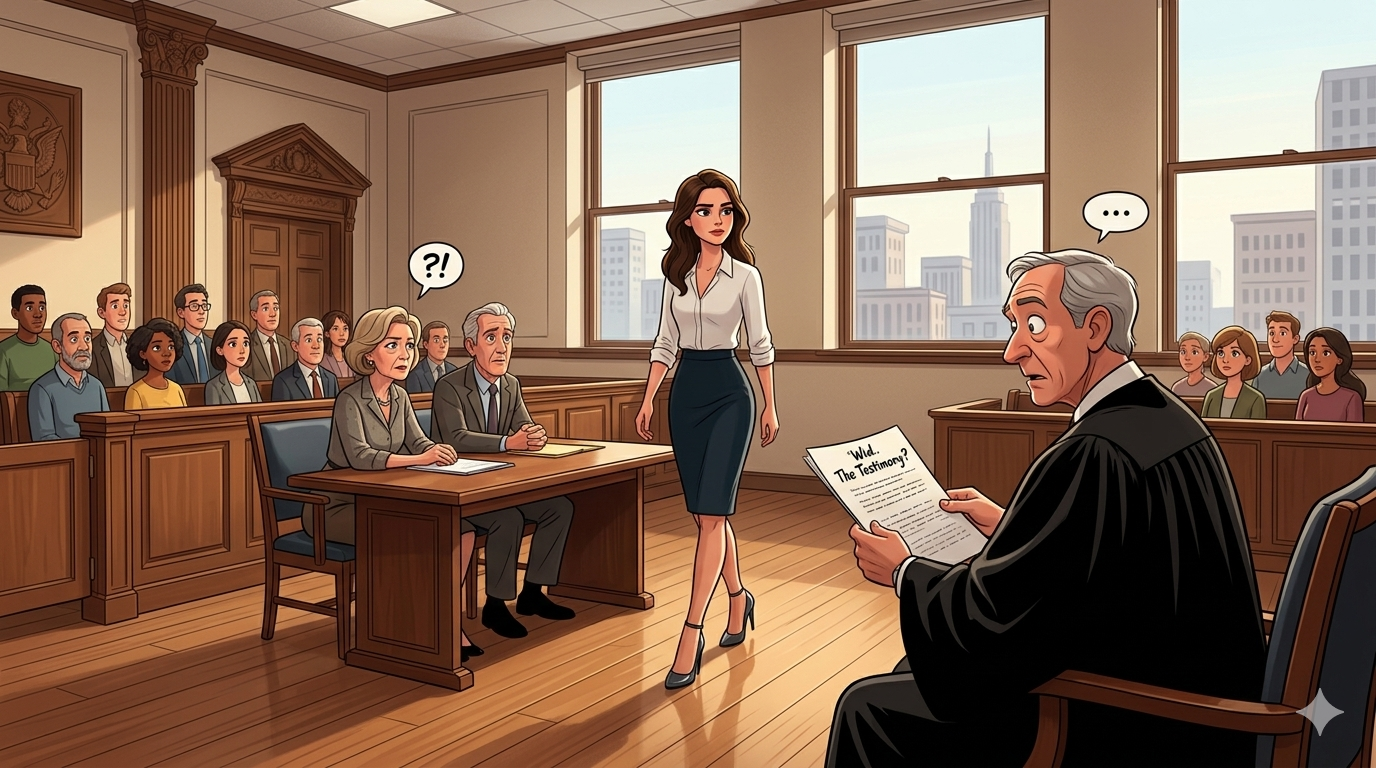
As I walked back to my car, I thought about the courtroom years ago—the eye roll, the accusations, the judge’s surprise.
My parents had tried to turn love into a weapon and inheritance into proof of manipulation.
But the court had done what courts are supposed to do when they work.
It looked at pattern. It looked at evidence. It looked at who showed up.
And the record matched the truth.
That’s the ending.
Not reconciliation. Not redemption for people who didn’t earn it.
Peace.
A life built on the foundation two people laid for me with daily, stubborn love.
And the simple principle Grandpa taught me long before any of this happened:
Family isn’t who shares your DNA.
Family is who shows up, again and again, for a lifetime.
Part 10
The first time I woke up in Rome, my body did something it hadn’t done in decades.
It didn’t reach for a case file. It didn’t scan the day for urgency. It didn’t brace for conflict.
It just… woke up.
Light filtered through thin hotel curtains, warm and soft, and for a second I lay there confused, like I’d forgotten how mornings worked without responsibility. Then it hit me: I was retired. I was nobody’s boss, nobody’s judge, nobody’s weapon. The Supreme Court chamber I’d occupied for years was across an ocean, and it could make decisions without me.
I rolled onto my back and stared at the ceiling, half waiting for guilt to arrive like a familiar ache.
It didn’t. Not immediately.
Instead, I thought about Grandpa’s list.
Italy, he’d said, like the word tasted good. Ireland. Alaska. Little flashes of places he wanted to see before his knees slowed and his heart got tired. We used to sit at the kitchen table and circle destinations in old travel magazines like it was a game we might play someday.
Then someday ran out.
So I was playing it now, for both of us.
I spent that first day walking until my legs burned, letting the city pull me through it. Rome was loud in a way that felt alive instead of draining. Scooters buzzed past like angry bees. Tourists crowded sidewalks, their voices overlapping like a constant hum. The air smelled like espresso, stone, and exhaust, and everything around me seemed older than any law I’d ever interpreted.
At the Pantheon, I stood under the open circle in the ceiling and watched sunlight spill down like something holy. I thought about justice—how people build temples for what they worship. Power. Gods. Systems. The law always felt like a cathedral in my mind: towering, impressive, and sometimes cold. But standing there, watching that beam of light move slowly across ancient stone, I realized something simple.
Cathedrals aren’t what makes people feel safe.
People are.
That night, I ate dinner alone in a small trattoria with checkered tablecloths and a waitress who called everyone bella like it was the default setting. I ordered pasta I couldn’t pronounce and drank a glass of wine that made my shoulders loosen.
At the next table, a young couple argued in low voices while their toddler slumped asleep in a stroller.
The woman looked exhausted. The man looked defensive. They had the tight, resentful energy of people who thought life owed them freedom.
The man hissed something in Italian and gestured toward the stroller. The woman rolled her eyes. Then, without looking at the child, she said something sharp and waved a hand like the toddler was a nuisance.
My stomach tightened.
I shouldn’t have cared. It was none of my business.
But the familiar feeling rose anyway, the one that always came when I saw a child treated like an inconvenience.
The waitress noticed my expression and followed my gaze.
She sighed. “Always fighting,” she murmured in English with a thick accent. “They leave the baby with the nonna every weekend.”
“The grandmother?” I asked.
She nodded, face softening. “The nonna is everything. They are… young. They want life. But the baby needs someone.”
I stared at the sleeping toddler and felt a small, old sadness move through me, like a ghost stretching.
A baby needs someone.
I’d had someone. Two someones. That was the difference between surviving and being swallowed.
I left the restaurant and walked back to my hotel slowly, letting the night air cool my skin. In my room, I opened my notebook—the one I’d promised myself I’d use for travel memories instead of legal notes.
I wrote a letter to Grandpa, not because I believed in ghosts, but because writing to him still felt like conversation.
I saw the Pantheon today, I wrote. It made me think of you. Not the grandeur, but the way something can stand for centuries because it was built carefully. You built me carefully. I’m still standing.
I paused, pen hovering.
Then I wrote the truth I hadn’t fully admitted until now:
I’m not angry anymore.
That sentence startled me.
I’d carried anger for so long it felt like a limb. Not explosive anger—quiet anger, disciplined anger, the kind that becomes motivation and armor. The trial had released a big part of it, but some pieces stayed lodged in me, sharp and stubborn.
Rome softened them.
Not because Italy was magical, but because for the first time, I wasn’t fighting anything. I wasn’t proving anything. I was just existing in a world that didn’t know my history and didn’t care who my parents were.
The next weeks became a slow unfolding.
Florence smelled like leather and rain. I stood in museums and stared at paintings until my eyes ached. In Venice, I took a vaporetto across water that shimmered like hammered metal and wondered what Grandpa would’ve said about a city built on stilts and stubbornness.
In a tiny bookstore in Florence, I found a worn copy of a book Grandpa loved—one he’d quoted at me during my first year in law school when I’d called him, crying, convinced I wasn’t smart enough.
He’d said, You don’t have to be the smartest. You have to be the most consistent. Keep showing up.
I bought the book, even though I already owned it back home. I wanted this copy, with its Italian bookstore stamp and its folded corners, as if it belonged to this version of my life.
One afternoon, sitting in a café with a view of the Arno, I realized something else.
I’d spent decades building systems. Opinions. Precedents. Frameworks that helped courts see pattern and truth.
But I’d never built something simple that lived outside the courtroom.
I pulled out my notebook again and wrote a list.
Scholarship fund for kids raised by grandparents.
Legal clinic for guardianship support.
Mentorship program for young lawyers from fractured families.
A foundation named after Helen and William Parker.
I stared at the list until the words blurred.
It felt obvious. It felt like the next move in the chess game Grandpa taught me, the move where you stop reacting and start shaping.
I didn’t need to sit on a bench to keep his legacy alive.
I just needed to keep showing up for the people who needed someone in their corner.
The day I flew home, the airport felt strangely sterile after weeks of history and color. But when I landed and stepped onto familiar ground, I didn’t feel trapped the way I used to.
I felt like I was carrying something new.
Not obligation.
Direction.
I drove straight from the airport to the cemetery.
The tulips were gone for the season, just green stems and soil, but the stones were the same, steady and quiet.
“I went,” I told them softly. “I saw Italy. Grandpa, you would’ve complained about the crowds and then secretly loved the architecture.”
I smiled, a real one.
“And I figured out what’s next,” I added.
The wind moved through the trees like a slow exhale.
I stood, brushed dirt off my palms, and walked back to my car feeling lighter.
Not because I’d escaped my past.
Because I’d finally stopped living as a response to it.
I was living forward now, and I could almost hear Grandpa’s voice in my head, calm and approving:
Good. Now make it mean something.
Part 11
Starting a foundation is less romantic than people think.
It isn’t a montage of heartfelt meetings and smiling children holding scholarship certificates while music swells. It’s paperwork. Phone calls. Endless decisions about budgets, bylaws, and how to prevent your good intentions from turning into someone else’s tax shelter.
It’s also, strangely, the closest thing to peace I’d ever built.
I named it the Helen and William Parker Foundation, because saying their names together still felt like a prayer. I hired a small team—two staff members I trusted, an accountant with a spine, and a director who had spent years running a legal aid nonprofit and knew how quickly kindness could be exploited if you weren’t careful.
Grandpa would’ve liked her. She didn’t smile unless she meant it.
We focused on three things.
First, scholarships for students raised by grandparents or guardians. Not just tuition, but support—textbooks, transportation, emergency help when the car breaks down or the rent spikes. I remembered what it felt like to have stability so solid I could focus on becoming who I wanted to be.
Second, a legal clinic. Guardianship petitions, custody support, benefit claims, estate planning for caregivers who never thought they’d need it until life forced it on them.
Third, mentorship. A network of lawyers, social workers, and community leaders willing to be the kind of steady adult a kid could count on.
The first day the clinic opened, I stood in the lobby and watched people file in.
Grandmothers with tired eyes. Grandfathers in worn jackets holding folders too thin to protect them from bureaucracy. Guardians who looked like they hadn’t slept in weeks. Young adults translating for their caregivers because the system didn’t make room for their voices.
I felt something in my chest tighten, not with grief, but with purpose.
Then I saw her.
A girl sat in the corner, knees pulled up, hood up even though it was warm inside. She looked about sixteen, maybe seventeen, all sharp angles and guarded eyes. Beside her sat an older woman—gray hair, hands folded, posture steady in a way that reminded me of Grandma.
The older woman approached the intake desk, speaking softly. The girl stayed in the corner, watching like she expected someone to hurt them.
I walked over carefully, not wanting to startle her.
“Hey,” I said, crouching a little so I wasn’t towering. “You doing okay?”
Her eyes flicked up, quick and assessing. “I’m fine.”
Every kid who’s not fine says that.
I nodded as if I believed her. “What’s your name?”
She hesitated. “Mia.”
“Mia,” I repeated. “I’m Haley.”
Her eyebrows lifted slightly. “Like… Justice Morrison?”
I smiled. “Used to be.”
Mia stared at me like she wasn’t sure if she should be impressed or suspicious. Smart kid.
“You work here now?” she asked.
“I started it,” I said.
Her gaze shifted to the older woman at the desk. “My grandma doesn’t like asking for help.”
“I didn’t either,” I admitted. “But sometimes help is just someone showing you where the forms are.”
Mia’s mouth twitched, almost a smile. Then it disappeared.
“They’re trying to take my grandma’s house,” she said suddenly, voice low. “My mom died last year. My dad’s not… around. My uncle says the house should be his. He says Grandma manipulated Mom into leaving it to her.”
The words hit me so cleanly it felt like stepping into a familiar room.
I kept my expression calm. “And your grandma raised you?”
Mia nodded once, jaw tight.
I glanced at the older woman. She stood straight, hands trembling slightly, trying to look strong.
I turned back to Mia. “Then we’re going to handle it,” I said simply.
Mia’s eyes narrowed. “How do you know?”
Because I’ve lived it, I thought.
Instead I said, “Because we’re here.”
Her stare held on me for a long second. Then she exhaled, small and shaky, like she’d been holding her breath for years.
Over the next months, Mia became a steady presence at the clinic, not because she needed legal help every day, but because she needed a place where adults didn’t treat her like a problem to be managed.
She started volunteering, sorting intake folders, handing out water bottles, learning the rhythm of advocacy the way I’d learned chess.
One evening, she sat in my office while I reviewed documents.
“Why do you do this?” she asked suddenly.
I looked up. “Do what?”
“This,” she said, gesturing vaguely at the clinic, the foundation, the whole thing. “You could be… rich. You could just disappear.”
I thought about Rome. About the toddler in the stroller. About Grandpa’s list and Grandma’s garden.
“I had people who showed up for me,” I said. “I’m paying it forward.”
Mia picked at a loose thread on her sleeve. “My grandma says blood is blood,” she muttered. “But my uncle acts like blood is a receipt.”
“That’s a good way to put it,” I said, and watched her eyes sharpen with recognition.
A few weeks later, Mia’s case came up for a hearing.
Her uncle’s attorney tried the same old language—undue influence, manipulation, vulnerable grieving mother. I sat in the courtroom behind Mia and her grandmother, not as a judge now, not with authority, just as a person present.
Our clinic attorney presented the evidence: school records showing the grandmother raised Mia. Medical records. Tax filings. A calendar of involvement. Photos. Letters. Pattern.
The judge ruled quickly. The will stood. The house stayed.
Mia’s grandma cried quietly in the hallway afterward, relief shaking her shoulders. Mia didn’t cry. She just stood there, face tight, then turned and hugged her grandmother like she was holding on to the only safe thing in the world.
Later, in the clinic parking lot, Mia looked at me and said, “So it’s real.”
“What’s real?” I asked.
“That showing up counts,” she said.
I nodded. “It does.”
Mia swallowed, then said something that startled me more than any courtroom surprise ever had.
“Can I come to dinner sometime?” she asked, voice casual but eyes too careful. “Like… if you do dinners. With people.”
The request landed in my chest like a soft ache.
Sunday dinners had been sacred with Grandpa. After he died, I’d tried to keep the tradition alive with friends, but it never felt quite the same. It always felt like an imitation of something holy.
Maybe it didn’t have to be imitation.
Maybe traditions could evolve.
“Yeah,” I said, voice gentler than I meant. “You can.”
Mia blinked fast, then nodded like it was no big deal, but her shoulders loosened like she’d been holding herself upright through sheer will.
That Sunday, she showed up at my house wearing a clean hoodie and nervous bravado.
I made grilled cheese and tomato soup—the simplest thing in the world, the thing Grandpa used to make when he didn’t feel like cooking.
Mia took one bite and said, “This is weirdly good.”
“It’s the law,” I said. “Grilled cheese is always good.”
She snorted a laugh, and the sound filled my kitchen in a way that made it feel less empty than it had in years.
I looked at the chair where Grandpa used to sit and didn’t feel the sharp sting of absence.
I felt something else.
Continuation.
Love didn’t end.
It changed shape.
And in that small, ordinary Sunday dinner, I understood what Grandpa meant when he told me legacy isn’t money.
Legacy is what you keep alive by showing up again.
Part 12
The first time I saw Diane’s wedding ring again, it wasn’t dramatic.
It didn’t glow or whisper or unlock some secret grief.
It just sat in a small wooden drawer in my study, the same drawer where I kept paper clips, old pens, and the kind of stray objects you don’t know what to do with but can’t throw away.
I’d put it there years earlier when a package arrived with a note from someone I didn’t recognize: Found this in Scott Morrison’s belongings after he passed. Thought you might want it.
Scott died alone, as far as I knew. No funeral invitation reached me. No request for forgiveness. Just a ring sent through strangers like someone trying to toss responsibility back into my hands one last time.
I didn’t feel anything then.
I didn’t feel much now, either.
But that morning, after a long clinic meeting about a new wave of elder fraud cases, I opened the drawer to grab a binder clip and saw the ring.
I stared at it for longer than I expected.
Not because it mattered.
Because it reminded me that even when you’re free, the past still leaves fingerprints.
The clinic had been slammed lately. Not with family drama, but with something uglier: professional exploitation. People targeting elders with promises, paperwork, and smooth voices. Coercing signatures, draining accounts, moving assets with the ease of thieves who knew exactly how much shame kept victims quiet.
One case hit me hard.
A retired teacher named Mrs. Kline came in with her niece, hands shaking as she held a folder of bank statements. She’d been convinced by a “financial advisor” to sign over power of attorney. Within six months, half her savings was gone. He’d convinced her it was for her “care.”
Her niece’s voice trembled with rage. “She trusted him. She didn’t want to bother us. She didn’t want to be a burden.”
Mrs. Kline whispered, “I thought he was helping.”
I’d seen it before. Not the same details, but the same pattern: vulnerability exploited by someone who knew how to dress greed in kindness.
We built the case carefully. We looped in law enforcement. We coordinated with the state attorney general’s office. I wasn’t a prosecutor anymore, but I knew how to make evidence speak.
When the advisor finally got arrested, Mrs. Kline cried in my office, relief and humiliation tangled together.
“I should’ve known,” she whispered.
I leaned forward, voice steady. “No,” I said. “He should’ve been better. You didn’t fail by trusting. He failed by exploiting.”
After she left, I sat alone for a while, letting that sentence settle.
It was the same truth I’d lived my whole life, just in a different costume.
People love to blame victims for believing in family, in kindness, in the idea that someone will show up.
But the failure is always on the one who didn’t show up.
Or worse, showed up to take.
That afternoon, I opened Grandpa’s unsent letters again.
I didn’t read them often. I didn’t need to reopen the wound for proof. But sometimes I read them like you reread an old ruling—checking the logic, remembering the principle.
One letter, dated near the end of his life, caught my attention in a different way this time.
I am learning, he wrote, that love without boundaries becomes permission for harm.
I sat back, staring at the line………………………..