
When I was younger, I’d thought boundaries were cold. Like shutting a door was the opposite of love. Grandpa’s letters showed me he’d struggled with that, too—giving Diane money not because she deserved it, but because he couldn’t stand the idea of abandoning his daughter the way she abandoned hers.
And yet, in the end, he chose boundaries.
He chose truth.
He chose the person who showed up.
I picked up my phone and called Margaret Chen, Grandpa’s estate attorney, now semi-retired.
“Haley,” she greeted warmly. “How are you?”
“Good,” I said. “Busy. Always.”
She chuckled. “Your grandfather would say that means you’re doing it right.”
“I have a question,” I said. “If I wanted to donate Grandpa’s letters and papers to a legal archive—something that preserves his work and also the personal context—how would I do it responsibly?”
Margaret paused. “That’s thoughtful,” she said. “And complicated.”
“I know,” I admitted.
We talked through privacy, ethics, redaction. The difference between preserving history and exposing people who didn’t consent. Margaret suggested a university archive with strict access rules. Time locks. Sensitive materials sealed for a certain number of years.
“You don’t owe anyone protection,” she added quietly, “but you can still choose dignity.”
That line landed.
I didn’t owe Diane dignity. She’d never given it to me.
But Grandpa had lived with dignity even when dealing with disappointment. Maybe I could honor him by doing the same.
So I prepared the collection.
Grandpa’s judicial papers went to the archive. His letters about Diane went into a sealed portion—restricted access for decades. Not to protect Diane, but to protect the living from turning pain into spectacle.
The will letter he wrote to me stayed with me.
That one wasn’t for history. It was for my heart.
The night I drove the boxes to the university, the campus was quiet, lights glowing in windows where students studied like their lives depended on it.
I walked into the archive office carrying history in my arms and felt a strange kind of closure.
Not the closure of forgiveness.
The closure of organizing the past into its proper place.
Afterwards, I went home and made grilled cheese.
Mia—now in college, still stubborn, still sharp—came by for dinner when she could. She sat at my kitchen table and told me about her classes, her job at the clinic, the way she wanted to go into social work because “someone has to fight for the kids before they become court cases.”
I listened, smiling, and felt the tradition hold steady.
Somewhere between bites, Mia asked, “Do you ever wonder what it would’ve been like if your parents were normal?”
I considered the question honestly.
“Sometimes,” I said.
“And?” she pressed.
“And I think,” I said slowly, “that I would’ve been a different person. Maybe not a better one.”
Mia nodded like she understood too well.
Then she said, “I’m glad you weren’t alone.”
“So am I,” I said.
Later that night, after Mia left, I stepped outside and looked up at the sky. It was clear, stars scattered like someone had spilled salt.
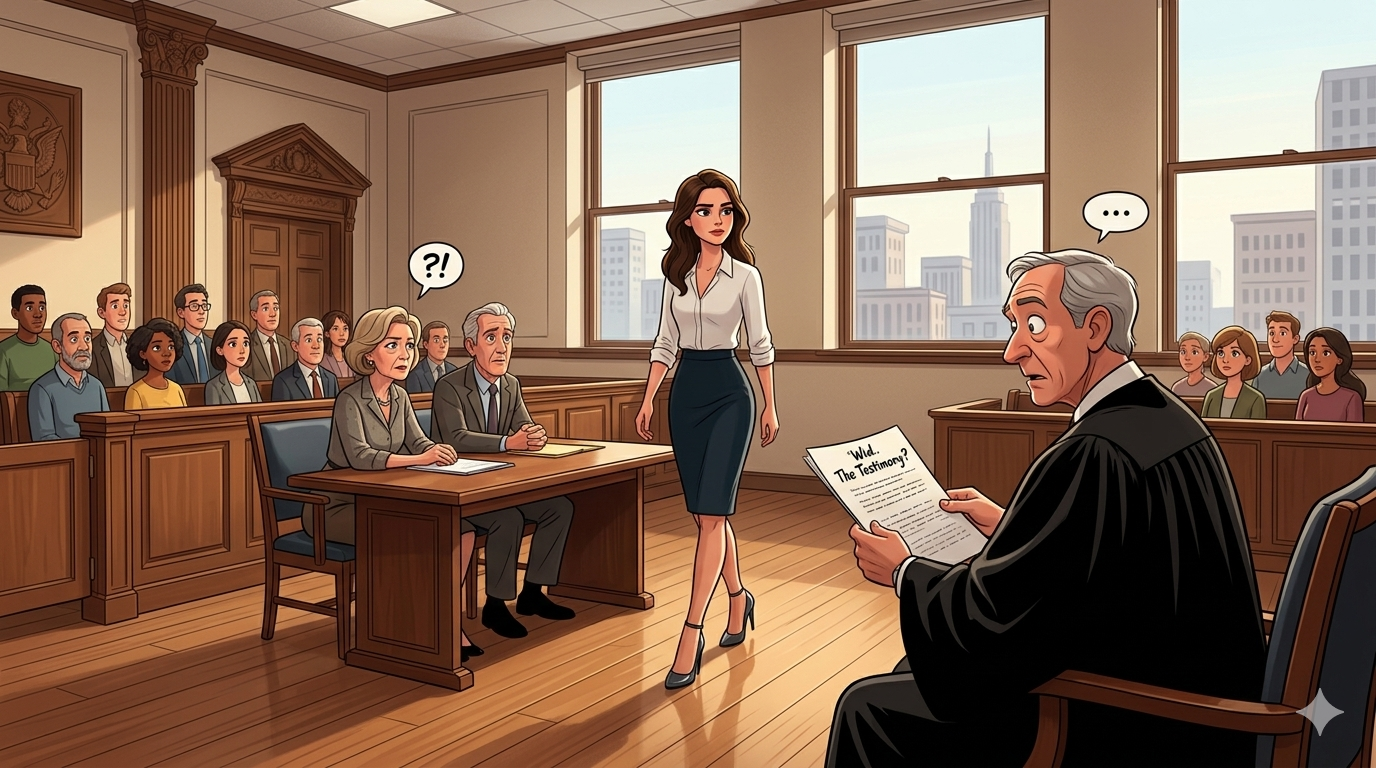
I thought about the courtroom again, the eye roll, the judge’s surprise, the way truth landed with the weight of evidence.
I thought about Grandpa’s letters and the line about boundaries.
And I realized that the story didn’t really end with the verdict.
The verdict was a hinge.
What mattered was what came after—what I built, who I showed up for, how I turned survival into something useful.
That was the real inheritance.
Not money.
Not property.
The ability to keep choosing love as an action.
And when I went back inside, I didn’t feel haunted by the ring in the drawer.
I felt steady.
Because the past was finally where it belonged—behind me, documented, accounted for.
And the future was in my kitchen, in a teenager-turned-college-student who’d learned the same truth I had:
Family isn’t claimed.
It’s proven.
Every day.