
Twice you pass it.
Twice your pulse kicks.
The third time, Camila snaps her fingers for an assistant to bring her the media deck from the archive printer room because, in her words, “nothing is ever where it’s supposed to be in this building.” The assistant hesitates, then admits she doesn’t have clearance. Camila swears under her breath, hands you a keycard, and says, “You. Go.”
The universe, you decide, has a vicious sense of humor.
You walk the hallway with measured steps, each one loud inside your skull. The archive suite is exactly where the photo suggested. Frosted door. Keycard reader. Biometric panel mounted in brushed steel beside it. The keycard gets you through the outer door into a quiet room lined with printers, supply cabinets, and two interior offices. At the back, just beyond a half wall, sits the archive door itself.
No cameras visible.
That doesn’t mean there aren’t any.
You collect the media deck from a printer tray, then pretend to search for a stapler beside the biometric panel. Your fingers find the underside seam Tomás described. The lipstick-sized relay slides into place with a magnetic click so soft it vanishes beneath the printer hum. You straighten, count to two, and turn.
Someone is standing in the doorway.
Rodrigo.
The folder nearly slips from your hands.
He looks older than memory. More sculpted by success, more ruined by it too. His suits used to wear him; now he wears them like armor. The softness in his face is gone. What remains is handsome in the way sharp glass is beautiful. Dangerous. Cold. Reflective. You had once loved every inch of that face. Now your body remembers fear faster than your mind remembers history.
He glances at you with the bored entitlement reserved for staff.
“Who are you?”
Your heartbeat becomes a riot.
“Elena Cruz,” you answer, grateful that your voice emerges flat. “Event logistics.”
He barely nods. “Tell Camila the donors from Monterrey are moving to the terrace sequence.”
Then he reaches for the biometric panel.
You keep your eyes on the media deck.
The machine flashes green beneath his thumb.
The relay is armed.
You walk out without running.
Back in the conference suite, Camila takes the packet from you without thanks. Rodrigo joins the meeting five minutes later, kisses her cheek, and begins discussing sponsorship optics as if he has never stood over the grave of your life. You remain near the wall, making notes no one will read, while every cell in your body screams.
Then Camila says something that freezes you.
“We need to settle the Churubusco issue before quarter-end.”
Rodrigo doesn’t look at her, but you see the warning flicker in his jaw. “Not here.”
“No, now,” she replies softly. “Because your father is asking questions. And because if that woman’s body ever turns up attached to the wrong paperwork, we’ll have a press problem.”
Your fingers tighten so hard around the tablet they ache.
Rodrigo’s tone is silk over a knife. “It won’t.”
Camila smiles the way elegant women smile before killing reputations. “You said that two years ago.”
There it is. Not a confession a jury could use, but enough to turn your blood into fire.
You leave the building fifteen minutes later with your head down and your expression controlled. Only when you reach the service elevator do you allow yourself to breathe. Tomás is waiting in a delivery van across the street, dressed like a florist and somehow convincing in it. The second you climb in, he sees your face and says, “What happened?”
You tell him everything.
By nightfall, the operation has changed.
The relay worked. Rodrigo’s print is cloned. The archive can be opened. But now there is a second urgency. Churubusco. Your supposed death. Paperwork. Somewhere in that room, there may be documentation linking your accident to whatever they buried afterward. Insurance filings. Security invoices. Internal emails. Proof not just of financial fraud but of deliberate erasure.
Alejandro listens in absolute stillness as you recount the overheard exchange.
When you finish, he gets up from the table and walks to the far end of the room. For several seconds, no one speaks. Then he places both hands flat against the brick wall, lowers his head, and says in a voice so quiet it barely exists, “I raised him.”
You expect Lucía to comfort him. She doesn’t.
Good.
Some grief deserves witnesses, not absolution.
At eleven-thirty that night, you go back in.
It isn’t part of the original plan, which makes Lucía furious and Tomás almost equally furious, but you refuse to stay behind once there is a chance to uncover proof about your own attempted murder. Alejandro tries to stop you. You tell him that two years of disappearing is enough. If your ghost is finally walking, it gets to choose where.
So the four of you move.
Tomás gets you into the underground garage using vendor access. Lucía remains in the van with secured drives and a scanner rig. Alejandro waits two blocks away in an unmarked sedan because if anyone spots him near Monte Claro at midnight, the whole board will ignite by morning. You and Tomás ride the private elevator in silence, both wearing dark coats, gloves, and the focused stillness of people who know fear wastes oxygen.
The relay works.
Rodrigo’s cloned print triggers the biometric lock with a soft green blink, and the archive room opens like a throat.
Inside, the air is cooler, filtered, dead quiet. Shelves of boxed records line the walls. Two encrypted server towers hum near the back. A fireproof cabinet sits beneath a framed abstract painting so tasteless it has to be expensive. Tomás moves fast, connecting extraction hardware. You search physical files. Development codes. Investor rosters. Payment ledgers. Site audits falsified with signatures that make your skin crawl.
Then you find a folder labeled C-14/CHURU.
Your hands stop.
For one second you just stare at it.
Then you open it.
The first page is an insurance liability memo.
The second is a recovery report from a private contractor.
The third contains a photograph of your car half-submerged in the ravine, timestamped hours after the crash.
The fourth page breaks something open inside you.
SUBJECT NOT CONFIRMED DECEASED, it reads. MEDICAL EXTRACTION BY LOCAL CIVILIANS OBSERVED. PURSUIT ABORTED DUE TO POLICE MOVEMENT. CLIENT ADVISED.
Client advised.
Your vision blurs.
They knew.
They knew you were alive.
You keep flipping pages. A transfer authorized by a holding company linked to Camila. A burner number used to communicate with the contractor. Notes about reputational risk. A recommendation that “subject instability” be seeded among existing contacts if resurfacing occurs.
You are no longer shaking.
You are turning to stone.
“Tomás,” you say, and your own voice frightens you.
He is beside you instantly. One look at the folder, and his face hardens. “Lucía,” he whispers into comms. “We’ve got it. Attempted murder documentation. Full recovery notes.”
Lucía’s voice crackles back, tight with adrenaline. “Download everything. Leave nothing.”
Then the lights go out.
Not all of them. Just enough.
Emergency strips snap on along the floor, throwing the archive into red.
Tomás swears under his breath. “Motion trigger. Someone’s here.”
The door handle jerks.
Locked from the outside.
Your heart slams once, hard enough to hurt.
A voice comes through the glass. Smooth. Familiar. Laughing without joy.
“You always did have terrible timing, Sofía.”
Camila.
For a second, the entire world narrows to the red light beneath the door and the sound of your own breathing. Tomás moves toward the secondary exit marked in the floor plan, but you already know from the empty wall behind the server towers that it doesn’t exist. False notation. A trap or outdated plan. Either way, useless.
Camila continues, amusement curling through every syllable. “I must say, when Alejandro started acting sentimental lately, I wondered if grief had finally made him stupid. Turns out it just made him nostalgic.”
“How did you know?” you call out.
Her heels click softly outside the door. “Please. You think I don’t notice when a dead woman begins shopping for shoes in my size?”
Your blood chills. The apartment. The new clothes. Somewhere in the chain, someone reported the purchases. Of course they did. Wealth leaves trails, and women like Camila know how to read them like weather.
Rodrigo’s voice joins hers, lower and colder. “Open the door, Sofía. Let’s stop pretending this ends any other way.”
A strange calm descends on you then.
Maybe because terror has a ceiling. Maybe because, after enough loss, the mind stops negotiating with fear and begins selecting what deserves to survive. You look at the folder in your hands, at the downloaded files ticking across Tomás’s screen, and realize that for the first time in two years, they are the ones improvising.
Not you.
You press a hand to the fireproof cabinet. “Tomás. Can you trigger the suppression system?”
He blinks. “What?”
“These rooms have oxygen-drop fire protection. If we trip it, alarms will force internal override and building security has to open the door manually.”
He stares at you for half a heartbeat. Then a grin, feral and brief, flashes across his face. “That is either brilliant or suicidal.”
“Pick one.”
He is already moving.
Outside, Camila must hear the change in rhythm because her voice sharpens. “Rodrigo.”
Too late.
Tomás slams a steel flashlight into the cabinet sensor housing. The suppression alarm erupts instantly, a shrieking mechanical scream that rips through the floor. Emergency protocols flash. Internal vents clunk alive. Somewhere beyond the archive, doors begin unlocking in sequence for evacuation. The outer handle releases.
The door flies open.
Security men spill in.
So do Camila and Rodrigo.
Everything becomes motion. Tomás drives an elbow into the first guard’s throat. You duck as another lunges. Rodrigo catches sight of the Churubusco folder in your hands, and something savage cracks across his face. Not guilt. Rage. The rage of a man whose lies have finally been touched.
He comes for you.
You pivot on instinct, but he grabs your wrist hard enough to bruise. The folder tears, papers exploding across the floor like panicked birds. Camila screams for security to shut the hallway. Tomás slams one guard into the server rack. Sprinklers don’t activate, but the alarms keep howling, turning every second into a jagged red strobe.
Rodrigo yanks you close. “You should have stayed dead.”
The sentence lands between you like a judge’s hammer.
You stare straight into his face. The face you once kissed. The face you defended when friends said he was too charming to be trustworthy. The face that watched your life collapse and called it collateral. Somewhere behind the fury, you see it clearly at last. He never loved you. He loved being loved by you. There is a difference vast enough to bury cities.
“You first,” you say.
Then you drive your heel down onto his instep and slam the edge of the metal tablet you’re still holding into his temple.
He releases you with a curse. The Churubusco pages scatter farther. One skids to Camila’s feet. She glances down, sees the contractor memo, and goes pale for the first time since you’ve known her.
Not because of conscience.
Because of exposure.
She lunges for the page. You get there first. Tomás grabs your arm with one hand and a drive with the other. “Move!”
You run.
The hallway is chaos. Security converging. Staff shouting into radios. Elevator access dead because of the alarm. Tomás veers toward the stairwell. You follow. Behind you, Rodrigo is shouting orders, his voice echoing off concrete with the brittle authority of a man discovering that money cannot outpace collapse once panic enters the bloodstream.
You make it down three flights before the stairwell door opens below.
Two more guards.
Tomás shoves you back and mutters, “Up.”
“No,” you hiss, seeing the service landing above. “Roof access.”
He trusts you instantly, which may be the reason you both survive.
You sprint upward. Your lungs burn. Your ankle flares. Somewhere below, doors bang open and closed. On the roof, the wind hits like a slap. The city stretches around you in black glass and scattered lights, Mexico City sprawling vast and indifferent under a bruised midnight sky. No helicopter, no cinematic miracle, just tar paper, ventilation units, and the ugly math of being trapped on a roof with men who would rather erase you than answer for what they did.
Tomás checks the ledge and spots it first. Adjacent building. Lower roof. Two meters across.
“You can make that?” he asks.
You look down once and regret it. Alley. Dumpsters. Too far to survive a fall cleanly.
Behind you, the roof door bursts open.
Rodrigo steps out first, breathing hard, fury radiant. Camila stays just behind him, coat whipping in the wind, phone in hand. She isn’t calling police. You know that immediately. She is calling people who solve problems before law arrives.
Rodrigo spreads his hands slightly, as if this is now a negotiation. “Give me the file, Sofía.”
You clutch the folder tighter. “Why? So you can finish the job?”
His face twists. “You don’t understand the scale of what you’re touching.”
“Try me.”
Camila cuts in, colder than the wind. “This is bigger than revenge. There are ministers involved. Investors. Foreign capital. If this blows publicly, whole developments freeze, markets panic, hundreds lose work.”
The argument almost makes you laugh. There it is. The anthem of the powerful. Stability. Markets. Collateral. They build cathedrals out of greed and ask the poor to admire the architecture because the roof employs people.
“You mean the buildings with rotten foundations?” you shout back. “The housing projects built to crack? The people who’ll die because your margins mattered more than concrete?”
Rodrigo takes a step closer. “You think morality feeds anyone?”
“No,” you say. “But it keeps roofs from collapsing on children.”
Something changes in his face then. The final mask drops. What remains is not charm, not intelligence, not ambition. Just appetite stripped of polish.
“You were always sentimental,” he says. “That’s why you were easy to remove.”
Tomás shifts beside you, gauging distance, timing, bodies. Camila is still on the phone. Too calm. Help is coming. Not the helpful kind.
Then another voice cuts across the roof.
“That’s enough.”
Alejandro.
You turn so sharply it almost hurts.
He emerges from the stairwell with two uniformed officers and Lucía right behind them, hair windblown, expression lethal. For one stunned beat, nobody moves. Then the roof becomes a chessboard overturned by God.
Camila’s composure fractures first. “What did you do?”
Alejandro’s gaze never leaves his son. “What I should have done two years ago. I stopped believing you.”
Rodrigo looks genuinely shocked. Not by police. Not by Lucía. By betrayal from his father. Men like Rodrigo always assume loyalty flows upward toward them by natural law.
“Dad,” he says, and the word sounds grotesque coming out of his mouth now. “Whatever you think this is, you don’t understand.”
Alejandro steps closer, rain and grief and fury written into every line of him. “I understand that you tried to kill your wife. I understand that you stole from the company my father built and used public housing money to line private accounts. I understand that there is blood in your spreadsheets.”
The officers move.
Rodrigo backs away, then lunges suddenly toward you, maybe for the file, maybe for the simple old thrill of control. He never reaches you. One officer intercepts him. They crash hard against a ventilation unit. Camila bolts for the stairwell, but Lucía catches her by the arm with a precision that feels almost surgical.
“Don’t,” Lucía says. “You’ve been dying to be dramatic all night. Save it for court.”
Camila stares at her, breathing fast, then looks at you.
For the first time since you met her, she does not look superior. She looks cornered.
“You think you’ve won?” she spits. “You have no idea how many people this will bury.”
You meet her gaze evenly. “I know exactly how burial works.”
That silences her.
The next days unfold like a city learning to pronounce scandal.
Raids hit three Valdés-linked offices before dawn. The board splits by lunchtime. By evening, news channels are running blurred footage of Rodrigo being escorted from federal custody, though his lawyers quickly begin building the usual fortress of denials, procedural complaints, and carefully purchased outrage. Camila’s image vanishes from social circuits almost overnight, which in that world is a kind of social death more horrifying than prison.
But the evidence is too dense, too ugly, too well-documented to drown quickly.
The Churubusco file opens the door. The contractor flips within forty-eight hours. Ernesto gives a statement under protection. Two engineers come forward about falsified materials. Journalists start pulling permit records and matching them to shell companies. Families from one of the compromised housing developments demand inspections. The story stops being about one dynasty’s embarrassment and becomes something broader, angrier, less containable.
You watch much of it from a secure apartment Lucía insists you use until formal witness protection terms are negotiated.
The first morning you wake there, sunlight spills across white sheets so clean they almost seem imaginary. For a while you just lie still, staring at the ceiling, because your body does not yet believe in safety. You keep expecting concrete damp, bridge noise, river smell. Instead there is coffee in the kitchen and city sounds softened by height. Recovery, you discover, is sometimes more disorienting than disaster.
Alejandro visits on the third day.
He does not arrive with flowers or speeches. He brings a paper folder, a bakery box, and eyes that look ten years older than when you saw him under the bridge. You let him in. He sets the pastries on the counter and the folder on the table, then remains standing as if he hasn’t earned a chair.
“I had your legal identity restored,” he says. “Birth certificate, tax records, professional documents. Lucía handled the emergency motions. The false death trail is being dismantled.”
You stare at the folder without touching it.
Your name, resurrected, weighs more than paper should.
“There’s more,” he adds. “The apartment title Rodrigo transferred through the divorce settlement was invalid in three separate ways. It can be challenged. The compensation trust from the civil action, when it settles, will be substantial.” He hesitates. “And the company shares I once put in Rodrigo’s discretionary family trust are being frozen. I am reallocating a portion to a foundation for victims of housing fraud. If you want a seat on it, it’s yours.”
You look up. “Why would I want anything from your empire?”
The question is not cruel. Just honest.
Alejandro accepts it that way. “Maybe you won’t. Maybe you shouldn’t. But I spent too long confusing inheritance with love, power with protection. I’m trying, for whatever that’s worth, to build something less corrupt from what remains.”
You let the silence sit. It earns the room.
Finally you ask, “Did you ever really care about me? Or was I just the version of Rodrigo’s life that made him look decent?”
Pain flickers across his face like a wound reopened. “I cared,” he says. “And I failed you anyway.”
That, more than any apology, feels true.
Weeks pass.
The city changes color with spring. Newspapers feast. Court filings multiply. Rodrigo’s lawyers attempt a media counteroffensive that collapses when two more witnesses emerge. Camila is indicted on conspiracy, fraud facilitation, and obstruction counts. The attempted murder case moves slower, knottier, but the contractor’s testimony and recovery notes keep it alive. One of the officers tells Lucía privately that without the Churubusco file, the whole thing would have stayed rumor. With it, it has a spine.
You begin testifying in measured pieces.
You tell the truth about the marriage, the divorce, the isolation, the accident, the aftermath. Some truths come out clean. Others have barbs. After each session you go home exhausted in a way sleep cannot fix. But something subtle is changing. Every time you speak, the ghost version of you shrinks a little. Every time the record reflects what happened, erasure loses ground.
One afternoon, after hours with prosecutors, you walk alone through Coyoacán.
Not because it’s wise. Because you need to see whether your life can exist in public again.
The plaza is full of ordinary miracles. Children chasing pigeons. Couples arguing about coffee. A street musician butchering a bolero with astonishing confidence. You stop outside the church where you got married and stare at the doors without going in. Grief rises, but it no longer feels like drowning. More like weather passing through a place that has learned it can survive storms.
Your phone buzzes.
An unknown number.
For a second your body locks. Then you answer.
It is not Rodrigo. Not Camila. Not some hidden associate with a threat wrapped in politeness.
It is the farmer’s son who pulled you from the ravine two years ago.
Lucía found him through old clinic traces and contractor timestamps. He says he heard you were alive, says his father wanted to know if that was true before he passed last month, says he is glad the answer is yes. You lean against a wall and cry harder than you cried the night of the arrest. Not because of loss. Because somewhere in the middle of greed, lies, and broken concrete, there had been strangers who chose decency with no audience.
That matters.
By summer, Rodrigo’s trial begins.
You do not attend every day. You refuse to build your whole new life around watching his old one burn. But you are there for the testimony that counts. Ernesto. The engineers. The contractor, pale and sweating, describing payment chains and “reputational cleanup.” Camila, immaculate even in disgrace, insisting she believed every transaction was legal until emails written in her own clipped style are read aloud in court.
When you take the stand, Rodrigo watches you as though trying to recover some old power by sheer eye contact.
He fails.
The prosecutor asks whether you recognize the defendant.
You do.
But not as husband. Not as heartbreak. Not as the man who ruined you.
You recognize him as a coward who mistook privilege for immunity and affection for ownership.
By the time the verdict comes months later, the city has half-moved on. That is how cities survive. They consume spectacle and still require groceries, schools, traffic, rent. Yet some stories leave a stain. Rodrigo is convicted on major fraud, conspiracy, and attempted murder-related charges tied to the contracted crash. Camila is convicted on fraud and obstruction counts, with additional proceedings still pending. Appeals will come, of course. Men like Rodrigo always believe the law is merely another concierge service they haven’t tipped enough yet.
Still, prison doors close the same way on the wealthy as on everyone else.
Metal is democratic.
The strangest part comes after.
Not the headlines. Not the interview requests you refuse. Not the foundation launch Alejandro insists must center survivors rather than his own redemption narrative. The strangest part is learning how to live without waiting for disaster to re-enter the room.
You rent a small apartment with a balcony barely large enough for two chairs and a stubborn basil plant. You return, cautiously, to work, consulting first for nonprofit housing audits, then for a design firm with ethics strict enough to seem almost fictional. You buy your own groceries. Choose your own sheets. Sleep with the windows cracked open on cool nights just because you can.
Sometimes fear still wakes you.
Sometimes a black SUV slows near the curb and every muscle in your back goes rigid before logic catches up. Sometimes you dream of red emergency lights and wake tasting metal. Trauma is not a villain you defeat in one act. It is weather the body remembers longer than the mind wants to.
But healing has its own persistence.
One evening in late autumn, Alejandro asks to meet.
You choose the location: a modest café in Roma Norte where no one cares who owns what tower and the coffee is strong enough to straighten grief into something almost useful. He arrives without security for the first time. Smaller somehow. Less polished. More human. He tells you the foundation’s first legal housing intervention prevented a contractor from using substandard steel on a low-income development outside Toluca.
“You were right,” he says.
“About what?”
“That roofs matter more than markets.”
You smile despite yourself.
Then he slides an envelope across the table. Not thick. Not legal. Personal.
Inside is a photograph from your wedding.
You almost flinch. But this one is different from the staged portraits. It’s a candid shot taken when you were laughing at something off-camera, your head thrown back, one hand pressed to your chest. Alejandro stands beside you in the frame, mid-laugh himself, looking not powerful but happy. Entirely happy. A relic from before rot surfaced.
“I found it in my wife’s old desk,” he says. “She loved that picture.”
You trace the edge of it lightly.
“I nearly burned all of them,” he admits. “Everything connected to that day. Then I realized destruction is too easy. Preservation is harder. More honest.”
You look at him across the table. At the man who failed you. At the man who came back. At the father who tried too late and the human being trying still.
“I don’t know what to do with forgiveness,” you say.
“You don’t owe it to me.”
“I know.”
The café hums around you. Cups clink. Somebody laughs too loudly near the counter. Outside, the city keeps moving, indifferent and alive. You tuck the photograph back into the envelope.
“I may never call you family again,” you tell him.
His eyes shine, but he nods. “I understand.”
“But that doesn’t mean I want you to disappear.”
Something in him eases. Not healed. Never fully. But eased.
When you step back onto the sidewalk, dusk has turned the windows gold. Alejandro heads one direction, slower than he used to walk, and you head the other. At the corner you stop and glance up.
For years bridges meant endings to you.
The place where names vanished. Where cold and shame and hunger braided together until you could barely tell survival from punishment. But now, standing beneath a wide October sky, you think of bridges differently. Not as places where lives are lost, but as places between. Between who you were and who you are becoming. Between burial and return. Between the woman they erased and the woman who came back carrying evidence in blood-warm hands.
You are not what they left under Churubusco.
You are not the ruined wife. Not the vanished ex. Not the ghost rich people invoked when they needed a clean story.
You are the witness.
You are the crack in the façade.
You are the reason a dynasty learned that concrete poured over rot will always, eventually, split.
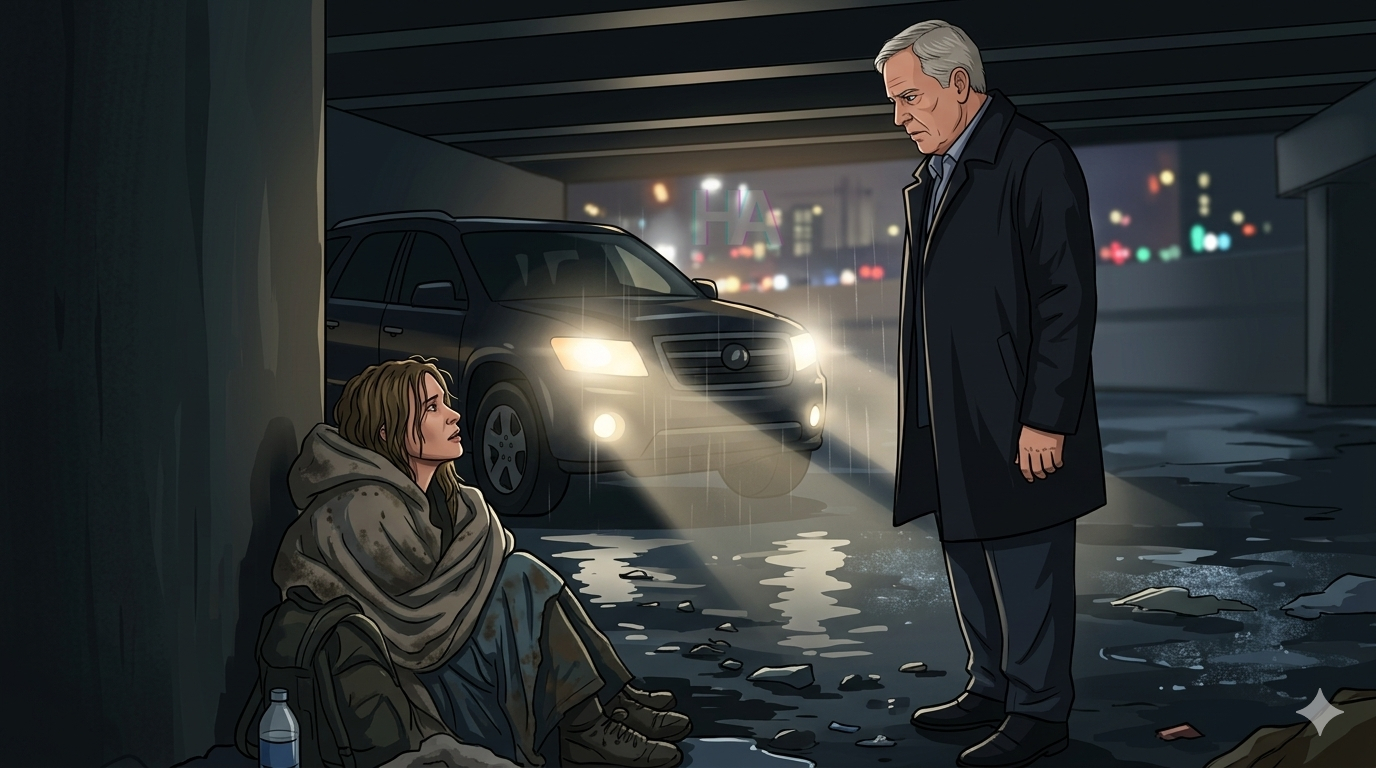
And sometimes, late at night, when the city noise softens and memory comes prowling, you think back to that moment under the bridge when Alejandro first looked at you like he had seen the dead rise. At the time, you thought resurrection would feel glorious. Trumpets. Fury. Vindication bright as lightning.
It doesn’t.
It feels quieter than that.
It feels like choosing, again and again, to remain.
To eat. To sleep. To speak. To testify. To laugh when laughter returns shyly and without permission. To let sunlight touch the floorboards of your apartment. To believe that a name restored on paper can one day settle fully back into skin.
The rich told themselves you were gone because it made their version of events easier to decorate.
They held galas over your grave.
They signed contracts over your silence.
They built lies into towers and believed height made them untouchable.
But the truth is stubborn.
It waits in ledgers. In witness statements. In old men’s guilt. In cracked foundations. In women who survive ravines, bridges, winters, betrayals, and still find enough breath to say no, this is what happened.
And when the truth finally rises, it does not ask permission from the people who buried it.
It only asks whether you are ready to be seen.
At last, you are.
THE END!!!