
Part 1
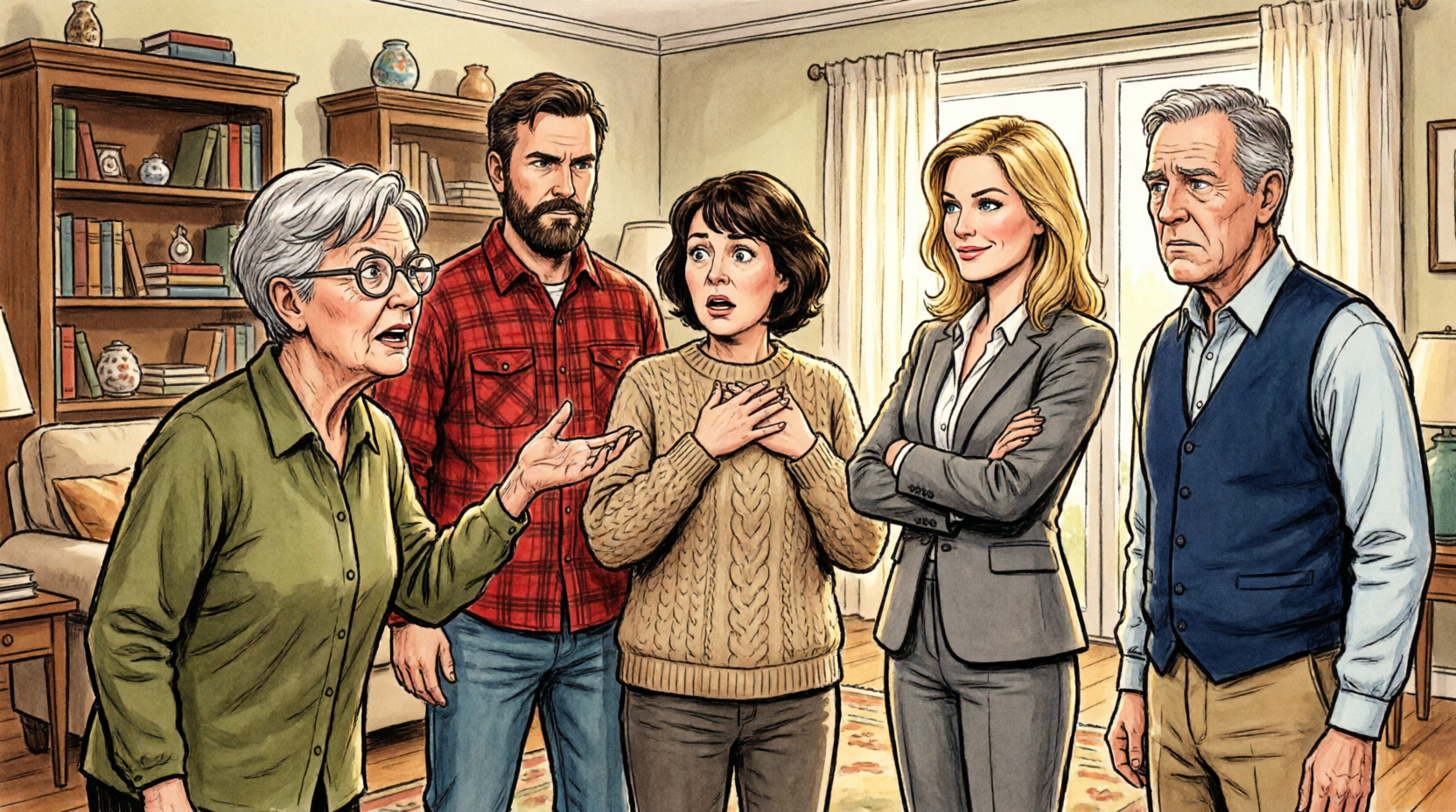
I was shopping for groceries when my sister called: “”You’re paying my rent this month – $2,600. Dad says you make more, so shut up and help.”” Then Dad texted: “”If you don’t, you’re not welcome for Thanksgiving. My sister also sent: “”I already told my landlord you’d wire it today. Don’t make me look stupid.” “I sent one reply to all of them: “”Good luck.”” By the weekend, their landlord called me – and now my sister’s stuff is on the curb, Mom’s crying, and Dad is texting: “”What did you say to him?! He’s evicting her today! Answer your phone now!!!””
My sister called while I was standing in the frozen food aisle holding a bag of peas.
No hello. No buildup. No pretense.
“You’re paying my rent this month,” she said. “Twenty-six hundred. Dad says you make more, so shut up and help.”
I stood there under the white grocery store lights, one hand on the cart, and actually looked around to make sure I had heard correctly. A little kid was begging his mother for cereal at the endcap. Somewhere behind me, a cashier laughed. Life was continuing normally while my family, once again, treated my bank account like a utility they were entitled to access.
“Excuse me?” I said.
My younger sister, Brianna, huffed like I was the difficult one. “I already told my landlord you’d wire it today. Don’t make me look stupid.”
That line almost made me laugh.
Almost.
Brianna was twenty-nine, beautiful, dramatic, and permanently one bad decision ahead of a crisis. There was always a reason she needed money right now. First it was a car payment, then a “temporary” medical bill that turned out to be cosmetic dental work, then a security deposit, then credit cards, then a “business idea” involving a mobile spray-tan service she ran for four months before deciding she hated customers. My parents never stopped rescuing her. They just started needing my money to do it.
Before I could answer, another text lit up my phone.
From my father.
If you don’t help, you’re not welcome for Thanksgiving.
That was three days away.
I stared at the message and felt something go cold and perfectly still inside me.
Because it wasn’t just manipulation anymore. It was extortion dressed up as family loyalty. Pay your sister’s rent or lose your place at the table. Transfer money or be cast as the selfish daughter who abandoned everyone over “one little favor.”
My mother, of course, said nothing herself. She never had to. She let my father issue the threats and Brianna make the demands while she played peacemaker afterward, crying about family unity and how hard things had been for everyone.
I checked out without buying half the groceries in my cart. By the time I reached my car, Brianna had sent two more texts.
Landlord wants it by 5.
Don’t embarrass me.
I sat behind the wheel and closed my eyes for one long second.
For years, I had paid. Not every time, but enough. I was thirty-five, a CPA in Raleigh, North Carolina, with a stable income, a condo I actually owned, and a life built on the kind of planning my family found useful only when it benefited them. I paid for Brianna’s moving truck when she got dumped and had to leave an apartment overnight. I covered her car insurance once because “it was easier than letting her lose the vehicle.” I even paid off a utility shutoff notice last winter after my mother called crying and said, “She just needs one good month to get back on her feet.”
There was never one good month.
Only the next emergency.
This time, though, something felt different. Not because the amount was bigger. Because of the arrogance. The certainty. Brianna had already promised my money to another adult before even asking me. My father had backed her up with a holiday threat. Neither of them seemed to believe I had any choice.
So I sent one reply to the group thread.
Good luck.
Then I silenced my phone and drove home.
By the weekend, their landlord called me directly.
And by then, my sister’s furniture was already on the curb, my mother was sobbing, and my father was texting in all caps asking what I had said to him.
The answer was simple.
Nothing they were going to like…
PART 2
PART 3
The moment my father said it, something in me didn’t just harden—it clarified. His voice came through sharp and venomous, no longer pretending this was about “family.” “If you don’t fix this,” he snapped, “I swear I’ll make sure everyone knows exactly what kind of daughter you are.” There it was. Not concern. Not desperation. Control. Reputation. Image. And for the first time in my life, I realized he wasn’t protecting the family—he was protecting a narrative where I was the resource, not the person.
I didn’t argue. I didn’t cry. I simply said, “Go ahead.”
That silence on the other end? That was new.
Because I had never called his bluff before.
By the afternoon, things escalated fast. Brianna’s belongings were scattered across the curb like a yard sale nobody wanted. A couch tilted sideways, her designer bags stuffed into trash liners, framed photos face-down on the pavement. I drove by—not to help, but because I needed to see it with my own eyes. My mother sat on the steps, crying into her hands. My father paced like a man betrayed by the world. And Brianna? She was on her phone, probably already rewriting the story where I was the reason this happened.
I stayed in my car.
For years, that scene would have pulled me out of the driver’s seat instantly. I would’ve rushed over, fixed it, paid it, absorbed it. But this time, I noticed something different. No one was actually solving anything. They were waiting—for me. Waiting for the same ending where I sacrifice, they reset, and nothing changes. The pattern was so obvious it almost felt embarrassing that I hadn’t seen it clearly sooner.
So I drove away.
That night, the messages came flooding in—not just from them, but from extended relatives. My father had followed through on his threat, spinning a version where I “refused to help” and “let my sister become homeless over money.” But something unexpected happened. People started asking questions. Real ones. “Wasn’t Brianna already behind?” “Why was Lena responsible?” “Did she agree to any of this?” The story cracked under the weight of basic logic. And for once, I didn’t rush to defend myself. I let the truth stand on its own.
By Sunday, the chaos had quieted—but not in the way they expected. Brianna was staying with a friend. My mother stopped calling. My father sent one final message: “You’ve changed.”
He meant it like an accusation.
But sitting alone in my condo, with my phone finally silent, I realized something almost unsettling.
He was right.
I had changed. Not into someone cold. Not into someone selfish. But into someone who understood that love without boundaries isn’t love—it’s permission. And for the first time, I wasn’t the safety net beneath their fall.
I was just… not there anymore.
And strangely, that felt like peace.