
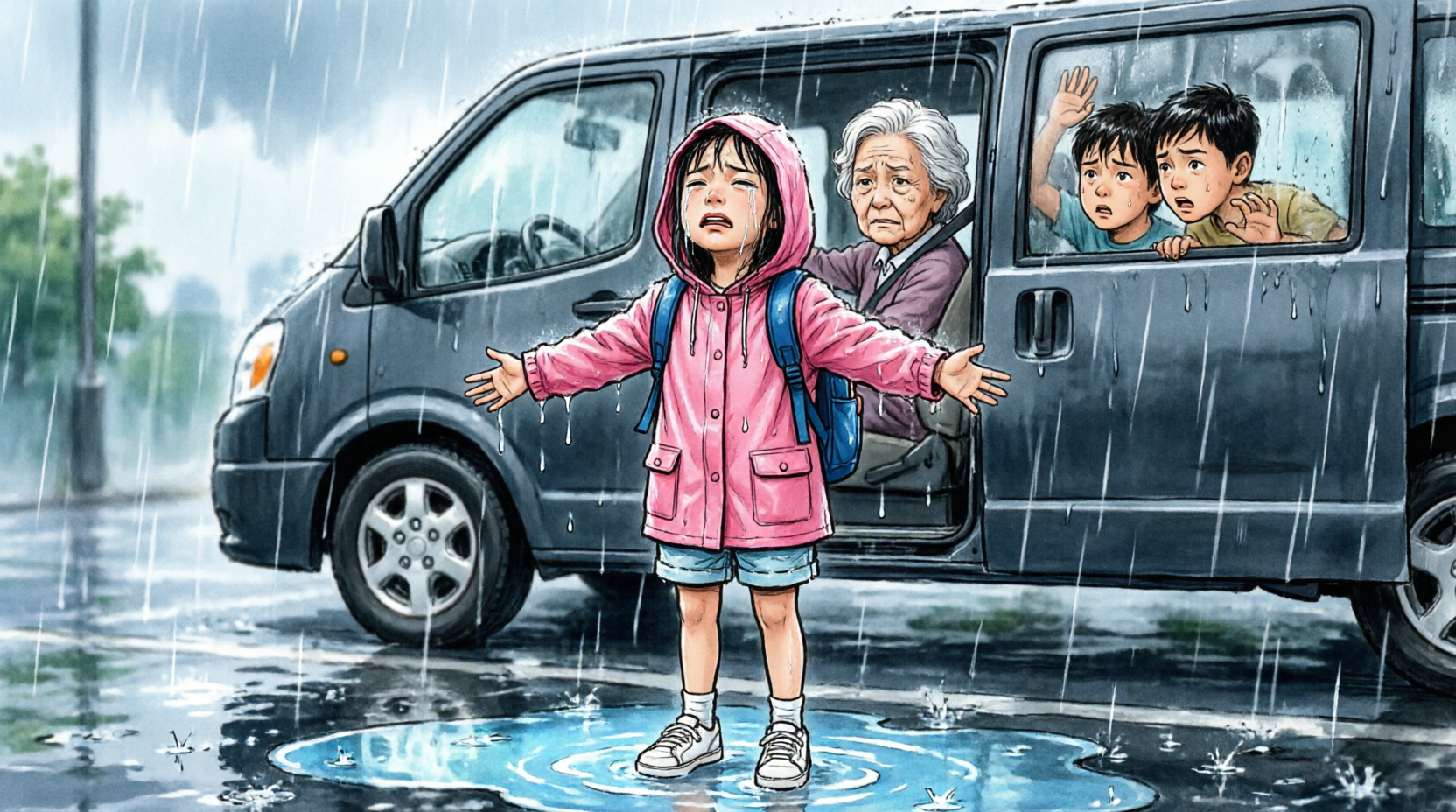
Sunday dinner had been my mother’s ritual for as long as I could remember.
No matter how bitter the arguments got, no matter how obvious the tension became, she believed a polished table and a roast in the oven could disguise rot.
By noon, the calls had not stopped.
My mother left three more voicemails.
My father sent two clipped texts asking why the mortgage draft had bounced.
Miranda wrote a longer message, full of outrage, confusion, and the kind of entitlement that always wore the costume of wounded innocence.
I didn’t answer any of them.
Instead, I made Lily pancakes shaped like lopsided hearts, because she liked pretending the broken ones tasted better than the perfect ones.
She was quiet that morning.
Not miserable, not crying, just subdued in a way that made me hate my parents more than the storm itself had.
Children recover quickly from scraped knees and spilled milk.
They do not recover quickly from realizing exactly where they rank in a family.
Every now and then she looked toward the window, at the gray sky still hanging low over the neighborhood, and then back at me.
“Are Grandma and Grandpa mad at me?” she asked, cutting through me with the careful voice children use when they are afraid of the answer.
I put down the spatula and crouched beside her chair.
“No, sweetheart. They are not mad at you.”
“Then why didn’t they let me in?”
There are moments when parenthood feels less like guidance and more like standing in front of an avalanche with your bare hands.
You know you cannot stop the whole thing.
You can only try to keep the worst of it from crushing the person behind you.
“They made a cruel choice,” I said carefully. “And sometimes adults do wrong things because something inside them is wrong, not because of the child.”
Her lower lip trembled.
“Did I do something bad?”
“No.” I answered so fast it almost came out as a gasp. “No, Lily. You did absolutely nothing bad.”
She studied my face, as if deciding whether it was safe to believe me.
Then she nodded once, very small, and went back to her pancakes.
I turned away before she could see my eyes fill.
That was when I knew Sunday dinner could not be postponed, softened, or handled privately anymore.
If I kept this in the shadows, my parents would do what they had always done.
They would rearrange the facts, minimize the damage, blame my tone, blame stress, blame misunderstanding, blame literally anything except themselves.
By four o’clock, I was dressed, Lily was in a soft blue sweater, and my anger had cooled into something steadier and more dangerous.
Resolve.
The drive to my parents’ house took thirty minutes.
Lily sat in the back seat with her stuffed rabbit in her lap, staring out at wet trees and driveways still shining from yesterday’s storm.
Halfway there, she asked, “Do I have to go inside?”
I met her eyes in the rearview mirror.
“You do not have to do anything you don’t want to do.”
She twisted one of the rabbit’s ears.
“Can I stay close to you?”
“You’re staying with me the whole time.”
She nodded and leaned her head against the window.
My parents’ house stood exactly as it always had, with the trimmed hedges and painted shutters that made strangers think warmth lived inside.
Three cars were already in the driveway.
My father’s sedan.
Miranda’s SUV.
And the leased van I had been paying for.
Seeing that van there tightened something in my chest, not because of the money, but because I suddenly saw it for what it was.
A monument to my own complicity.
I parked at the curb and sat for a second with both hands on the wheel.
Lily unbuckled quietly and waited for me to open her door.
When I took her hand, her fingers were cold despite the heated car.
Inside, the smell of rosemary, butter, and baked bread hit us immediately.
The dining table was already set with the good china.
My mother always used the good china when she expected admiration or war.
Miranda was in the kitchen opening wine.
Her husband, Dean, stood near the island pretending to help while actually scrolling through his phone.
My father was carving meat with the solemn concentration of a man who had spent a lifetime avoiding emotional labor by focusing on knives and appliances.
And my mother, in a cream sweater and pearls, turned at the sound of the door.
For one brief second her face flashed relief.
Then she saw I had brought Lily.
Then she saw I was not smiling.
The relief disappeared.
“Well,” she said, wiping her hands on a towel. “You finally decided to show up.”
Miranda let out a breathy laugh without looking up from the bottle.
“There he is. Mister drama.”
I took off Lily’s coat and hung it by the door.
Nobody came to greet her.
Nobody crouched to say hello.
Nobody kissed her cheek or asked how she was feeling after being abandoned in a storm.
That, more than anything, hardened me.
Lily moved closer to my side until her leg pressed against mine.
My father cleared his throat.
“Can we handle this calmly?” he asked, as if calm were something he had any right to request.
My mother folded the towel and placed it neatly on the counter.
“You embarrassed us with those cancellations,” she said. “Your father’s mortgage payment was returned. The insurance portal says our policy is under review. Miranda’s tuition transfer didn’t go through.”
Not one word about Lily.
Not one.
I looked directly at her.
“You left my daughter standing in the rain.”
My mother’s jaw tightened.
“We told you already, there was no space.”
Miranda finally looked up, offended on cue.
“There literally wasn’t. The kids had their booster seats, Dean was meeting us later, and Mom said Lily could walk because it’s not that far.”
Lily’s fingers clenched around mine.
I could feel the tiny pressure of each one.
I turned to Miranda.
“She is eight.”
Miranda shrugged.
“I walked places at eight.”
“No,” I said. “You didn’t. I drove you everywhere once I got my license, because Mom said your anxiety made buses too stressful.”

That landed.
Dean looked up from his phone at last.
My mother’s mouth thinned.
“That is completely different.”
“Why?”
“Because Miranda needed more support.”
I laughed then, one sharp, humorless sound.
There it was.
The sentence that had underwritten my entire adult life.
Miranda needed more.
Miranda always needed more.
More grace.
More money.
More patience.
More room.
More excuses.
And apparently, more seats in a dry car than my child.
Lily looked up at me, then quickly down again.
I realized with a jolt that she was old enough to understand far more than anyone in this room deserved.
I guided her toward the den doorway where she could still see me.
“Sweetheart, do you want to sit on the couch with your rabbit while I talk?”
She hesitated.
“Can I still hear you?”
“Yes.”
She nodded and went, curling into the far end of the couch with her knees tucked under her.
My mother frowned.
“This conversation is not for children.”
“It became her conversation when you left her outside in a storm.”
Silence.
Real silence this time.
Even my father stopped carving.
Miranda set down the wine bottle a little too hard.
“Oh my God,” she said. “Are we seriously going to keep acting like this was attempted m*rder or something? It was rain.”
The room changed temperature.
I took one step toward her.
“It was fear,” I said. “It was humiliation. It was a little girl begging family not to leave her, while you sat inside warm and dry.”
Miranda rolled her eyes, but there was less confidence in it now.
“You always exaggerate.”
“No,” I said. “I always absorb. I always excuse. I always smooth things over. That is what I am done doing.”
My father laid down the carving knife carefully, like he was handling a ceremonial object.
“Enough,” he said. “This family has always done a lot for each other.”
I looked at him for a long time.
“You want to talk about what this family has done for each other?”
He glanced at my mother, already uneasy.
And suddenly I understood.
He knew.
Maybe not the rain in detail.
Maybe not the image of Lily outside the gate, soaked and shaking.
But he knew enough to fear where I was going.
I reached into my coat pocket and took out a folded sheet of paper.
Then another.
Then another.
I had spent the afternoon printing summaries, because I knew if I relied on memory they would call me emotional, dramatic, unfair.
Paper unnerves people who have lived on comfortable denial.
“What is that?” my mother asked.
“This,” I said, placing the pages on the dining table beside the bread basket, “is what I paid for last year.”
No one moved.
I read the first line aloud.
“Mortgage contribution: twenty-two thousand dollars.”
My father’s face changed first.
Not guilt.
Panic.
“Vehicle lease and maintenance: nine thousand four hundred.”
Miranda crossed her arms.
“This is tacky.”
“Health insurance premiums: fourteen thousand two hundred.”
Dean slowly put his phone away.
“Private school tuition for Miranda’s children: eighteen thousand.”
Miranda flushed.
“You offered to help.”
“Emergency transfers, camp fees, extracurriculars, vacations, miscellaneous support: twenty-four thousand six hundred.”
I looked up.
“Ninety thousand two hundred dollars. In one year.”
My mother pulled out a chair and sat down without taking her eyes off me.
“This is not the time.”
“It is exactly the time.”
I lifted the second sheet.
“Over four years, the amount is three hundred seventy-one thousand dollars.”
Nobody spoke.
From the den, Lily’s rabbit slipped from the couch to the floor with a soft thud.
That small sound traveled through the room like a witness clearing her throat.
Dean was the first to find words.
“You can’t just weaponize help because you’re upset.”
I turned to him.
“I am not weaponizing help. I am exposing dependence.”
Miranda scoffed.
“You’re acting like we robbed you.”
“No,” I said. “Robbery implies I didn’t hand it over myself. I did. Repeatedly. Because every time I tried to pull back, Mom cried, Dad went silent, and you had some crisis.”
My mother’s eyes widened with injured dignity.
“I have never manipulated you.”
I stared at her, almost admiring the commitment to fiction.
“When Lily was three and I said I needed to start saving for her college fund, you told me family came first.”
My mother opened her mouth.
I kept going.
“When Miranda wanted the bigger house, you said her children deserved stability.”
My father shifted.
“When Dean lost his job for six months and I suggested they cut back, you said I was selfish because children should not suffer.”
Dean looked down.
“When I asked why nobody ever showed up to Lily’s dance recitals, piano nights, school fair, or science expo, you said Miranda had more on her plate.”
No one interrupted me now.
Because this was the trick of long injustice.
Once named out loud, it becomes difficult to stuff back into polite language.
I pointed toward the den.
“And yesterday, when my daughter asked for the same ride you give your other grandchildren without question, you told her to walk home in the rain.”
My mother’s expression hardened.
“You are taking one incident and using it to punish everyone.”
One incident.
I felt something inside me go still.
“This wasn’t one incident,” I said quietly. “This was the first time you were cruel enough to leave evidence a child could describe.”
Miranda made an exasperated sound.
“Lily is sensitive.”
“No,” I snapped. “Lily is observant. That is what frightens you. She noticed the truth before I was willing to say it.”
From the couch, a small voice came.
“Grandma said there was room for family.”
Every adult in the room froze.
Lily had not meant to speak loudly.
But the sentence landed with perfect clarity.
She sat upright now, rabbit clutched to her chest, eyes shiny but steady.
“She looked at me and said there was room for family.”
My mother went pale.
I turned, my heart breaking and swelling all at once.
“Do you want to come here, sweetheart?”
Lily got up and came to me.
I lifted her into my arms though she was getting almost too big for it, because sometimes children need to feel held more than they need to feel grown.
She buried her face in my shoulder.
My mother rose from the chair.
“That is not what I meant.”
“Then what did you mean?” I asked.
She looked from me to Lily to the rest of the room, as though searching for an angle that still preserved her image.
“You know how children misunderstand tone.”
I almost laughed again.
Not because it was funny.
Because it was obscene.
“You looked my daughter in the eye while she stood in heavy rain and told her to walk,” I said. “There is no tone issue that fixes that.”
My father rubbed his forehead.
“Your mother made a poor choice.”
My head snapped toward him.
“A poor choice is overcooking dinner. A poor choice is forgetting a birthday card. This was abandonment.”
His mouth tightened.
“You are inflaming this beyond reason.”
“No,” I said. “Reason is what brought spreadsheets.”
That almost made Dean smile before he caught himself.
Miranda stepped closer to my mother.
“So what, then? You cut us off forever because of one bad afternoon?”
I shifted Lily higher on my hip.
“No. I cut off the money because I finally accepted what the money was buying.”
Miranda stared.
“It was buying access without accountability. Gratitude without respect. And a version of family where my daughter was expected to accept crumbs while financing the feast.”
Miranda’s face reddened.
“You sound insane.”
“Do I?”
I set Lily down gently and kept one hand on her shoulder.
“Tell me the last birthday present you bought me.”
Miranda blinked.
“What?”
“The last one. Tell me.”
“That’s irrelevant.”
“Tell me.”
She crossed her arms tighter.
“I don’t remember.”
“Because there hasn’t been one in six years. Tell me the last time you called Lily just to ask how she was.”
Silence.
“The last time you thanked me without immediately asking for something else.”
Nothing.
I looked at Dean.
“The last time you told your children their school was paid for by someone other than magic.”
He swallowed.
“They’re kids.”
“Exactly,” I said. “And yet somehow the adults are the ones least interested in reality.”
My mother slammed her palm against the table.
“This is enough.”
The china rattled.
Lily flinched.
I put my arm around her fully now.
“No,” I said, quieter than before. “You don’t get to decide when enough happens. Not tonight.”
My father looked old suddenly.
Not softer.
Just older.
“What do you want?” he asked.
There it was.
Not what do you need.
Not how do we repair this.
What do you want.
As though every wound is merely a negotiation waiting for the right price.
I took a breath.
“I want the truth spoken plainly.”
My mother laughed bitterly.
“The truth is that you have always resented your sister.”
I nodded slowly.
“Yes. I have. Because resentment grows where fairness is starved.”
Miranda made a disgusted face.
“Oh please. You had everything. You were the successful one. You were always the favorite outside this house.”
Outside this house.
The phrase hung there, almost poetic in its damage.
I looked at her and saw, maybe for the first time clearly, that she had built her whole identity around being protected from consequence.
She was not stronger than me.
She was simply more accustomed to being chosen.
“That is exactly the point,” I said. “I built a life outside this house because inside it there was no room for me unless I was useful.”
My mother actually recoiled.
“How dare you.”
I stared back.
“How dare I say what your patterns made obvious?”
My father sank into a chair.
Dean looked like he wanted to disappear into the backsplash.
Miranda’s eyes filled, but not with remorse.
With fury.
“You think because you make more money, you get to judge everyone.”
“No,” I said. “I think because I funded this family, I get to stop funding my own erasure.”
That finally shut her up.
The clock over the stove ticked.
Somewhere outside, water dripped steadily from the gutter.
Lily leaned into my side with the exhausted trust of a child who does not understand every word, but understands enough.
My mother sat back down very carefully.
“So what happens now?” she asked.
I had imagined that question all day.
In the car.
In the shower.
While Lily slept.
While printing the statements.
At first, my answer had been fueled by fantasy.
I wanted to scorch the ground.
I wanted them terrified, humiliated, scrambling.
I wanted my mother to feel one sharp fraction of what Lily had felt at the gate.
But standing there with my daughter’s weight against me, I understood something much colder.
Punishment was not the same as protection.
And if I made this only about revenge, they would still control the shape of the story.
So I answered carefully.
“Now, every automatic payment remains canceled.”
My mother inhaled sharply.
Miranda swore under her breath.
I continued.
“I will not reinstate the mortgage assistance, the car, tuition, insurance, or any monthly support.”
Dean stepped forward.
“Come on. The kids shouldn’t suffer because—”
“Stop,” I said. “Do not use your children as shields. You are their father.”
He stopped.
I looked at my father.
“You can sell the house, refinance it, downsize, or finally use the retirement accounts you pretended needed to sit untouched while I covered your life.”
Then to Miranda.
“You and Dean can put your children in public school, pick up extra work, cancel vacations, and live like the rest of the world lives when money gets tight.”
Miranda’s voice cracked.
“You would do that to your nieces and nephews?”
That question would have trapped me once.
Not anymore.
“No,” I said. “I would do that to the adults who built their lifestyle on my guilt.”
My mother pressed a hand to her chest dramatically.
“You are destroying this family.”
I looked down at Lily.
Her hair was still slightly dry-frizzy from last night’s bath.
Her cheeks were round.
Her eyes were cautious.
And I felt something fierce and simple rise in me.
“This family was willing to wound my child to preserve its hierarchy,” I said. “I am not destroying that. I am refusing to keep feeding it.”
My father spoke then, and his voice was lower than I had ever heard it.
“Is there anything that would change your mind?”
I thought of saying no immediately.
I thought of making the severing absolute, elegant, final.
But life is rarely changed by the easy speech.
The harder speech is the honest one.
So I said, “There are conditions.”
Everyone in the room straightened, hope flashing too quickly in some faces and resentment in others.
My mother mistook it for weakness.
I saw it happen.
“I knew this was emotional,” she said. “Once you calm down—”
“No,” I cut in. “Listen carefully, because I am only saying this once.”
She fell silent.
“First, you apologize to Lily. Not generally. Not with excuses. Not with ‘I’m sorry you felt hurt.’ You apologize for leaving her in the rain.”
My mother’s mouth tightened, but she said nothing.
“Second, until Lily says otherwise, you do not pick her up from school, visit her, call her privately, or speak to her without me present.”
Miranda muttered, “This is insane.”
I ignored her.
“Third, if anyone in this family tells Lily she caused the money to stop, I am done permanently. No discussion.”
That landed hard.
Because it named exactly the sort of poison they were capable of.
My father looked ashamed for the first time.
Not deeply enough, perhaps, but visibly.
“Fourth,” I said, “if support ever returns in any form, it will never again be automatic. It will be specific, limited, documented, and not one dollar will go toward maintaining appearances.”
My mother laughed with disbelief.
“So you want us audited now?”
“Yes.”
The bluntness of it startled even me.
But once spoken, it felt right.
“Because I am done confusing love with subsidy.”
Miranda took a step back and looked at Dean as if expecting him to rescue her.
He didn’t.
Maybe because, for the first time, even he could see the shape of what they had all built.
My mother stood again.
“I am not apologizing under threat.”
“Then don’t.”
She looked at Lily, then away almost immediately.
Even now, direct contact with the child she had hurt seemed to cost her more than losing money.
That told me everything.
My father rose slowly and came around the table.
For one hopeful second, I thought he might do something decent.
Instead he looked at me and said, “You have always been too hard.”
The old line.
The family diagnosis.
Too hard for telling the truth.
Too hard for needing reciprocity.
Too hard for not being endlessly absorbent.
Something in me unclenched.
Because when people repeat the script at the climax, they reveal there was never another ending available to them.
“No,” I said. “I was too trained.”
He blinked.
“To work harder. Earn more. ask for less. Fix what I didn’t break. Smile while doing it. That wasn’t kindness. It was conditioning.”
He actually looked wounded by that.
Good.
Not because I wanted to hurt him.
Because maybe pain was the only language this family had ever respected.
Lily tugged my sleeve.
“Daddy?”
I crouched immediately.
“Yeah, sweetheart?”
“Can we go home now?”
Her voice was small but clear.
Home.
Not Grandma’s house.
Not here.
Home.
I stood and took her hand.
“Yes. We can go home.”
My mother’s face changed then, just for a second.
Not into remorse.
Into fear.
Because she understood at last that the center of gravity had moved.
Not to anger.
To decision.
“You can’t keep children from their family forever,” she said.
I met her gaze.
“Family is behavior. Not title.”
Then I turned and walked toward the door.
No one tried to stop me physically.
But behind me came the sounds of collapse beginning in slower forms.
Miranda crying angrily.
My mother demanding my father say something.
My father saying nothing.
Dean asking practical questions nobody wanted to hear.
The roast cooling on the counter.
The good china still unused.
At the threshold, I paused only once.
Without turning back, I said, “You all had years to notice what this was doing. Yesterday, Lily noticed it for you.”
Then I opened the door and left.
The night air was cold and damp.
Lily climbed into the car without prompting and buckled herself in, rabbit tucked under one arm.
When I got behind the wheel, I realized my hands were shaking.
Not from doubt.
From aftermath.
From the body understanding, after the fact, that a long-feared rupture had finally happened.
We drove in silence for several minutes.
Streetlights slid across the windshield in warm gold bars.
At a red light, Lily spoke softly.
“Are they going to be mad forever?”
I looked at her in the mirror.
“Maybe for a while.”
She nodded thoughtfully.
“Are you mad forever?”
Children ask questions that expose the truth you are still trying to edit.
I exhaled.
“I am hurt,” I said. “And I am protecting us. That matters more than how mad I feel.”
She seemed to consider that.
Then she asked, “Is protecting when you make sure bad things don’t keep happening?”
“Yes,” I said, my throat tightening. “Exactly.”
She looked back out the window.
“Okay.”
A minute later she added, “I like when it’s just us.”
I had to grip the steering wheel harder.
Because she said it with relief.
Not loyalty, not manipulation, not even sadness.
Relief.
As if the absence of certain people made the world easier to breathe in.
That was the cost.
That was what had already been taken from her before I acted.
When we got home, I made grilled cheese sandwiches even though neither of us was especially hungry.
Routine matters after emotional wreckage.
She ate half of hers in little thoughtful bites, then asked if we could build a blanket fort in the living room.
We did.
We dragged cushions down, clipped blankets to chairs, brought in string lights, and made a cave warm enough to feel like safety instead of hiding.
Later, with her head on my arm and a movie playing unwatched in front of us, she whispered, “You came fast yesterday.”
I kissed the top of her hair.
“Always.”
“I knew you would.”
There are sentences that make a parent feel proud.
And there are sentences that break them open.
That one did both.
After she fell asleep, I stayed there for a long time, listening to the little fort breathe around us.
My phone lit up twice on the coffee table.
Once from Miranda.
Once from my mother.
I ignored both.
Near midnight, one final message came.
From my father.
It was only one line.
Your mother won’t say it, but I know we were wrong.
I read it three times.
Then set the phone face down.
Not because it meant nothing.
But because it did not mean enough.
The next week was ugly.
My mother called relatives.
Miranda told cousins I had financially blackmailed the family.
An aunt sent me a long text about forgiveness before knowing any facts.
A cousin wrote privately to say he had seen this dynamic for years and was sorry.
The mortgage issue became urgent.
The school called Miranda.
Insurance paperwork multiplied.
Reality, when it finally arrives, is rarely graceful.
I kept going to work.
Packing Lily’s lunch.
Helping with homework.
Saying no.
Saying no again.
Saying no without explanation when explanation became another doorway to manipulation.
The first genuine surprise came ten days later.
A handwritten note arrived in the mail.
Not from my mother.
From my father.
Inside was a check.
Small compared to what I had spent over the years, but large enough to sting with symbolism.
A repayment, or the beginning of one.
And a note in his cramped print.
For Lily’s college fund. It should have started years ago.
I sat at the kitchen table for a long time looking at that sentence.
Then I opened a new savings account in Lily’s name and deposited it.
I did not call him to thank him.
Gratitude could come later.
Consistency had to come first.
My mother took longer.
Three weeks, to be exact.
She asked to see Lily.
I said no.
She demanded.
I said no again.
She cried.
I said no.
Then, eventually, a letter came.
Typed, of course.
Because handwriting would have felt too vulnerable.
The first version was garbage.
Full of misunderstandings, stress, weather conditions, assumptions, and her own embarrassment.
I sent it back with one sentence.
This is not an apology to a child. This is a defense statement.
She did not reply for six days.
Then another letter arrived.
Shorter.
Still stiff.
But cleaner.
It said: I left you in the rain. I saw you crying and drove away. That was cruel. You did not deserve it. I am sorry.
I read it twice.
Then I asked Lily if she wanted me to read her something from Grandma.
She listened from her seat at the table, coloring a rabbit with purple ears.
When I finished, she was quiet.
“Do I have to forgive her?”
“No.”
“Can I think about it?”
“You can take all the time you need.”
She nodded and went back to coloring.
That, more than any dramatic confrontation, told me the cycle had already shifted.
Because in the family I grew up in, children were expected to repair what adults broke, quickly and with a smile.
Mine would not be trained that way.
A month later, Lily agreed to a brief visit in the park.
Public place.
Daytime.
Me present.
My mother arrived wearing a camel coat and the strained expression of someone unused to walking into a room without being morally pre-cleared.
She looked older.
Not fragile.
Just less certain.
Lily stayed on the bench beside me at first.
My mother tried small talk.
It failed.
Then, finally, she looked at Lily and said, “I was unkind to you.”
Lily’s fingers played with the zipper of her jacket.
“Yes.”
My mother swallowed.
“I don’t expect you to trust me right now.”
“Okay.”
It was not warmth.
It was not reunion.
But it was honest.
And honesty, I had learned, was more useful than performance.
As for Miranda, the silence stretched.
She did not apologize.
She sent one message accusing me of humiliating her children by forcing them into public school.
I typed several responses and deleted them all.
In the end, I sent only this:
Your children are not humiliated by a school change. They are endangered by adults who teach them entitlement instead of character.
She never answered.
Maybe that is better.
Not every relationship needs closure.
Some need distance long enough for truth to become ordinary.
By Christmas, our lives looked different.
Smaller, financially and socially.
Calmer, emotionally.
Lily’s college fund had its first real shape.
The extra money I was no longer pouring into my parents’ house sat in savings, investments, repairs, summer plans, and quiet breathing room.
It turned out that nearly ninety thousand dollars a year could buy a child music lessons, books, travel, therapy if needed, and a father who was no longer secretly resentful every time someone else called with a crisis.
One snowy evening in December, Lily and I decorated cookies in the kitchen while music played too softly to compete with laughter.
She smeared icing everywhere, including somehow her elbow.
At one point she looked up and said, “This year feels lighter.”
I smiled.
“Yeah?”
She nodded.
“Like we don’t have to worry so much.”
I handed her another cookie.
“We don’t.”
And for the first time, I knew I wasn’t lying.
Because the line that had to be drawn had been drawn.
Because love, real love, had finally chosen clarity over obligation.
Because the moment that could have changed my daughter’s life for the worse had instead changed mine enough to protect hers.
And because some families only understand your value when your wallet closes.
But your child understands your value the moment you show up in the rain.