
Five years after the cemetery visit, the house no longer echoed. It breathed.
Not with the brittle, perfumed silence of Vivian’s reign, but with the steady, purposeful rhythm of a place that finally knew its own name. The Harper Foundation for Women in Leadership had moved past its startup years into quiet permanence. We funded two hundred and fourteen scholars that year alone. We hosted legal clinics, financial literacy workshops, and retreats for women who’d been told they were “too much” or “not enough.” They walked the halls like they belonged. Because they did.
I stood at the top of the grand staircase, watching the lobby fill for the foundation’s tenth-anniversary gathering. It wasn’t a gala. We’d kept it small: past recipients, staff, a handful of donors who understood that legacy isn’t about monuments. It’s about momentum.
Rosa, now in a tailored blazer, greeted guests at the door. Her hair was silver, her posture unbowed. Beside her hung Eleanor’s portrait, captured in that familiar half-smile she always wore when she knew she’d won without ever raising her voice.
The front door opened again. Alyssa stepped inside.
She wore a simple wool coat, her hair shorter now, her face softer. We hadn’t seen each other in person since our last annual coffee. She carried a small wooden box, its edges worn smooth by time.
“I brought this,” she said, handing it to me. “It was in David’s attic. Vivian left it behind when she moved. I don’t know why she kept it. Maybe she forgot it existed. Maybe she liked knowing she’d won.”
I lifted the lid. Inside were my teenage letters. Not the ones my father had hidden in his study. These were duplicates. Carbon copies. Vivian had been intercepting them for years, filing them away like trophies in a war I didn’t know I was fighting.
My throat tightened. Not with anger. With relief. The last ghost had finally been named.
“I kept them out of habit,” Alyssa said quietly. “Then I realized I don’t need to hold onto her proof that I was a lie. I’d rather hold onto the truth of who I’m becoming.”
I nodded. “Then let’s give them to the archive.”
We walked to the third floor together. The study door stood open. It always would now. I placed the wooden box on the desk beside the original folder. The foundation’s archivist would catalog them under a new heading: *Truth, Recovered.*
Later, when the guests had left and the house settled into its evening quiet, I climbed the stairs one last time. Not to hide. Not to search. Just to stand in the room where my father’s silence finally spoke.
I opened the bottom drawer of his desk. Inside was the unfinished letter he’d left. I’d read it a hundred times. But today, I took a pen and wrote one line on the back of the page, in my own steady handwriting:
*The story didn’t end with you. It began with me.*
I closed the drawer. Turned off the light. Locked nothing.
Downstairs, the grandfather clock chimed midnight. I walked to the front door, stepped onto the porch, and breathed in the cool Ohio air. The driveway was empty. The trees stood tall. Somewhere in the distance, a train whistle blew, low and steady, like a promise kept.
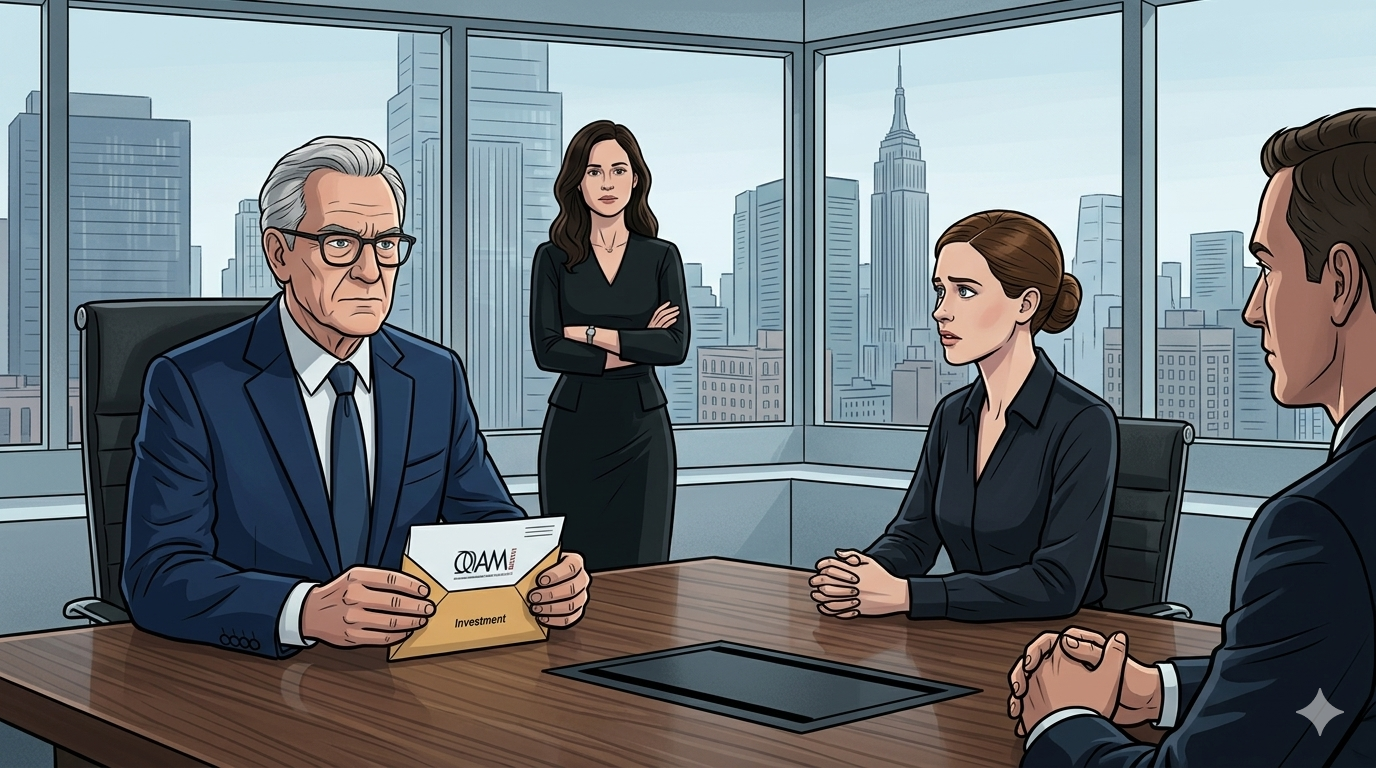
I thought of the girl who packed one suitcase at seventeen. Who believed she was an accident. Who sat in the back row of a funeral, reading her name under *Other relatives*. Who watched a lawyer open an envelope and braced herself for erasure.
She was still in me. But she wasn’t running anymore.
I smiled. Closed the door behind me. And walked toward the car, toward Chicago, toward whatever came next.
Not as a ghost. Not as an heir. Not as the daughter they tried to unname.
Just as Candace.
And for the first time in thirty-six years, that was all I ever needed to be.