
This is not a story of a divorce. This is the chronicle of a coup d’état, the quiet and desperate war I waged to reclaim my life from the man who had rewritten its history. It ended not with a bang, but with the soft, digital chime of a video file opening in a judge’s silent chambers.
The courtroom was a sterile, wood-paneled box designed to suffocate emotion. For months, it had been my personal purgatory. On one side sat my husband, Caleb Dawso, looking every bit the concerned father. His suit was immaculate, his posture a study in patient sorrow, an expression he had perfected for public consumption. Beside him, his lawyer, a shark in a tailored suit, arranged her papers with crisp, predatory movements.
On my side, there was only me, my lawyer—a good man fighting an uphill battle—and a chasm of dread that had been growing in my stomach for nearly a year. They had painted a masterpiece of my supposed instability. I was portrayed as erratic, forgetful, prone to emotional outbursts. They used my grief over my mother’s passing as a weapon, twisting my sadness into a narrative of mental decline. Every canceled credit card, every cash withdrawal Caleb had made from our joint account, was presented as my “impulsive spending,” my “financial irresponsibility.” I was losing. Not just the house, not just my financial security, but my daughter.
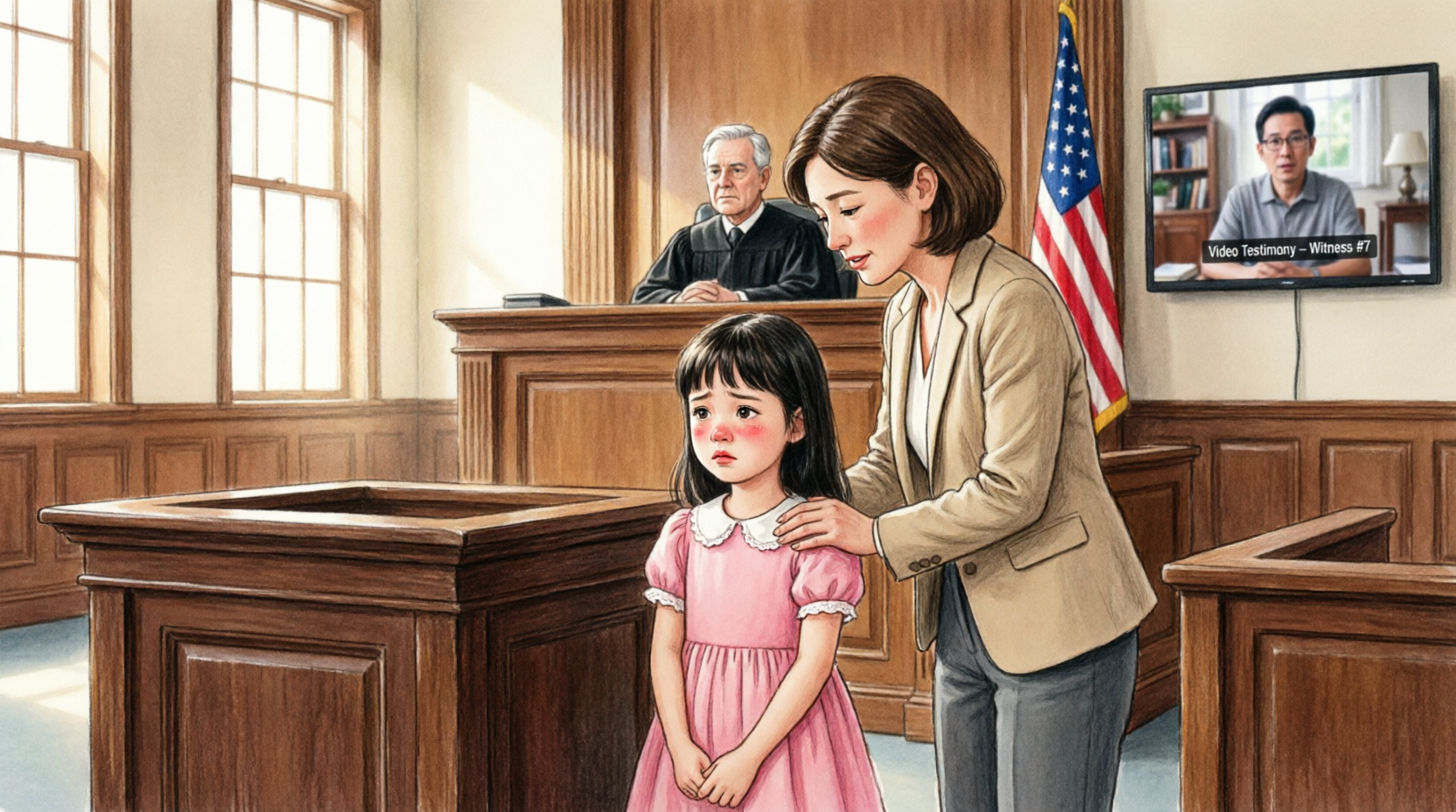
And then there was Harper. My ten-year-old daughter sat between the two legal teams, a small, silent island in a sea of hostility. For weeks, she had been quieter than usual, her gaze distant, her small shoulders carrying a weight I couldn’t identify. I thought it was the stress of the divorce, the quiet tragedy of a family imploding. I had no idea she was a soldier guarding a secret. She clutched her school-issued tablet to her chest like a shield.
Caleb’s lawyer was delivering her closing arguments, her voice a smooth, venomous river. “Mrs. Dawso’s emotional volatility,” she purred, “is, regrettably, not a stable environment for a child. Mr. Dawso seeks only to provide the consistency and security that Harper so desperately needs.”
I felt my lawyer place a restraining hand on my arm. My jaw ached from clenching it. It was all lies, a meticulously constructed fiction built on a foundation of my trust.
It was then that Harper moved. She stood up, her chair scraping against the polished floor with a sound that seemed to shatter the room’s oppressive silence. Every eye turned to her.
“Your Honor?” Her voice was small but clear, unwavering.
The judge, a woman with a face carved from granite, looked down from her bench. “Yes, young lady?”
“I have something you need to see,” Harper said, holding up the tablet.
A jolt went through me, pure, undiluted fear. What had she seen? What horror had my daughter felt she had to bottle up and hide on a device meant for games and homework?
Caleb shifted. It was a small, almost imperceptible movement, but I saw it. A second before, he was the picture of paternal concern. Now, something sharp and cold flickered in his eyes. The mask had slipped.
His lawyer was on her feet instantly. “Your Honor, this is highly irregular. The child is clearly being coached. This is a desperate, theatrical attempt to—”
“I asked him to keep it,” Harper said, her gaze fixed on the judge. She didn’t look at Caleb. She didn’t look at me. “But he said no one would believe it.”
Caleb’s face broke. The patient father vanished, replaced by a man staring at a ghost. “Harper,” he said, and the false sweetness was gone, leaving a raw, commanding edge. “Don’t do this.”
My daughter looked at him then, her expression holding a gravity far beyond her years. “You told me the judge needed to know the truth, Dad.”
Caleb’s lawyer nearly knocked over her chair. “Your Honor, this is inappropriate! The woman is disturbed, and she is clearly manipulating her own child—”
“Counselor, sit down,” the judge ordered. She didn’t raise her voice, but for the first time that morning, it sounded less like stone and more like steel. My breath caught in my throat. I didn’t know what was on that tablet, but I knew, in that single instant, that the war had just turned.
The judge’s gaze softened as it fell on Harper. “I do want to see that video. But first, can you tell me why you saved it?”
Harper swallowed, her knuckles white where she gripped the tablet. “Because I thought if I showed it to Mom, she would cry again,” she said, her voice trembling just slightly. “And I didn’t want her to cry anymore because of Dad.”
The air left the room. It was as if every soul in that courtroom had stopped breathing. I don’t know what my face showed—shock, horror, a sudden, blinding hope. I only know that when I looked across the aisle, Caleb was looking at me, truly looking at me, for the first time in a year. Not as his inconvenient ex-wife. But as an enemy who had just revealed a secret weapon. He hadn’t seen a broken woman. He’d seen a threat he had fatally underestimated.
The judge’s chambers felt like a pressure cooker. The door clicked shut behind us—me, my lawyer, Caleb, and his—sealing us in with the unspoken truth. The grand, impersonal theater of the courtroom was gone, replaced by the suffocating intimacy of a small office. Books lined the walls, silent witnesses to countless other broken families.
Harper stood before the judge’s large mahogany desk, her small frame looking even more fragile under the dim lighting. With hands that trembled slightly, she handed the tablet over.
“It’s in the folder that says, ‘For when I no longer believe you,’” she whispered.
The words hung in the air, a child’s heartbreaking indictment. Caleb made an involuntary noise, a strangled protest. You see? It’s nonsense, his posture screamed. My own lawyer shot me a look, a mixture of bewilderment and dawning comprehension.
The judge opened the folder. A video file appeared. She tapped the screen.
The image was shaky at first, filmed from a low angle, peeking through what looked like the leaves of a decorative plant on a high shelf. It took me only a second to recognize our living room. The slate-grey armchair. The low coffee table. The tall, vertical window that overlooked the garden where Harper used to play.
And then I saw Caleb.
He was pacing by the sofa, a whiskey glass in one hand, his phone pressed to his ear. The date stamp in the corner read three weeks before he served me with divorce papers. He wasn’t alone. Seated on the sofa, wrapped in a wine-colored silk robe I had never seen before, was Vanessa. His “financial advisor,” the woman who was supposedly just helping him “reorganize the family investments.”
The sight of her in our home, wearing that robe, was a physical blow. A cold dread coiled in my gut.
Caleb was laughing on the video. Not his warm, family-man laugh, but a dry, cynical sound I recognized from conversations about business rivals he was about to ruin.
“No, man, I’m telling you, it’s going to be a piece of cake,” he was saying into the phone. “Harper will repeat anything you tell her if you’re patient. You just have to convince her that her mother gets sad, that she yells sometimes, that she forgets things. Plausible stuff. Nothing too dramatic.”
My lawyer stiffened beside me.
On the screen, Vanessa laughed too, a tinkling, unpleasant sound. “The pineapple likes you better anyway. You bribe her with cakes and screen time,” she said, using his cruel pet name for our daughter.
Caleb raised his glass in a mock toast. “Don’t call it bribery. Call it providing stability.”
The image wobbled, a faint crackling sound audible over their voices. Harper. She had been there. Hiding. Listening. Recording. My ten-year-old girl, conducting her own surveillance.
Caleb’s voice continued, lower now, conspiratorial. “With full custody, the house is easier to liquidate, and I don’t have to split the primary assets the way she thinks. Besides, with her history of ’emotional mood swings,’ no judge is going to give her more than supervised visits.”
Vanessa looked at him, her smile a little strained. “What if the kid changes her mind? What if she says something?”
Caleb shrugged, the gesture dripping with dismissive arrogance. “She won’t. She’s terrified of disappointing me.”
That sentence, more than anything else, pierced through the shock and landed like a shard of ice in my heart. I risked a glance at my daughter. Harper wasn’t watching the screen anymore. She was watching me, her eyes filled with a sad, knowing look that no child should ever possess. She hadn’t recorded this to hurt him. She had recorded it to protect herself, to save proof of a reality she knew no one would believe coming from her. She had armed herself against his lies before we even knew we were at war.
The video continued. Caleb set his glass down.
“Plus,” he said, his voice dropping further, “once we get to discovery, I’ll bring up the impulsive purchases, the cash withdrawals, the chaos with the bank statements.”
My lawyer spoke in a fierce whisper, unable to contain himself. “Your Honor, those ‘impulsive purchases’ correspond to the maintenance account my client has documented, the same account Mr. Dawso systematically emptied in cash over six months.”
The judge held up a hand, silencing him without looking away from the screen.
On the video, Vanessa leaned in. “And what about the Arizopa account?”
A slow, predatory smile spread across Caleb’s face. “As far as the court is concerned, that account doesn’t exist.”
A deathly silence fell over the room. The Arizopa account. My ghost. The offshore holding company I suspected he’d been funneling money into for years, the one my forensic accountants could never quite pin down. He’d made me feel like I was paranoid, like I was seeing shadows, a crazy woman obsessed with money that wasn’t there.
“What if she finds out?” Vanessa asked.
Caleb let out that same dry, heartless laugh. “She won’t discover a thing. Elena has always been more sentimental than she is intelligent. She cries, she breaks down, and then she apologizes. It’s her pattern. It’s predictable.”
The judge hit pause.
The frozen image of my husband’s smug, triumphant face filled the screen. She didn’t make a grand gesture. She simply placed the tablet on the desk, removed her glasses, and polished them slowly with a cloth. The silence stretched, thick and heavy. She looked first at Harper, with an expression of profound sorrow. Then she looked at me, and for the first time, I saw not a judge, but a woman. Finally, her gaze fell upon Caleb.
I have never, in my entire life, seen a man’s blood drain from his face so completely. He was the color of ash.
“Mr. Dawso,” the judge said, her voice dangerously quiet. “Do you have anything you wish to say?”
Caleb opened his mouth, but no sound came out. He swallowed, his Adam’s apple bobbing. He made the only play he had left—the one of a cornered liar.
“It’s… it’s taken out of context.”
It was a pathetic defense. Small. Defeated. An insult to the evidence we had all just witnessed.
The judge didn’t respond. Instead, she reached forward and pressed play again, rewinding just a few seconds. Caleb’s voice, tinny and cruel, filled the office once more.
—She won’t. She’s terrified of disappointing me.
The judge paused it again. She leaned forward, placing both hands flat on the desk, her eyes boring into him.
“I have heard enough,” she declared.
Caleb’s lawyer began to babble, trying to salvage the wreckage, but her words were hollow. “Your Honor, my client—”
“Your client,” the judge cut in, her voice now ringing with cold authority, “has been caught on video admitting to a scheme of parental alienation, a strategy to defraud this court, and the deliberate concealment of financial assets. He has not only committed perjury but has emotionally manipulated his own child to achieve his ends.”
Caleb finally turned, his face a twisted mask of rage and disbelief. It wasn’t directed at me, or the judge, or even his own lawyer. It was directed at Harper. It wasn’t just anger. It was the raw fury of a king betrayed by his most loyal subject. In his warped reality, he was the victim.
“You recorded that?” he hissed, the words dripping with venom.
Harper, small and trembling but unbroken, held his toxic gaze.
“Yes,” she said. She didn’t cry. She didn’t flinch. And in that moment, my heart didn’t just break; it shattered and reformed into something stronger. My ten-year-old daughter was doing the job the adults around her had failed to do. She was holding a monster accountable.
The judge picked up her phone and summoned a court officer. She ordered an immediate copy of the video to be entered as evidence. She issued a temporary stay on Caleb’s custody request, ordered an emergency psychological evaluation for Harper by an independent expert, and a full forensic audit of Caleb’s finances, specifically naming the Arizopa account.
Then she looked at my lawyer. “File for emergency precautionary measures today. I will grant them.”
And finally, she looked at me. There was no pity in her eyes. There was something far more valuable. Respect. Credibility.
“Mrs. Dawso,” she said, her voice firm. “I am deeply sorry that it took your daughter bringing this into my chambers for the court to understand what you have been trying to say for months.”
Something inside me, a tightly wound spring of fear and pain that I’d been holding together for what felt like a lifetime, finally let go. I didn’t collapse. I didn’t weep. I just felt… still.
Then Harper took a hesitant step toward me, as if only now, with the battle won, was she allowing herself to be a child again. I met her halfway, sinking to my knees and pulling her into an embrace so fierce it was almost painful. I buried my face in her hair, breathing in the scent of her shampoo, the scent of my child, my hero.
“I’m sorry I didn’t tell you,” she whispered against my neck, her small body finally starting to shake with relieved sobs.
I held her tighter, closing my eyes against the sting of my own tears. “No, my love. Don’t you ever be sorry. You forgive me. Forgive me for leaving you to face something so big all by yourself.”
She rested her head on my shoulder, her breathing slowly steadying.
“We’re not by ourselves anymore, Mommy,” she whispered.
And for the first time in that long, brutal war, I knew she was right. We weren’t. The truth was finally on our side.
If you want more stories like this, or if you’d like to share your thoughts about what you would have done in my situation, I’d love to hear from you. Your perspective helps these stories reach more people, so don’t be shy about commenting or sharing.